







Wax Heaters for South African Salons: The NRCS File, 230 V and a Capacity Ladder
A wax warmer is a small appliance with a large regulatory footprint in South Africa. It cannot legally be sold there without a Letter of Authority issued under the compulsory-specification regime, and that letter is held by a local entity — not by the factory. Most first-time importers discover this after the container is booked. This article sets out what the NRCS file actually involves, why a chip-controlled warmer is the right specification for the market, and how a nine-model range from 20 ml to 800 ml maps onto South African salon types.
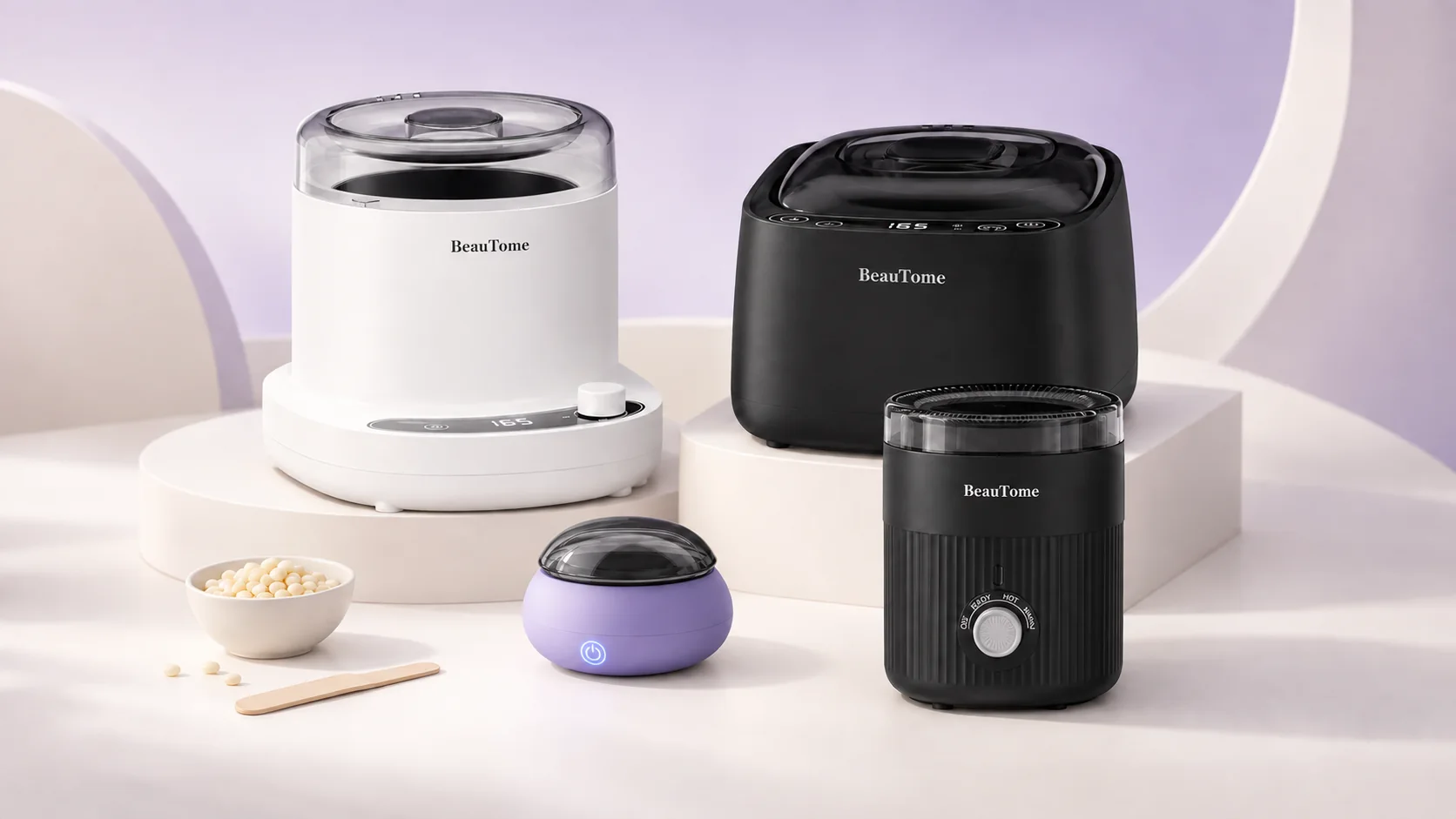
Nine warmers on one platform: a single supplier, a single spare-parts list, and a specification built for 230 V / 50 Hz markets.
Why South Africa is worth the paperwork
South Africa is the most developed professional beauty channel in Africa and the natural entry point for a distributor planning to serve the wider sub-Saharan region. Its nail and beauty retail category is modest in absolute terms — industry analysis places South African nail polish revenue at roughly USD 0.2 billion in 2025, in a Middle East and Africa region worth about USD 0.6 billion — but the opportunity is structural rather than spectacular. The same analysis notes that South Africa functions as the gateway to sub-Saharan distribution, while cautioning that affordability and retail reach differ sharply from the Gulf. That is precisely a market where a distributor wins by carrying the right tiered range and by being the importer who already has the compliance file in order while competitors are still waiting for paperwork.
230 V / 50 Hz
South Africa’s grid, on the round three-pin SANS 164-1 plug — specify both at order stage
SANS IEC 60335
The household-appliance safety family a warmer is tested against, with the applicable part for the product type
20–800 ml
Nine chip-controlled models, so one import file covers a whole product line
The NRCS Letter of Authority, in plain terms
The National Regulator for Compulsory Specifications (NRCS) administers South Africa’s compulsory-specification regime under the Compulsory Specifications Act. Electrical appliances in scope may not be imported, sold or even warehoused without a Letter of Authority (LOA). Testing agencies that handle these applications describe the process as follows, and the sequence matters more than the documents.
- Classification first. The product is mapped to the relevant compulsory specification and the applicable standard. For household appliances that family is SANS IEC 60335 — the general safety standard plus the part covering the specific appliance type. A wax warmer is a liquid-heating appliance, and the laboratory confirms which part applies; the supplier does not decide this.
- Test report from an accredited laboratory. The report is produced against the SANS standard with South African deviations — voltage and frequency among them. Reports are commonly required to be recent, with three years cited as the usual ceiling, so an old EU test report is often not usable as-is.
- A local holder. The LOA must be held by a South African entity. Non-resident manufacturers work through a local importer or an authorized representative who files the application, and that entity carries the certificate.
- Review and marking. Reviews are commonly quoted at four to eight weeks for straightforward appliances. Once granted, the product carries the NRCS mark and the certificate number on the product or packaging.
- Change control. A design change or a change of critical component means re-application. This is why a stable platform across a whole model range is worth more than it looks: one range, one set of critical components, one file to maintain.
Practical consequence for a buyer: ask a supplier for the accredited-laboratory test documentation, the component list, and the labeling artwork before you commit, because those are the inputs your local holder needs. Ask us for these early and the filing starts on day one rather than after the goods land.
Why chip control is the specification that pays in this market
Wax is the most controllable cost in a waxing room, and the heater decides how much of it gets wasted. A bimetal-thermostat warmer — the classic analog pot — cycles around a temperature window that drifts as the thermostat ages, so the wax ends up either hotter than the working range the formula was designed for or cool enough that a technician re-heats and re-applies. A chip-controlled warmer holds a set temperature much more tightly, and the difference shows up in three ways a salon owner actually tracks.
First, wax consumption. Film waxes are formulated to be applied at a specific temperature: our Formula A1 is a rosin-free hard wax with a working window of 45–50 °C, and the Consumer-Grade Hard Wax is a 55–60 °C film wax. Run either above its window and the film goes on too thin, tears, and forces a second pass on the same area. Second, labor. A technician who has to wait for the pot to recover, or who spends time re-heating a cooled film, is a technician not taking the next client. Third, client experience. Temperature stability is the difference between a comfortable Brazilian and a complaint.
This is why the range is chip-controlled throughout rather than only at the top. The entry model, the BWW5K, is a 450 ml pot with a 100 W element and a single dial covering 30–125 °C — no screen, no touch interface, nothing for a new technician to misconfigure, but electronic control of the temperature itself. It is the model a distributor uses to open accounts that will not pay for a digital console. The compact PW8 mini runs a 180 ml pot with 30–145 °C control, sized for a single treatment room, a second service in a nail-and-wax bar, or a mobile kit. Portable units in the range use a graphene heating element, which keeps the body light enough for house calls.
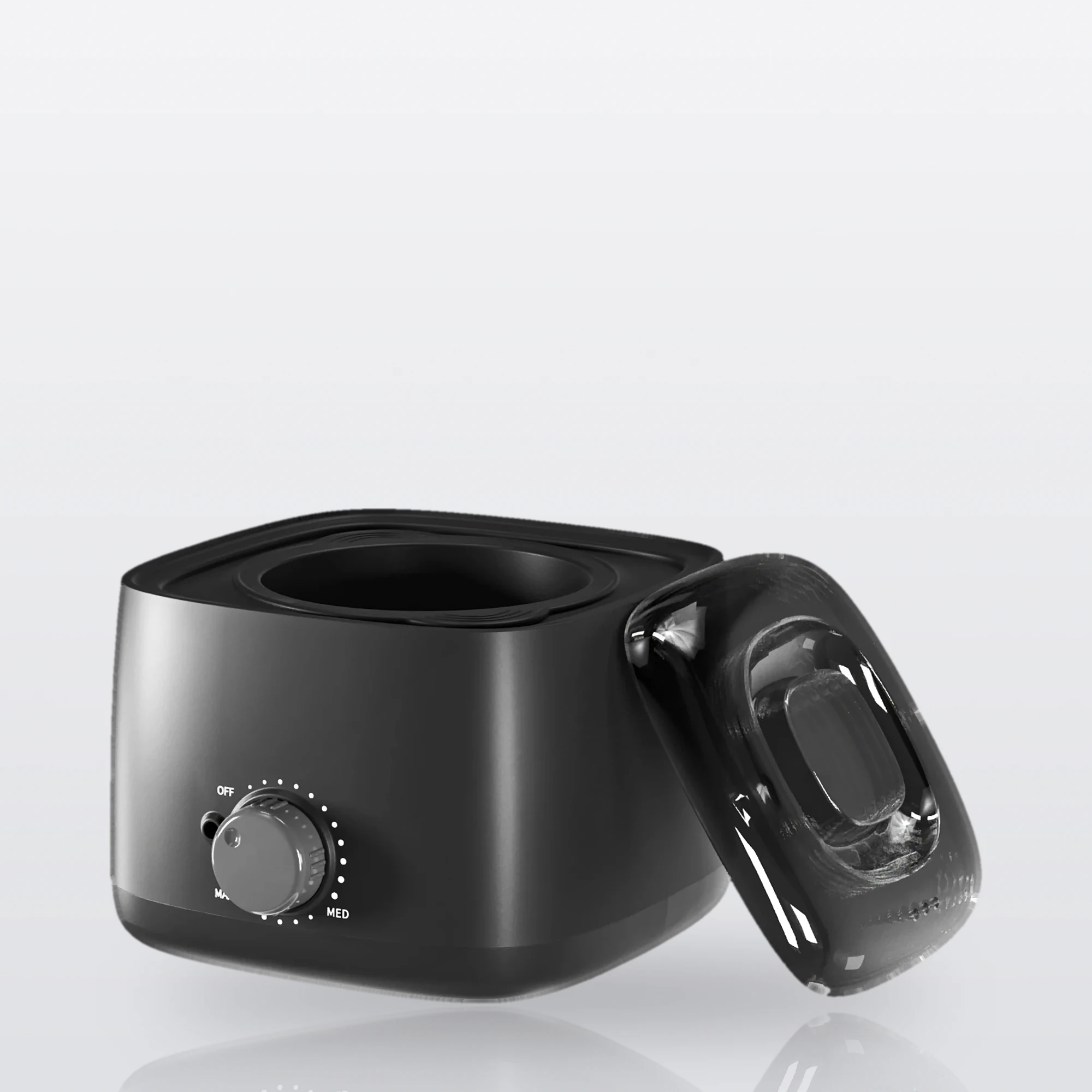
Chip control holds the working window steady across a full client day — the model that stops a film wax from being applied out of range.
A capacity ladder for three South African salon types
A distributor in this market typically sells to three profiles, and the range is designed so that one order covers all three without opening three supply relationships.
The single-room or home studio. One PW8 mini at 180 ml, or a 100–200 ml pot. One treatment in progress at a time, limited counter space, and a preference for a unit that stores rather than sits out permanently. A 450 ml BWW5K is the step up if the studio runs two wax types simultaneously.
The multi-room salon or beauty bar. Two to three warmers per room, sized so a technician never waits. This is where the 400–600 ml models earn their place, and where mixed-model shipments matter: the same platform, the same lid geometry, the same spare elements. A salon that standardizes owns one parts inventory and one training conversation.
The multi-site chain and the distributor’s own stock. The 800 ml top of the range for high-throughput rooms, ordered alongside the smaller models so every site receives the size it actually uses. Because the range is one platform, a chain can standardize on a single supplier without standardizing on a single capacity.
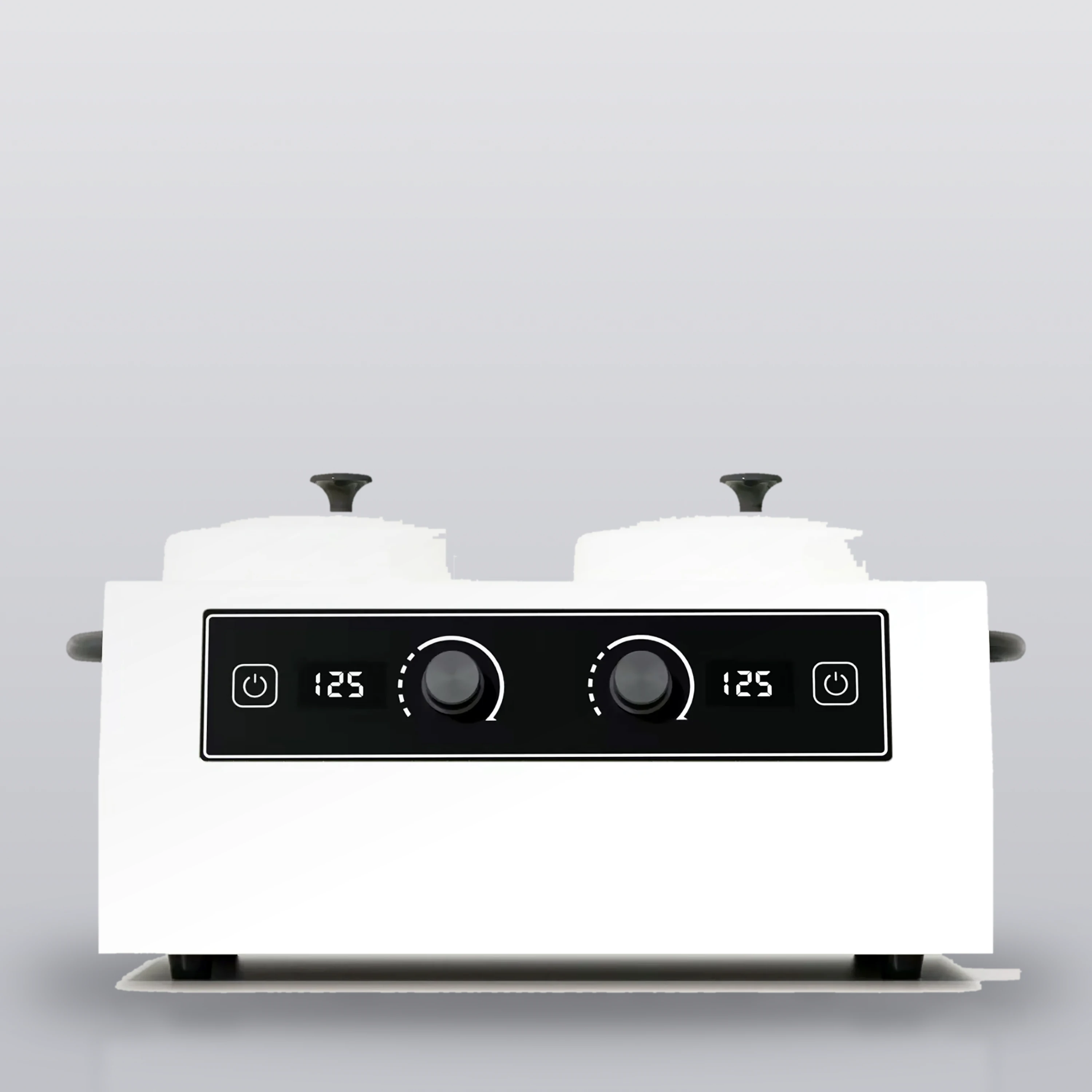
The larger models cover the multi-room salon; the range is one platform, so a chain standardizes on a supplier without standardizing on a capacity.
One product line, one import file
The commercial argument for buying the range rather than a model is the same as the regulatory argument: fewer critical components, one test program, one labeling exercise. Our private-label route starts with white-label or neutral units at 3–5 pieces, with single sample units available for evaluation before any commitment, and custom branding — your logo, shell color and retail packaging — quoted from 300–500 units. Full specifications for all nine capacities are on the wax heater page, and the private-label process is described on the depilatory wax page, which covers how a branded warmer-and-wax program is assembled for a single market.
Quick FAQ
Do you supply the NRCS Letter of Authority?
Can I order a mixed selection of capacities in one shipment?
What voltage and plug do you build for South Africa?
Next step
For a sample warmer, a mixed-capacity quotation, or the technical documentation your South African importer needs to file an LOA, contact Miro Wu, Dedicated Account Manager — email miro.wu@beautome.com or WhatsApp +86 188 1393 3019. Tell us the salon profiles you sell to and we will propose the capacity mix for your first order.