


Wax Heaters for Egyptian and North African Salons: Capacity, 230 V and the Import File
Egypt and the Maghreb are price-sensitive markets with an unusual mix: a young, grooming-driven customer base, a very high density of small treatment rooms, and an import process that puts the conformity certificate in the hands of the local importer rather than the factory. That combination rewards a different sales approach from Europe. The conversation is not about premium features — it is about which pot holds a working temperature through a long day, what a studio can afford to buy twice, and which files have to exist before the container leaves. Here is how to plan a wax-heater range for Egypt, Morocco and their neighbours.

Nine chip-controlled wax heater platforms from 20 to 800 ml, plus a 450 ml single-knob entry model — one range that covers a walk-in room and a hotel spa from the same container.
A region that buys volume, not features
Two things are happening at once in North Africa. The consumer side is growing quickly: Egypt’s beauty and personal care market is put at USD 1.96 billion in 2025, heading to USD 3.23 billion by 2034 on rising urban incomes, a young population and heavy social-media influence on grooming habits (IMARC Group, 2025), while Morocco’s cosmetics market was valued at USD 1.82 billion in 2024 and is forecast to grow at 7.5% a year to 2030 (Grand View Research, 2025). The category you are selling equipment into is growing with it: the Middle East and Africa hair removal wax market is sized at USD 730 million for 2025, reaching USD 1.23 billion by 2034, with Egypt, Morocco and Turkey all listed as covered country markets (Straits Research, 2025).
USD 730 M
Middle East & Africa hair removal wax market, 2025, heading to USD 1.23 B by 2034 (Straits Research, 2025)
USD 1.96 B
Egypt’s beauty and personal care market in 2025, forecast to USD 3.23 B by 2034 (IMARC Group, 2025)
7.5%
Annual growth forecast for Morocco’s cosmetics market to 2030, from a 2024 base of USD 1.82 B (Grand View Research, 2025)
The buying pattern is what makes the region different. Inflation and currency movement keep average selling prices under pressure, so salons buy in smaller steps and replace individual units rather than the whole bench. A single room in Cairo or Casablanca may run one 450 ml pot for wax and one small pot for a second wax type; a hotel spa in Sharm el-Sheikh or Marrakech may run three or four at once, all day, at two temperatures. The range has to serve both without a separate factory line.
Pick the pot by service, not by price
Most complaints we see from this region are capacity complaints dressed up as quality complaints. A pot that is too small for a leg or back service is being heated and re-filled all day, which is slower for the technician and harsher on the wax.
- Small, fast services. A 180 ml mini is enough for brows, upper lip and small touch-ups, and it is the model that mobile and home-visit technicians can carry with a detachable cord.
- The volume workhorse. Our BWW5K is the entry model: 450 ml, 100 W, a single knob covering 30–125 °C — no display, no touch panel, nothing to explain to a new employee. It is the unit that lets a distributor open a price-led account without discounting a chip-controlled model.
- Full-room capacity. The nine chip-controlled platforms run from 20 ml to 800 ml, including dual-pot stations that hold a hard wax and a soft wax at two set temperatures at the same time. That is the correct answer for a back-and-leg service where the technician should never be waiting for wax to come up to temperature.
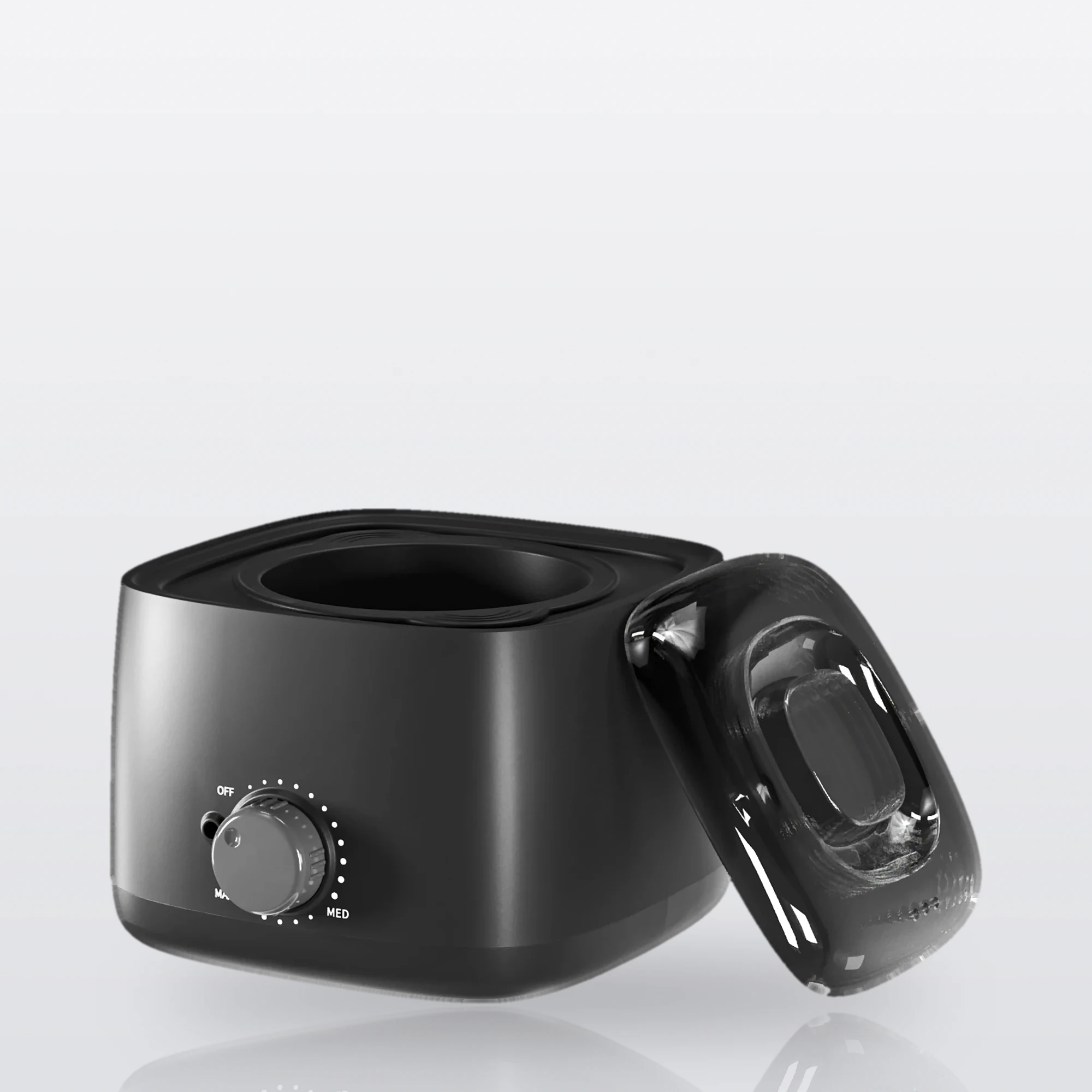
Chip-controlled heating holds the set point instead of drifting around it — the difference between a pot that is ready when the client sits down and one that is not.
Temperature control is a running-cost line, not a feature line
A bimetallic thermostat switches a heating element on and off around a wide band; a chip-controlled board holds a set point. In a room doing fifteen to thirty waxing services a day the difference shows up in two places. First, wax that stays inside its working band can be re-used at the intended consistency instead of being thinned out or discarded, and a client who is waxed at a stable temperature is a client who comes back. Second, a technician who is not re-heating, re-testing and topping up a pot is doing another service instead.
For a first delivery in this region, the questions worth asking a factory are practical: can the pot hold temperature through a long day without the outer shell becoming a burn risk, are the pots and inner containers replaceable on their own, does the cord detach for transport and storage, and does the same platform exist in the voltage and plug your market uses. Ours ship on 220–240 V / 50 Hz with the cord set matched to the destination; for Egypt that means the two round-pin plug the market expects, and for Morocco the same European pattern. We quote the cord set and the spare parts list with the units, because a bench that is out of service because of a missing pot is a lost account.
Egypt: the conformity file sits with the importer
Electrical appliances entering Egypt are controlled at the border and the mechanism is specific: under the Import and Export Control Law No. 118/1975 and the technical regulations that follow it, regulated products are subject to conformity assessment run through the General Organization for Export and Import Control (GOEIC). In practice the market works with two documents that are often confused: a conformity certificate covering the product type and its compliance with Egyptian standards, and a certificate of inspection covering the specific shipment against the invoice and packing list. Products are assessed against Egyptian standards — the ES series, which for household appliances follows the same structure as IEC 60335 — or against recognised international equivalents, with test reports from an accredited laboratory.
Three practical consequences for a wax-heater order. Labeling and documentation need Arabic, including the importer’s identification; English-only packaging does not clear the review. The application is made by the Egyptian importer or an appointed local agent, not by the factory, so the chain of authorisation should be agreed before shipping rather than after the goods arrive. And the tolerance for a model mismatch is low: a certificate issued for one model does not automatically cover a different pot size, so if your range includes several capacities, decide up front which models you intend to register. Requirements in this area are revised through annual ministerial communiqués, so confirm the current text for your product group and HS code before booking.
Morocco: a conformity certificate on Portnet and the CMIM mark
Morocco runs a comparable system with a different name and platform. Products on the regulated list must obtain a certificate of conformity (COC) and carry the CMIM conformity mark, and trade-compliance sources describe the mark as having a minimum height of 6 mm with core parameters and safety warnings in Arabic, optionally alongside French. Since 2 December 2024 the application has to be filed by the Moroccan importer through the Portnet platform, and certificates are issued and verified electronically — which means a foreign exporter cannot complete the process alone, and a paper certificate from a previous shipment does not substitute for a current electronic one. Appliance safety is assessed against NM/IEC 60335-type standards, and equipment with a radio or telecom interface falls additionally under ANRT. A CE file is useful evidence inside the technical dossier but it is not the market authorisation, so treat it as the input, not the deliverable.
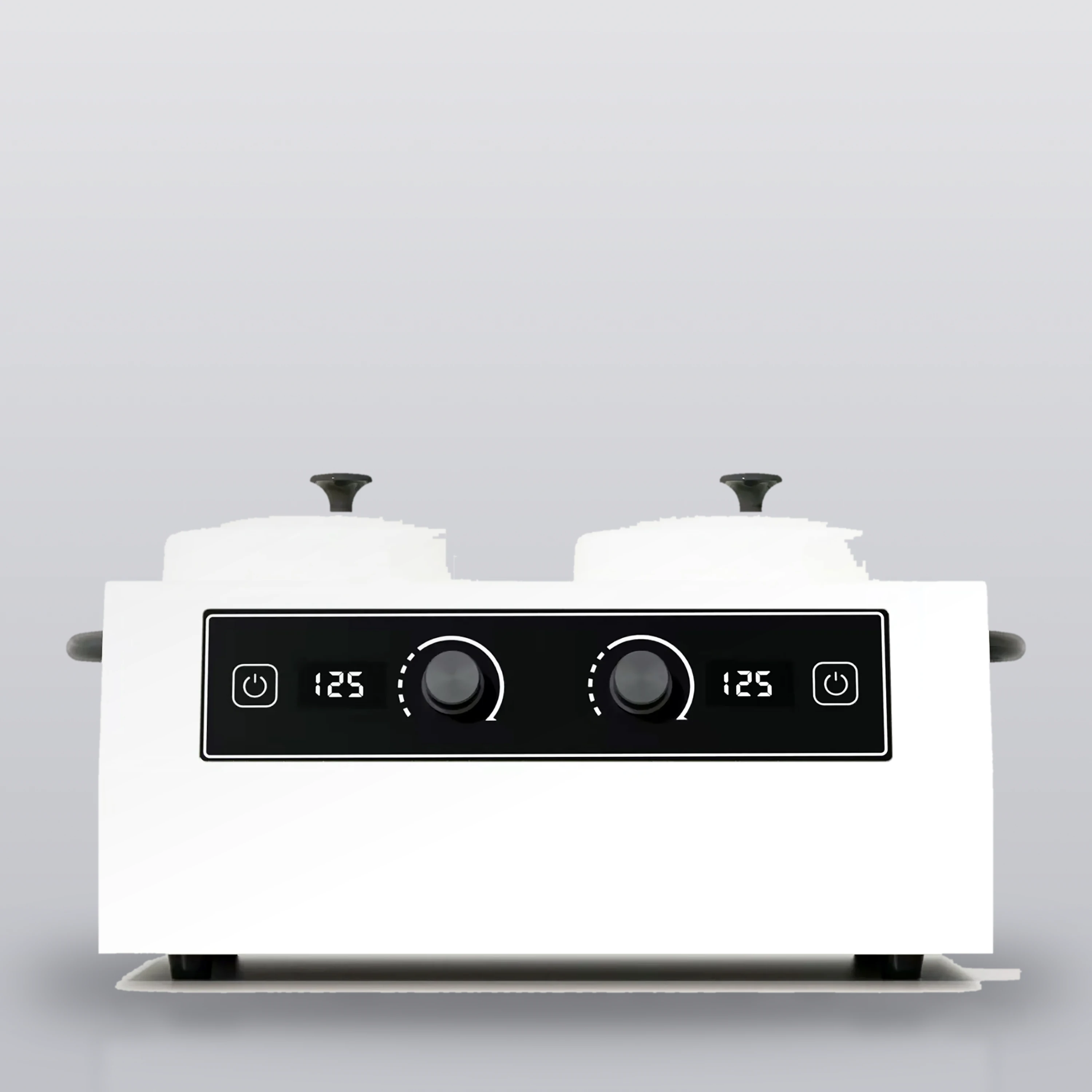
A dual-pot station keeps hard and soft wax at two set temperatures — the configuration that removes the queue in a busy treatment room.
What to put in the quotation
Ask for the voltage and plug for each destination, the spare-pot and cord-set list, and a sample unit that a salon can run for a week before the range is fixed. Our full platform list is on the wax heaters product page; if you are still deciding how many pots a treatment room actually needs, the capacity planning guide maps models to services and throughput, and the wax formulas range covers the hard and soft waxes those pots are designed to hold. Own-brand branding for the warmer line is quoted from 300 units, and private-label wax in unlabeled transparent bags is available from low MOQ for distributors building a house brand, which we cover separately on the OEM & ODM page.
Quick FAQ
What voltage and plug do Egyptian and Moroccan salons need?
Can you supply the certification documents for Egypt or Morocco?
Which warmer should a small studio buy first?
Next step
Send your destination cities, the capacities you intend to register, and the plug type you need, and you will get a quotation that already accounts for the cord sets and the spare-parts list. For a sample warmer, a documentation pack for Egypt or Morocco, or an own-brand discussion, contact Miro Wu, Dedicated Account Manager — email miro.wu@beautome.com or WhatsApp +86 188 1393 3019.