Vision-Assisted Nail Curing: What 0.2-Second AI Detection Actually Does
Under the glossy shell of the BeauTome AI Smart Nail Lamp V2 sits a 2 MP camera, a 1.2 GHz processor and a 0.5 TOPS neural engine. Here is how that hardware turns a vision-assisted nail curing lamp into a measurable workflow upgrade for professional salons.
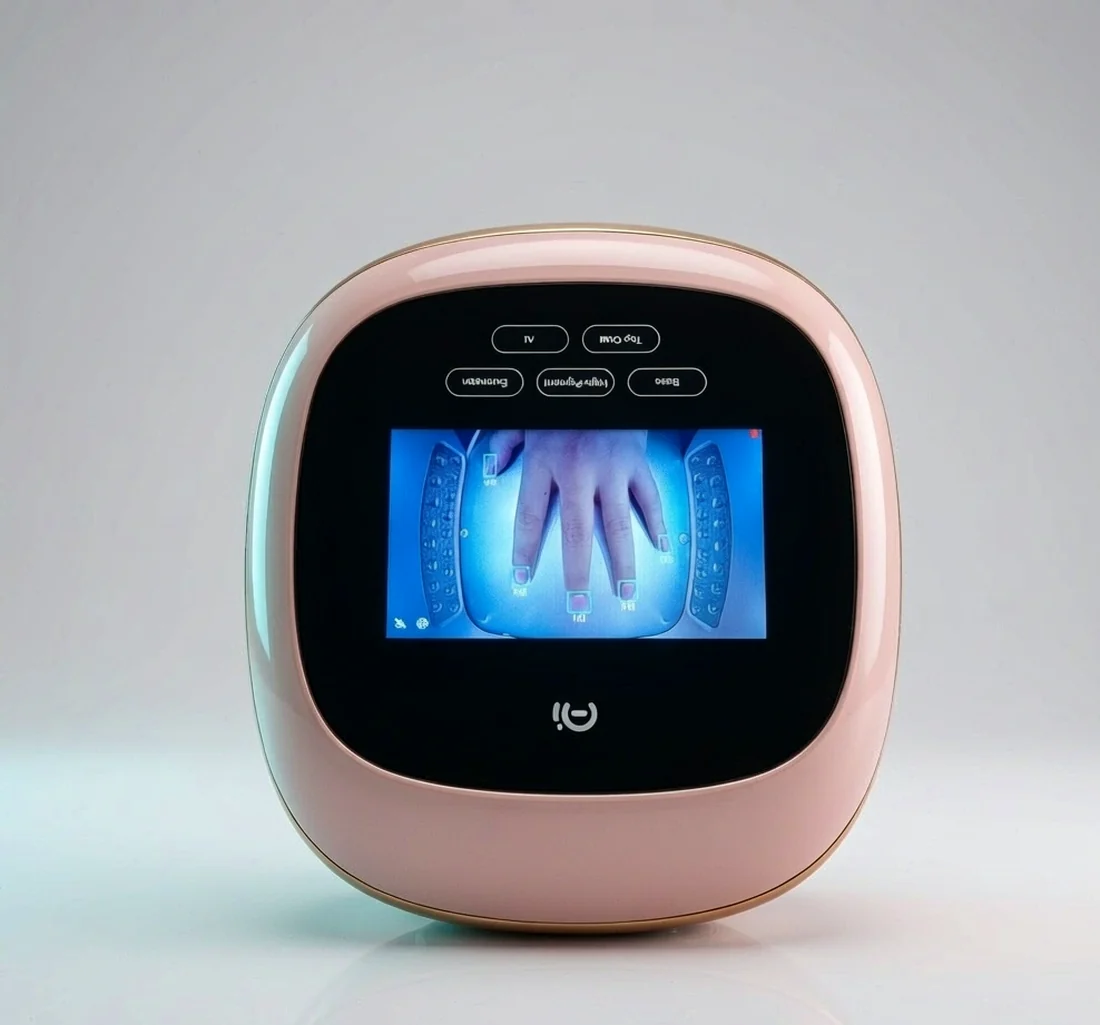
The touchscreen shows the live camera view: five fingers detected, nail areas highlighted, countdown armed.
The problem with timer-only lamps
A conventional UV/LED lamp starts a countdown the moment a hand slides in — whether the hand is positioned well or not. Fingers that drift off the LED sweet spot cure unevenly; thumbs cure differently from pinkies; different gel brands respond to different doses. The salon’s answer is technician attention: reposition, re-timer, re-check. Multiply that by thirty clients a day and the minutes add up.
What happens in those 0.2 seconds
When a hand enters the V2 chamber, the camera captures a frame and the on-device AI model — running locally on a 0.5 TOPS NPU, with no internet connection required — completes three tasks almost instantly:
Detect
Finds each finger and flags nails that are outside the optimal curing zone, prompting the technician to adjust before the cycle starts.
Measure
Reads nail area and hand position, then matches them against the selected gel program so the LED dose fits the service.
Adapt
Drives the 136 dual-wavelength LEDs in an adaptive pattern — full coverage where it is needed, gentle output where it is not.
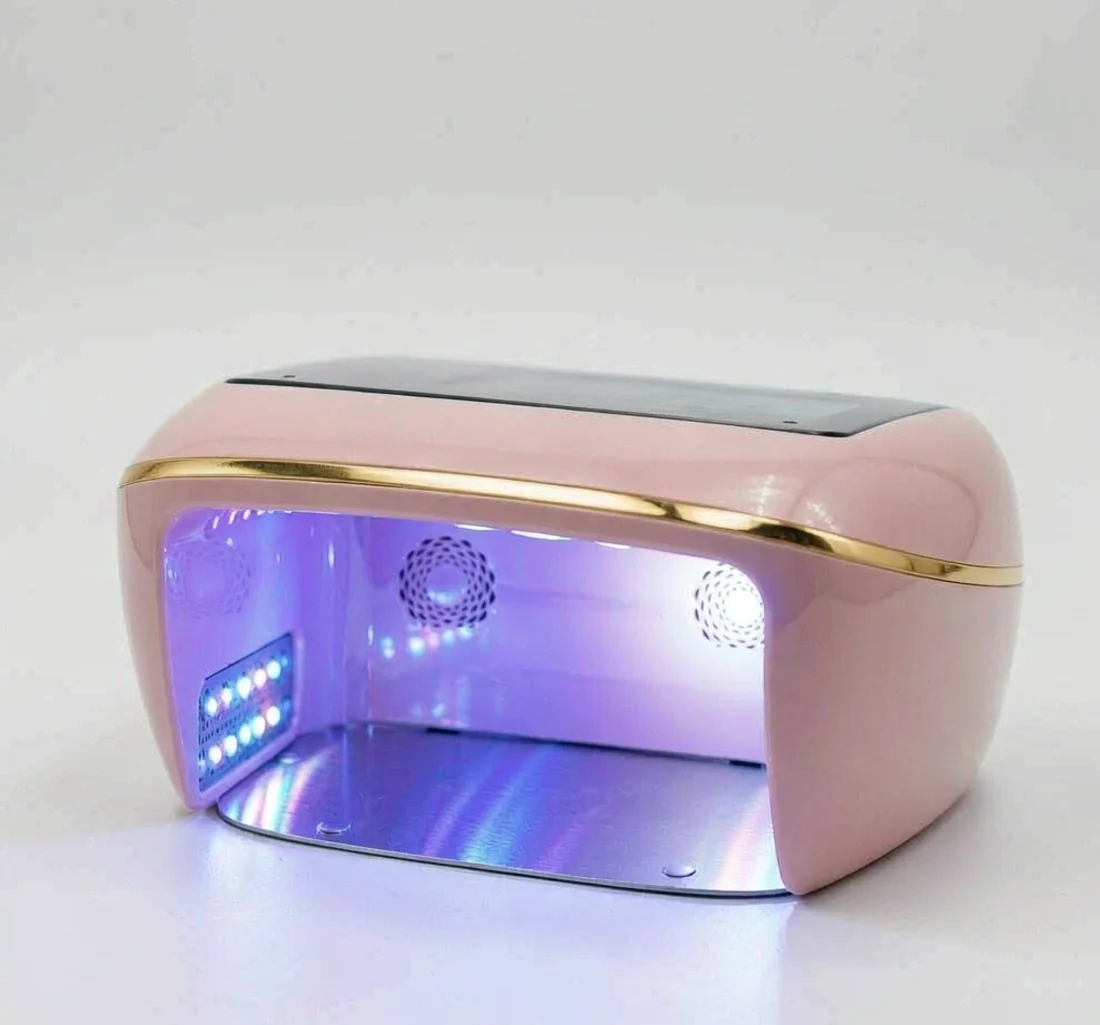
Dual-wavelength LED array (365–370 nm + 395–400 nm) — the optical foundation of adaptive curing.
Two quiet features salons notice first
Smart heat control. Heat spikes are the top complaint from gel clients. The V2 modulates output in a low-heat ramp curve, and its light-decay warning tells the salon when LED output has drifted below specification — before clients start complaining about under-cured sets. For a busy salon equipment fleet, that warning is the difference between a recalibrated lamp and an unhappy review.
A multilingual interface. The 5.5-inch HD touchscreen speaks 29 languages out of the box — a decisive detail for distributors serving European, Russian and Southeast Asian markets, and one of the most requested items in our multilingual salon equipment OEM programs.
The workflow math for a five-chair salon
Curing is the most repeated step in a gel service. Saving even 20–30 seconds per cycle — through auto-start, correct first-time positioning and no manual re-timing — compounds across a working day. Salons piloting vision-assisted lamps typically report the gain shows up not in speed alone, but in redo rates: fewer sets that need a second pass, fewer callbacks for lifting or dull tops.
Quick FAQ
Does the AI need Wi-Fi?
No. Detection and adaptation run entirely on the device — nothing leaves the lamp.
Is the camera a privacy concern?
The 2 MP sensor sees only inside the curing chamber and has no storage or upload path; it exists to position and dose, not to record.
Does it work with all gel brands?
The dual-wavelength array covers the standard UV/LED curing spectrum used by major gel systems; the AI adjusts dose within that range.
Can we brand it for our chain?
Yes — OEM and private-label programs include custom colors, packaging and pre-configured interface languages.