







Hard Wax for Russian Distributors: Formula A2, Coarse Hair and a Pack-Size Ladder
A Russian distributor rarely asks which formula is best. They ask how three formulas and three pack sizes turn into a price list their accounts can understand — one entry line for the salon that counts every ruble, one core line that carries the volume, and one premium line that justifies a higher shelf. Get that ladder right and the wax sells itself. Get it wrong and every account negotiates.
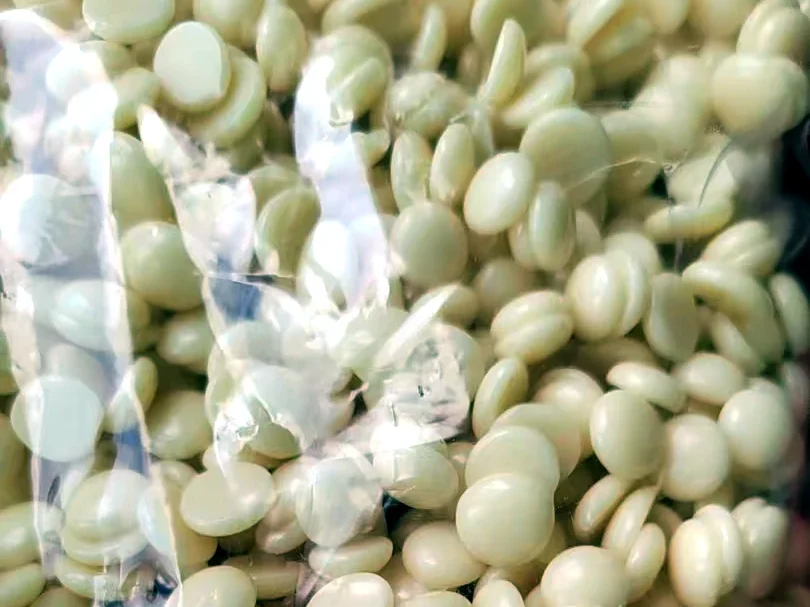
Formula A2 — cream white beads, high elasticity, built to hold short and coarse hair on the first pull.
Where the volume actually comes from
The category is not shrinking. Industry forecasts cited across trade research put hard wax growth at roughly 7.4% a year through 2032, against 4.7% for strip wax — film wax keeps taking share because it is faster per client and needs no muslin (2025 forecasts). In Russia and the CIS that shows up in the treatment room as a preference for polymer and rosin film waxes applied thin, with the therapist working from a pot at the back bar and a small warmer at the chair.
What that means for a distributor is simpler than a market report: the range has to cover a salon that buys 300 g at a time and a chain that buys a kilogram, without asking either of them to change brand.
7.4%
Forecast annual growth for hard wax to 2032, versus 4.7% for soft strip wax (2025 forecasts)
45–50 °C
Working melt window for rosin-free Formula A1 — a range, not a single point
300–1000 g
Three pack sizes that map onto trial, salon and back-bar volumes
A2 is the workhorse, and coarse hair is why
Formula A2 is a premium rosin salon wax in cream white beads. Rosin gives the film its tack, and the cream white base makes it easy to see on the strip and easy to explain at the counter. Its practical advantage is elasticity: the film stretches rather than shatters, so it holds short, dense and coarse hair that a brittle wax leaves behind and forces a second pass over.
Be careful how you frame that in a price list. Coarse hair is an individual characteristic, not a regional one, and the claim that travels is the mechanical one: high elasticity grips short growth, which reduces repeat passes and therefore reduces the cost per treatment. For a salon in Yekaterinburg or Kazan serving clients who book every four weeks, that is the argument that closes. It is also the reason A2 should sit in the middle of the ladder rather than at the top — it is the formula most accounts will reorder.
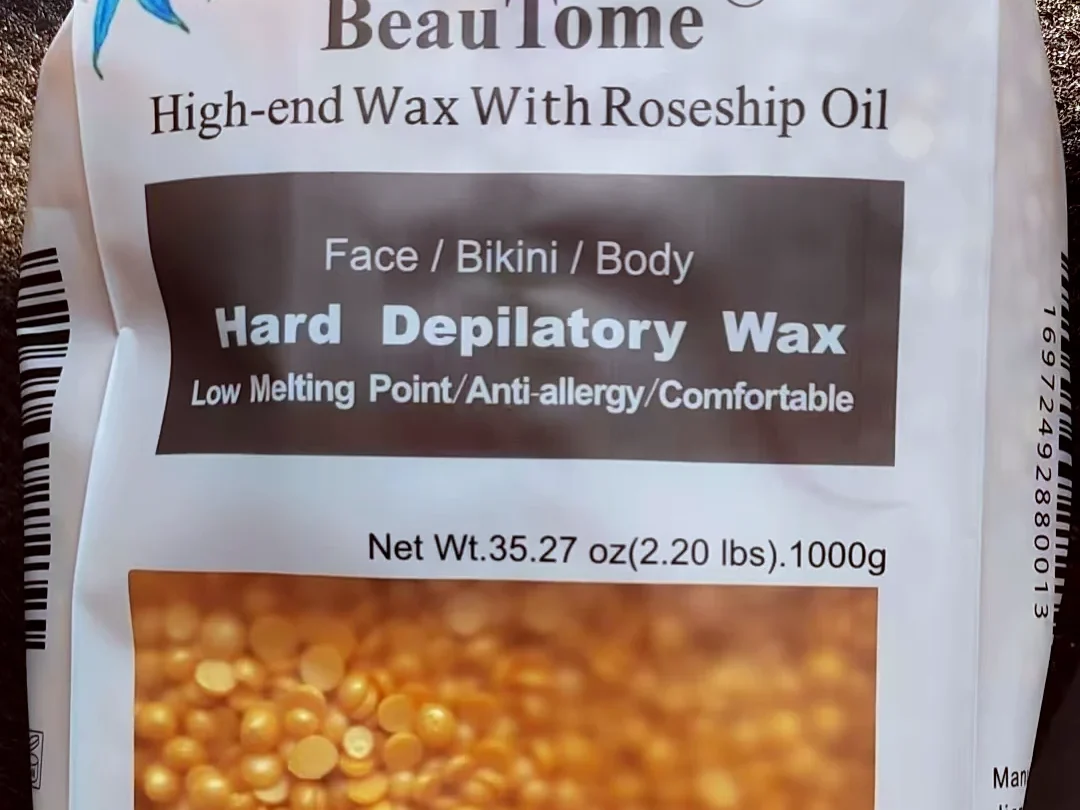
Formula A1 in its standard Gold retail bag — the premium end of the same price list.
A1 is the premium line, and the temperature is the story
Formula A1 is the rosin-free flagship. It works in a 45–50 °C melt window — always quote it as a range, because a single number misrepresents how a wax behaves across a pot, a room and a therapist’s rhythm. A lower working temperature means less sensation on sensitive areas, a longer open time to place the strip, and less risk of the film setting before the hand is positioned.
Color is part of the commercial design, not decoration. Gold and Pink are standard colors, stocked and repeatable. White is a custom color — it is the most demanding of the three to produce consistently and is made to order, so it belongs in a forecast, not in an urgent request. Pack sizes are 300 g, 500 g and 1000 g bags. Position A1 above A2 for sensitive skin, first-time clients and premium menus, and let the color do the shelf work: gold for the signature line, pink for the volume premium line, white for the account that wants to look different from the salon next door.
Below A2 there is still a tier worth carrying. Consumer-Grade Hard Wax is a 55–60 °C film wax for high-turnover, price-led work, and All-Purpose Soft Wax in 450 g cans covers the strip-wax client who has not converted. Four formulas, one brand, three price points — that is a range a distributor can defend.
The pack-size ladder is the margin structure
Most pricing arguments in this category are really pack-size arguments. Packaging, labeling and handling cost per kilogram fall as the bag gets bigger, so the same wax carries a different cost base at 300 g and at 1000 g. A distributor who prices all three per kilogram identically either loses money on the small bag or overprices the large one out of the back bar.
- 300 g — the trial and mobile size. One therapist, one to two weeks of work, and the unit a new account will actually agree to test. Highest cost per kilogram, and legitimately the highest price per kilogram.
- 500 g — the salon standard. This is where the reorder volume sits, and where a distributor should protect the sharpest shelf price.
- 1000 g — the back-bar size for multi-chair studios and chains. Lowest cost per kilogram, sold on continuity rather than on novelty, and usually bought against a monthly standing order.
The mistake to avoid is stocking only the middle. A 300 g bag is a sales tool: it lowers the cost of saying yes, and it converts a skeptical salon into a 500 g account in six weeks. A 1000 g bag is a retention tool: it locks the back bar. Carry all three and the account has somewhere to move without changing supplier.
Unlabeled clear bags, and where the label responsibility lands
The packing format that makes this practical for a distributor is the unlabeled transparent bag: beads in a clear food-grade bag with no printing, at low MOQ, with no print lead time. The distributor or brand applies its own label, in its own language, with its own batch and address. A new line can be on a shelf in the time it takes to print labels rather than the weeks it takes to print bags.
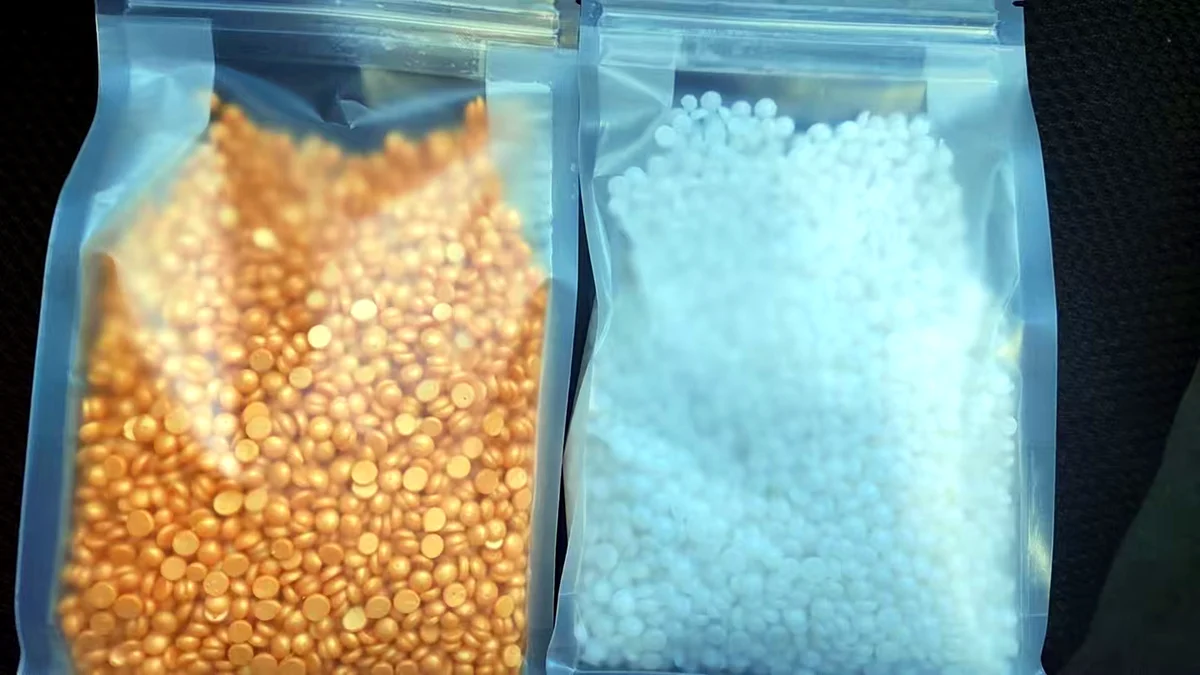
Unlabeled transparent bags — gold and pink beads, ready for the distributor’s own label.
That convenience carries an obligation. Under the EAEU cosmetic framework, TR CU 009/2011, the product needs a conformity declaration or, for categories classified as requiring it, state registration before it is sold — and the entity placing it on the market is the one answerable for the file and the Russian-language labeling. We supply the formulation documentation, ingredient breakdown, batch records and artwork templates; the declaration, the registration route and the label content belong to the importer or brand owner. The practical sequence, the 2025 amendment timetable and the winter logistics side are covered in our earlier guide to the Russian and CIS file.
One storage note that belongs in every distributor agreement: keep beads in a 15–24 °C band, sealed and out of direct light. Below freezing the beads go brittle and the film can crack on application; a cold pallet that comes indoors and is opened immediately will condense. Let it come to room temperature first.
What to check in a sample before you print a price list
Four tests, all doable in an afternoon with a pot and a therapist:
- Pull on short growth. Apply against the grain on a two-week regrowth area and count the passes. One clean pull is the A2 argument.
- Open time. Time from application to the point where the film stops being tacky. A short window punishes a slow therapist.
- Residue. A film that leaves oil needs a post-treatment product; a clean film does not. That difference is a line item in the salon’s cost.
- Reheat behavior. Melt, cool, remelt. A wax that darkens or thickens on the second cycle will generate complaints at the back bar, not at your desk.
Quick FAQ
Which formula should a Russian distributor lead with?
Can we order unlabeled bags and print our own labels?
Is White available as a standard color?
Next step
Tell us which tiers you plan to carry, the pack sizes you want on the first order and whether the bags ship labeled or unlabeled, and we will send the formula sheet with melt ranges, color options and the document pack for your declaration. The range is on the wax formulas product page; the private-label route, including unlabeled bag options, is on the OEM and ODM page. For samples or a distributor quotation, contact Miro Wu, Dedicated Account Manager — email miro.wu@beautome.com or WhatsApp +86 188 1393 3019.