







Wax Heaters for Canadian Salons: A 120 V Circuit Is a Budget
Most wax-room equipment problems in Canada are not equipment problems. They are circuit problems. A treatment room wired for two pots and a towel warmer has a fixed number of watts available, and adding a third pot, a sterilizer and a second workstation does not add capacity — it divides what is already there. Suppliers who quote pot counts without asking what is on the breaker lose the reorder; suppliers who do the arithmetic once keep the account for a decade.
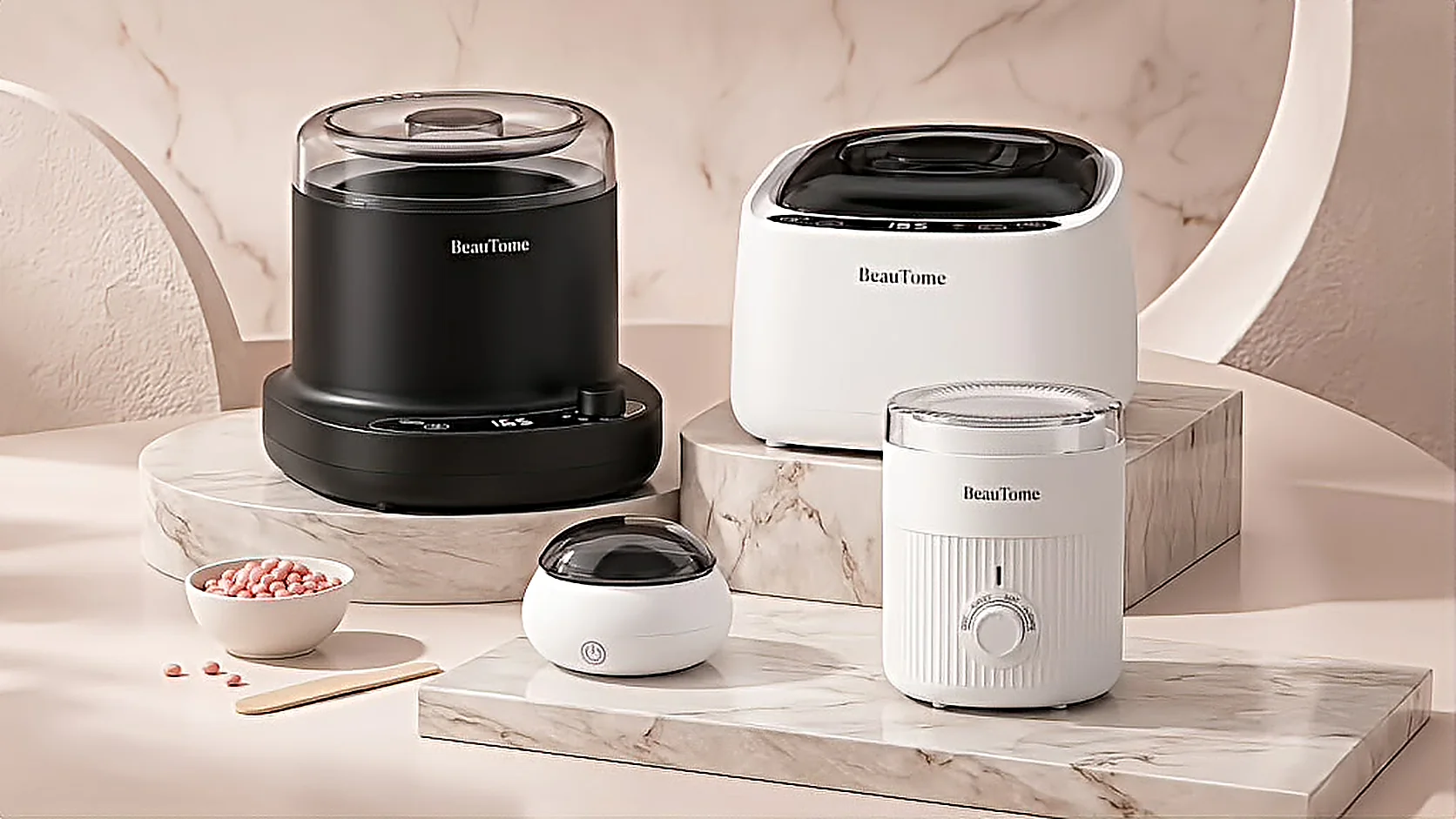
The range runs from a 20 ml graphite unit to an 800 ml single pot and double 400/800 ml stations — all available on 120 V elements for the North American grid.
A mature, owner-operated market
The registry count for April 2026 puts 14,882 beauty salons in Canada, up 2.18% since 2023, with 79.65% single-owner: Ontario 6,482, British Columbia 2,711, Quebec 2,650, and an average salon age of five years and six months (Rentech Digital, April 2026). A separate scrape from August 2026 counts 4,258 dedicated waxing businesses, with Ontario at 39.4% of them, British Columbia 13.7%, Alberta 12% and Quebec 10.2% (POIData, 2026).
Two percent growth is not a land-grab market. It is a replacement market, and replacement is where equipment suppliers actually earn: an owner replacing her second pot has already learned what a drifting thermostat costs in wax and in minutes, and she will pay for the version that does not drift. That conversation is technical, not promotional.
14,882
Beauty salons in Canada, 79.65% single-owner; Ontario 6,482, BC 2,711, Quebec 2,650 (Rentech Digital, April 2026)
4,258
Dedicated waxing businesses, Ontario 39.4% of the total, Alberta and Quebec next (POIData, August 2026)
1,440 W
Usable load on a 120 V, 15 A circuit once you allow 80% for continuous draw — the real budget
Start with the breaker, not the bench
The arithmetic is simple enough to do on the phone, and it is the first thing a Canadian buyer should hear. A 15 A circuit at 120 V gives 1,800 W; planning on 80% of that for equipment that runs for hours leaves 1,440 W. A 20 A circuit gives 2,400 W, so 1,920 W usable. Older buildings — and a lot of converted retail space in Toronto, Montreal and Vancouver is older — are often 15 A, sometimes shared with the hair side of the business.
Now add the room up. Four 450 ml pots at 100 W each is 400 W. A towel warmer is a few hundred more. A sterilizer, a task lamp and a small extraction fan take the rest. That fits one 15 A circuit with almost nothing left over — and it does not fit at all if the same circuit also feeds a dryer or a kettle. Two consequences follow, and both are quotable: the pot count is capped by the breaker, and the way to add capacity without rewiring is to concentrate wattage where the work happens — one larger pot on the busiest station rather than three small ones on three circuits that do not exist.
Ask the salon to photograph the panel schedule or read the breaker rating before you quote. It takes them two minutes and it prevents the most expensive kind of return.
120 V is not a plug change
The single most common sourcing error from European and Asian factories is treating 120 V as a cord variant. It is not. Power goes as the square of voltage across a fixed resistance: a 100 W element wound for 230 V, wired to 120 V, delivers roughly a quarter of its rated wattage — a pot that never melts properly, which the salon will report as “defective” rather than “wrong voltage”.
A real 120 V SKU means a different heating element, a different cord set and a nameplate that says so, and the current is roughly double what the same wattage draws at 230 V, which is why the cord and the plug are part of the certification rather than an accessory. On the purchase order, write the voltage and the wattage of the element, not just “North American plug”. Canada also runs at 60 Hz, so any controller with a time base or a fan should be confirmed on 60 Hz data rather than assumed.
Which mark, and whose name is behind it
Canada has no single federal electrical mark. Acceptance is enforced provincially, and each regulator requires a mark from a body accredited by the Standards Council of Canada: Ontario through the ESA under O. Reg. 438/07 (Rule 2-024), Quebec through the RBQ under Part V of the construction code, British Columbia through Technical Safety BC, Alberta through the Safety Codes Council. In practice that means a CSA, cUL or cETL mark, tested to the CSA C22.2 series — C22.2 No. 60335-1 for household and similar appliances.
Three details decide whether the file survives contact with an inspector. The mark must be on the product, not only on the carton. It must carry the “c” designation for Canada — a US-only UL listing does not satisfy a provincial authority. And the mark belongs to the manufacturer’s listing, which is maintained by periodic factory inspections, so a private-label buyer inherits a listing rather than owning one. Field evaluation exists for uncertified equipment already on site, but it is project-specific and expensive; it is not a market-entry strategy. If you are private-labeling, confirm in writing that your branding stays inside the certified model description — a new housing or a different element is a new listing.
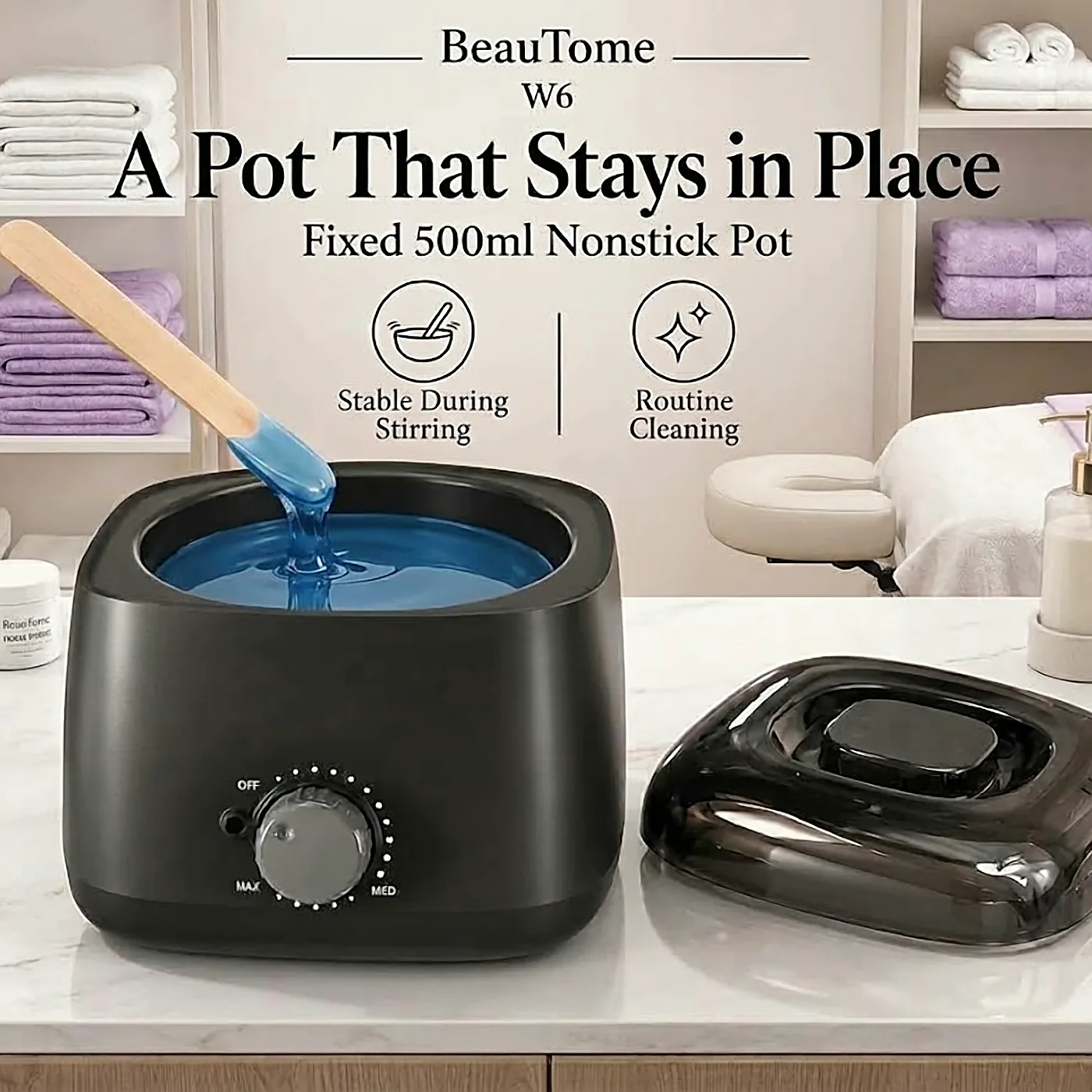
A 450 ml pot holds about 400 g of beads — one technician’s working day, which is why it is the unit most Canadian rooms standardize on.
Two languages, and one province that means it
Federal rules require bilingual English and French labeling and instructions, and Quebec enforces French presentation more strictly than the rest of the country: the language rules adopted under Bill 96 took effect on 1 June 2025, with a transition period to 1 June 2027 for certain existing products. A 2,650-salon province is not a rounding error, so the practical answer is one bilingual manual and one bilingual carton for the whole country. On the machine, keep the marking language-neutral — model, voltage, wattage, frequency, serial number — and let the manual carry the words.
Winter is a scheduling problem, not a product problem
Wax and equipment both arrive cold in Canada between December and March, and the room they arrive into is often cooler than a European factory assumes. Two habits prevent most cold-weather complaints. Let a unit sit at room temperature for a few hours before it is first powered, so condensation inside the housing can clear. Then measure the cold-start time in the actual room rather than the showroom: a 100 W pot bringing 400 g of beads to working temperature in an 18 °C room takes measurably longer than in a 23 °C one, and in January that difference lands in the first appointment of the day.
The fix is operational: hold the treatment room at 20–22 °C, switch pots on 30 minutes before the first client, and keep beads in a closed container away from exterior walls. A film wax formulated at 55–60 °C is less sensitive to a cold room than a 45–50 °C rosin-free hard wax, which is worth saying out loud when a studio runs both.
The pot ladder that fits a Canadian room
The range starts at a 20 ml graphite unit for patch tests and brow work, then 180 ml and 250 ml for a second treatment type or a small station, 400 ml and 450 ml for a main working pot, 500 ml with a digital display where the temperature has to be read rather than guessed, 800 ml for a high-volume room, and double 400/800 ml stations where two waxes at two temperatures run side by side.
Two temperature set points is the argument that sells the second pot, and it is arithmetic rather than opinion: a 45–50 °C rosin-free hard wax and a 55–60 °C film wax cannot share a pot setting, so a studio offering both needs two pots or accepts a fifteen-minute changeover between clients. The 450 ml single-knob unit — 100 W, 30–125 °C, no display — is the entry point for a room that runs one wax. Chip-controlled models are the upgrade: a bimetallic thermostat swings around its set point by several degrees, and that swing is wax burned on the rim every morning.
Five lines on the purchase order
- 120 V, 60 Hz, and the element wattage — not “US plug”.
- Certification mark required: CSA, cUL or cETL with the “c” designation, applied to the product.
- Bilingual English/French manual and carton for the whole country.
- Spare parts at 1:10 of the fleet — 120 V heating element, inner pot, controller, knob. A dead pot in a single-owner salon is a cancelled day, not a delay.
- Cold-start minutes at 18 °C and 22 °C, measured, not estimated.
Full specifications for the range are on the wax heaters page, and the private-label route is described under OEM and ODM.
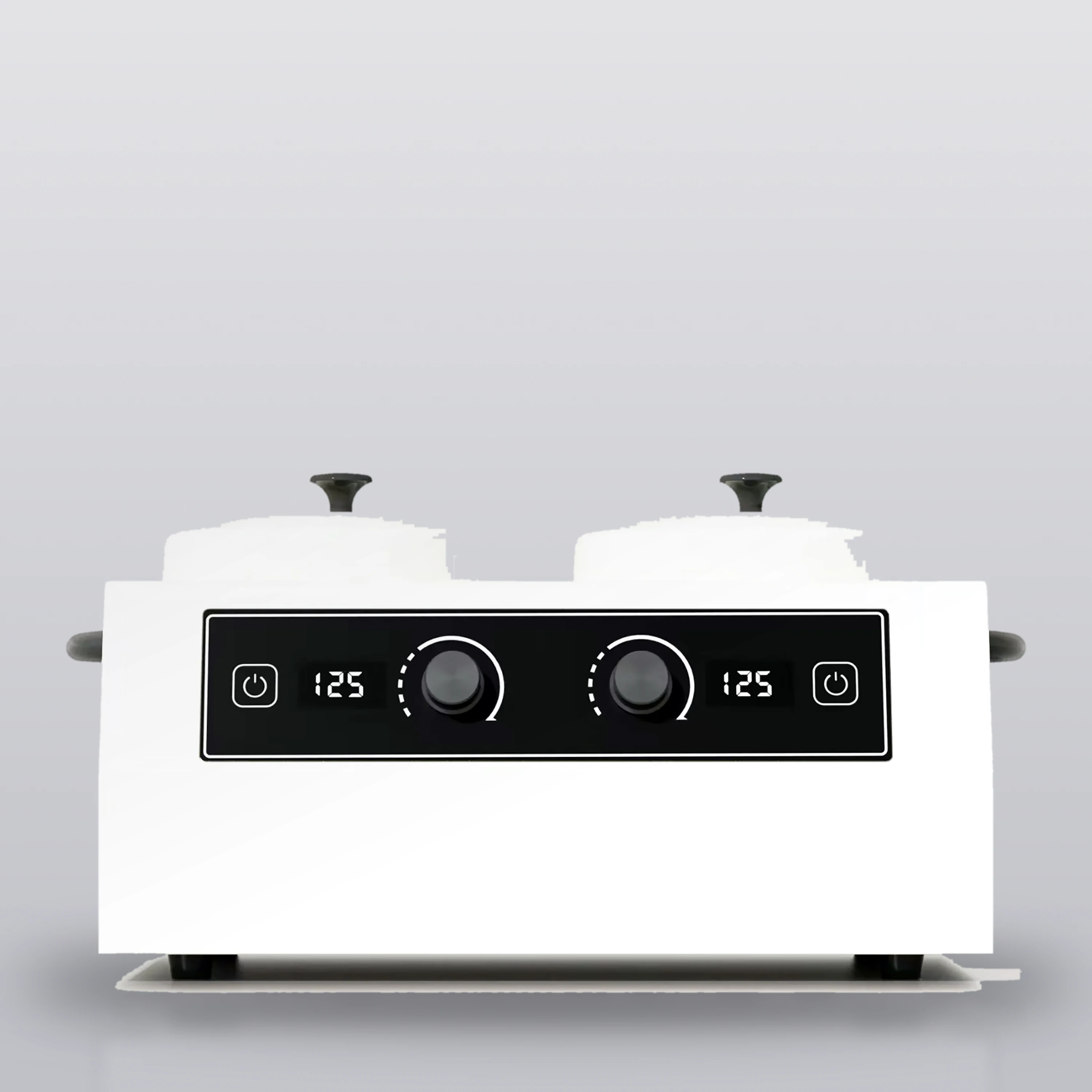
A double station solves the two-temperature problem on one circuit footprint — which is usually the constraint, not the bench.
Quick FAQ
Can we ship the 230 V model and let the salon use a step-up transformer?
Is a UL listing enough for Canada?
How many 450 ml pots fit on one 15 A circuit?
Next step
Send the breaker rating for the treatment room, the number of stations and the waxes you plan to run, and we will come back with a pot count, the element wattage for a 120 V build and the spare-parts list for the first order. Samples ship in small quantities so a room can be tested before a fleet decision. For a quotation, contact Miro Wu, Dedicated Account Manager — email miro.wu@beautome.com or WhatsApp +86 188 1393 3019. More market notes sit on the BeauTome blog.