




Wax Heaters for German and Austrian Salons: Three Registration Numbers Before the First Sale
A registry scan from April 2026 counts 13,998 beauty parlours in Germany and 1,355 beauty salons in Austria, and nearly nine in ten of the German ones are single-owner businesses. The CE file is the ticket into this market, but it is not what decides whether your heater stays on a shelf. That is decided by three registration numbers — packaging, electronics and, if you ship the battery version, batteries — none of which appear on a quotation until the distributor asks for them and the marketplace blocks a listing.
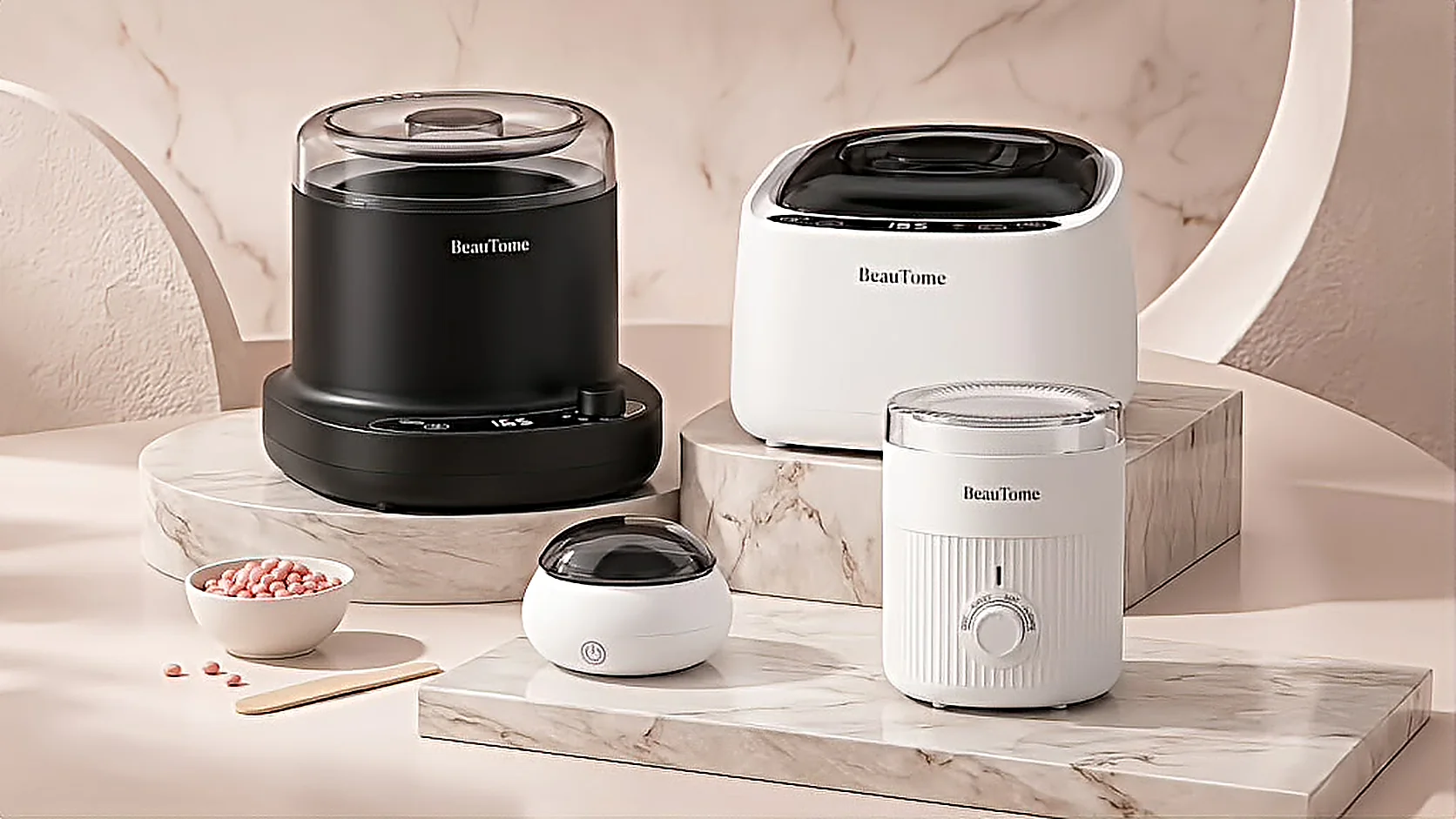
One platform, ten capacities: the range a German distributor expects to see before it talks exclusivity.
Who buys, and what they actually ask
The German market is broad and owner-run. Rentech Digital counted 13,998 beauty parlours in Germany as of April 2026, up 2.56% since 2023, with 88.52% under single ownership and an average business age of five years and two months. North Rhine-Westphalia alone holds 4,060 parlours, Bavaria 2,451 and Baden-Württemberg 1,282 — a geography that matters for a distributor’s route planning, not for the product itself. Across the border, Austria adds 1,355 beauty salons on the same socket and the same language (Rentech Digital, April 2026).
The buyer is the owner, and the questions are practical. Does the pot hold its temperature or swing, because a swinging thermostat burns a caramelized film onto the wax that a client can smell. How long from a cold morning room to a working melt. Can the salon run the 45–50 °C rosin-free wax and the 55–60 °C film wax in one setting or does it need two pots. And, increasingly before all of that: are you registered — because a distributor who lists an unregistered product in Germany is personally on the hook for every obligation that follows.
13,998
Beauty parlours in Germany, +2.56% since 2023, 88.52% single-owner (Rentech Digital, April 2026)
1,355
Beauty salons in Austria on the same 230 V type F socket and the same language (Rentech Digital, April 2026)
3
Registration numbers a German listing lives on: LUCID, WEEE-Reg.-Nr. and — if there is a battery — a battery register entry
Number one: the packaging registration (VerpackG / LUCID)
Any company that places packaged goods on the German market commercially must register with the Central Agency Packaging Register (ZSVR) through the LUCID portal and participate in a dual system for the packaging volumes it introduces — product packaging, shipping cartons and fill material alike. This applies to the importer and to anyone selling under their own brand; it is not limited to consumer retail. The two consequences that reach your order: platforms are legally required to check the LUCID number, so a listing without one gets blocked; and non-compliance can cost up to €200,000 in fines alongside the sales stop. Registration itself is quick — the recurring cost is the system participation fee, which scales with packaging weight.
Number two: the electronics registration (ElektroG / WEEE)
A plug-in wax heater is electrical equipment, and under the German ElektroG the producer must be registered with Stiftung EAR and hold a WEEE registration number before the first sale. A manufacturer outside Germany — which, for a private-label brand, includes the brand itself, because selling under your own name makes you the producer in the eyes of the law — must appoint an authorized representative based in Germany to hold the registration. The obligations run through the product’s life: the crossed-out wheeled bin marking on the product, monthly quantity reporting, financing take-back for equipment sold to private households. Compliance advisories consistently report the same enforcement pattern as for packaging: marketplaces block listings without a valid WEEE number, and fines can reach six figures.
For a salon-grade heater the B2B route narrows some of this — but the same model usually ends up on a retail shelf or a marketplace, so prudent German importers treat the B2C obligations as applicable and price them in. Register before the container ships, not after the listing goes live.
Number three: only if there is a battery (BattG)
Our wax heater line is corded and the standard configuration ships without a battery, which is one reason German importers like it. If a buyer adds the portable battery-powered option for mobile work, a third register entry under the German battery law attaches to that SKU: battery take-back and financing obligations, marking on the battery itself, and — as compliance advisories report for 2026 — a shifted producer-responsibility structure with a lowered volume threshold. Keep the battery version as a clearly separate SKU with its own registration trail, and say so on the purchase order. A standard corded heater carries none of it.
The mark that is voluntary but expected: GS
Alongside the CE file, German trade channels carry a long habit: the GS mark (“Geprüfte Sicherheit”), tested against the EN 60335 household-appliance safety series and issued under the Product Safety Act framework. It is voluntary. Distributors and retail buyers still treat it as a de facto entry ticket for plug-in appliances sold to end users, because it signals third-party testing of exactly the risks a heater presents — the housing temperature, the cord, the thermostat failure modes. Decide before the rating plate and carton are tooled whether the target channel expects GS; adding it after the fact means a new plate and a new carton print.
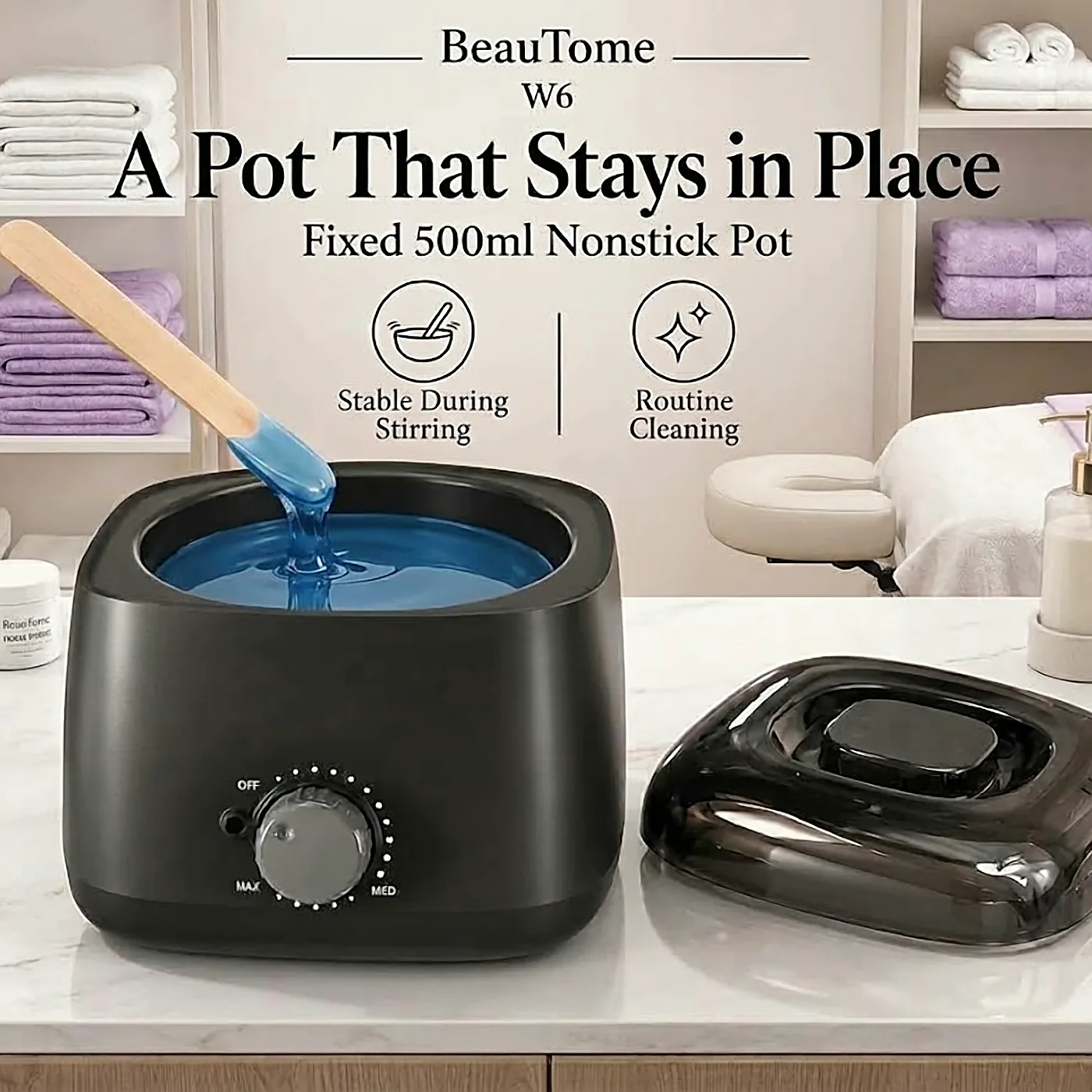
Chip-controlled heat versus a swinging bimetal thermostat — the test a German salon owner runs with wax, not with a meter.
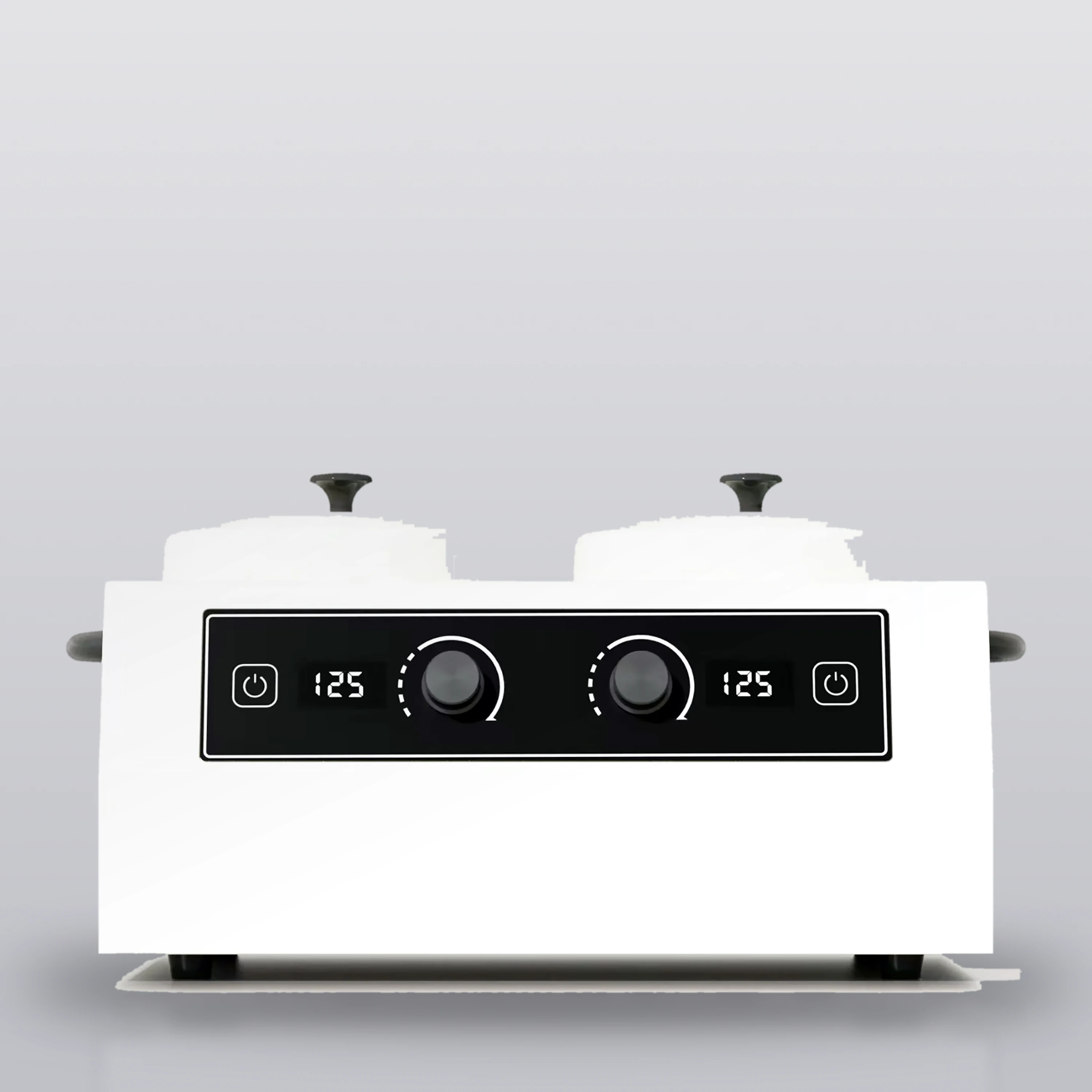
Two working temperatures, one station: the double-pot unit is the answer most German studios settle on.
What the salon owner tests with wax, not a meter
The technical evaluation in a German or Austrian studio is refreshingly concrete. Fill the pot, switch it on from a cold room, and watch three things: the heat-up curve (a 450 ml workhorse should reach a working melt without a long morning wait), the stability (chip control holds the setpoint; a bimetal thermostat oscillates and bakes a burnt film onto the wax that has to be skimmed off daily), and the first-cycle overshoot (a spike past the setpoint right after heat-up is what discolors a fresh fill). Two working temperatures — a 45–50 °C rosin-free wax and a 55–60 °C film wax — mean two pots or a double station; one dial that tries to serve both serves neither well.
The capacity ladder then maps to the salon type: the 20 ml graphene pot for detail work, the 180 ml mini for mobile kits, 250 ml and 400 ml mid pots, the 450 ml workhorses (including the BWW5K entry model with its single 30–125 °C dial), the 500 ml digital model for studios that quote temperatures to clients, the 800 ml for back-bar volume, and the double-pot station for treatments that switch waxes mid-service. Both markets run 230 V, 50 Hz on Schuko type F sockets, so one cord set serves the whole DACH order. Quote spare parts — heating elements, inner pots, knobs, controllers — at roughly one set per ten units in the first order; it is the line that turns a one-time buyer into a reordering distributor.
What goes on a DACH order
Seven lines cover it: the model number as it appears on the rating plate; the cord set (230 V, 50 Hz, Schuko type F); confirmation of who holds LUCID and the WEEE registration — by law that is the importer or the own-brand company, never the overseas factory; the GS question answered in writing before tooling; German-language manuals and safety text; the battery decision (standard is AC, no battery; the portable version is a separate SKU with its own registrations); and the spare-parts ratio. German-language documentation is not a courtesy in this market — it is what the distributor’s own compliance file and customer service assume.
The range and specifications sit on the wax heater product page, the private-label route is set out under OEM and ODM, and the entry 450 ml model has its own detail page in the same range.
Quick FAQ
CE marking is on the product — is that enough for Germany?
We are a brand importing under our own name. Who is the producer under German law?
Is the GS mark required for a wax heater?
Next step
Tell us the capacities your first order needs and which channel — professional distribution, retail or marketplace — you are listing into, and we will send the full document set, the registration checklist and a demo unit. Sample orders ship from three to five pieces. For a quotation, contact Miro Wu, Dedicated Account Manager — email miro.wu@beautome.com or WhatsApp +86 188 1393 3019. More market notes sit on the BeauTome blog.