






Wax Heaters for British Salons: CE Still Counts, the Plug Is a Separate Law
Every few months a British buyer asks for a UKCA certificate, and every few months the invoice includes a test program nobody needed. Since October 2024 the position in Great Britain has been the reverse of what most supplier websites still claim: for electrical equipment, a CE-marked product can go on the market as it is, and UKCA is an option rather than a gate. What does stop shipments is smaller and much less discussed — the plug, the importer’s block on the carton, and whichever producer register the brand forgot to join.
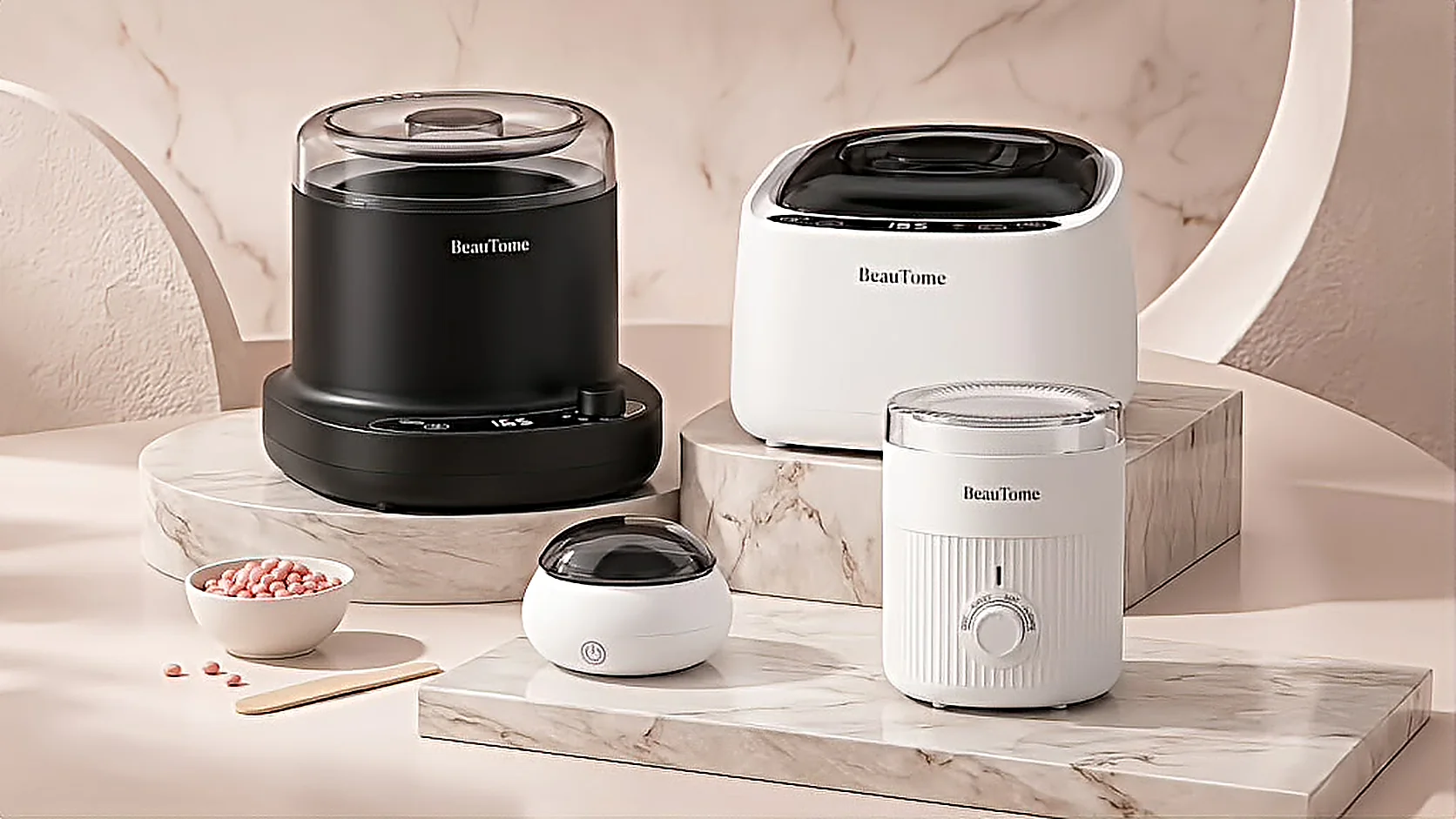
Nine models from 20 ml to 800 ml plus twin-pot stations — the UK order is usually a mix, not a single SKU.
The mark most exporters overpay for
The Product Safety and Metrology etc. (Amendment) Regulations 2024 came into force on 1 October 2024 and deleted the sunset date on CE recognition across the main product-safety regimes. The government’s own sector guidance now states it plainly for electrical equipment: businesses have the flexibility to use UKCA or CE marking to place goods on the market in Great Britain. The same sentence appears for electromagnetic compatibility. For a wax heater — an appliance under the Electrical Equipment (Safety) Regulations 2016 and the EMC Regulations 2016 — a valid CE file with the technical documentation behind it is enough.
Three details keep that statement honest. First, UKCA has not disappeared: it remains a lawful route, both marks may sit on the same product, and if a buyer wants UKCA you can supply it without re-engineering anything. Second, placement rules still bite for anyone using the mark: until 31 December 2027 the UKCA mark may be applied on a label or accompanying document, and from 1 January 2028 it must be affixed to the product itself. Third, Northern Ireland is not Great Britain — it follows EU product rules under the Windsor Framework, where CE applies and UKCA alone does not.
One more piece of housekeeping: the Product Regulation and Metrology Act 2025, in force since July 2025, is an enabling act. It lets ministers change product rules through secondary legislation, which means open-ended CE recognition is a policy position rather than a permanent fixture. For a 2026 order it is the correct basis; for a five-year supply agreement, put the marking route in writing and revisit it annually.
1 Oct 2024
Date the CE sunset date was deleted for electrical equipment and EMC in Great Britain (SI 2024/696)
1 Jan 2028
From this date a UKCA mark, if used, must be affixed to the product rather than a label or document
13 A
BS 1363 fused plug, 230 V 50 Hz — required by a 1994 regulation that sits outside CE entirely
The plug is a separate law, not a CE annex
This is where British shipments actually fail. The Plugs and Sockets etc. (Safety) Regulations 1994 require that electrical appliances ordinarily intended for domestic use, rated at 200 V or more and drawing no more than 13 A, are supplied fitted with an approved BS 1363 plug. The plug itself must be approved by a notified body and carry the approval mark and license number — the BSI Kitemark and the ASTA mark are the ones buyers look for — and it must contain a fuse to BS 1362 of the correct rating for the appliance.
Two practical consequences. The plug is not a CE matter at all, and the IET’s own guidance is blunt that a CE mark printed on a plug claiming BS 1363 conformance is a reliable indicator of a counterfeit. So the moulded cord set on a wax heater needs its own documentation line and its own supplier, separate from the appliance file. And the fuse rating has to match the load: a 100 W heater on a 13 A fuse is not dangerous, but it is the sort of inconsistency a trading standards officer notices and a retail buyer uses to reject a pallet. Put the plug, the fuse rating and the approval license in the purchase order as three separate fields.
The supply side is 230 V at 50 Hz, which is the same build as most of Europe — only the plug mould changes. That is why a UK order and an Irish or Dutch order can share a production run, and why a distributor consolidating both should say so at quotation stage rather than discover it at the packing list.
Who holds what after the sale
A British importer carries duties that no factory can discharge on their behalf. They must be identifiable: the importer’s name or trademark and a contactable address go on the product or its packaging. They must hold the declaration of conformity and be able to put the technical documentation in front of the Office for Product Safety and Standards for ten years after the last unit is placed on the market. And if the importer puts the product on the market under their own name — which is exactly what a private-label buyer does — they take on the manufacturer’s obligations in full, not a subset of them.
Then come the registers that have nothing to do with product safety and everything to do with getting paid. UK WEEE producer registration is separate from the EU scheme, with its own registration, data reporting and fees; British packaging extended producer responsibility is a third regime again. A distributor selling into both the EU and Great Britain is running two schemes, not one, and a salon chain buying 40 pots for a rollout will eventually ask who is registered for what. Answering that question with a document beats answering it with an opinion.
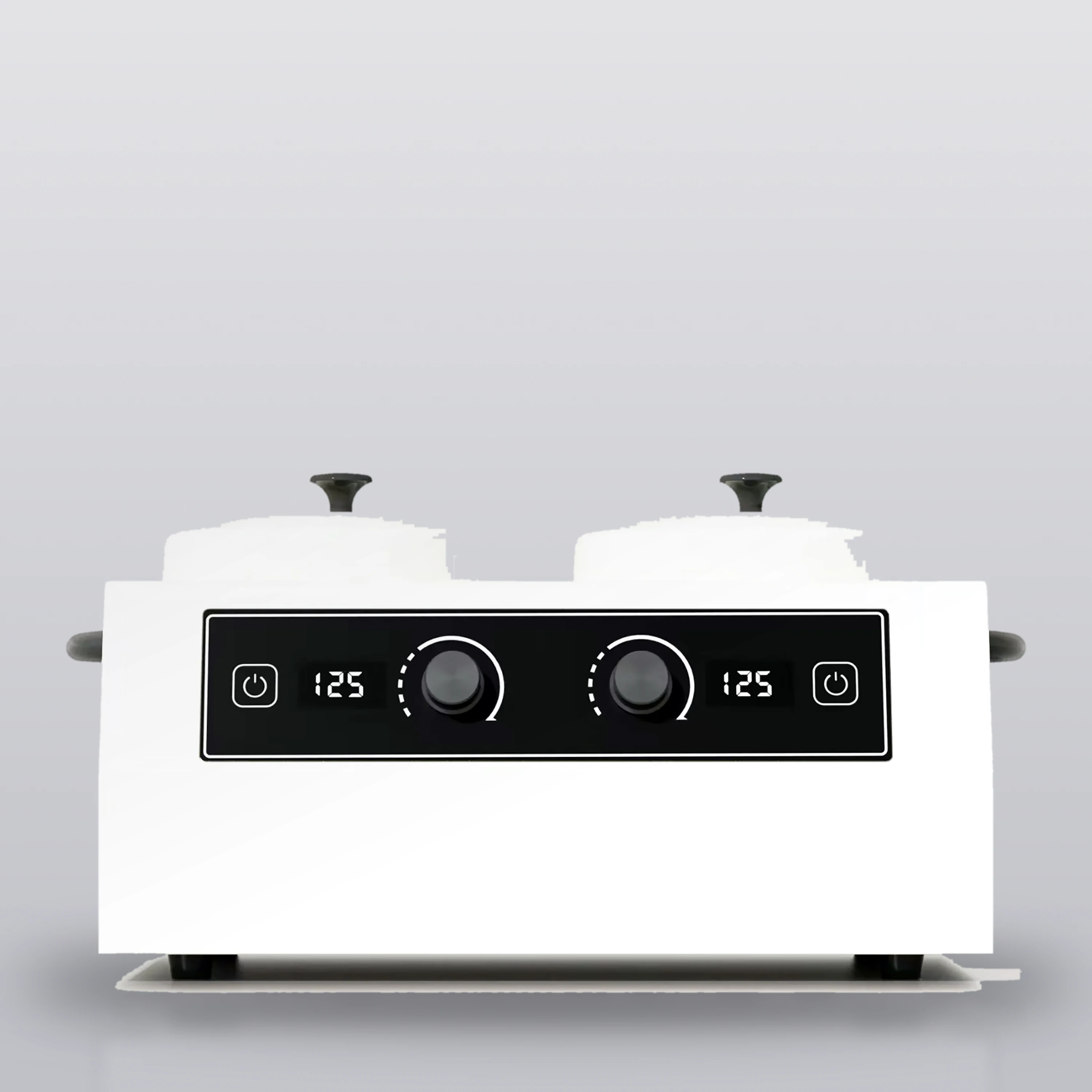
Two pots, two working temperatures — the configuration British chains standardize on when a room runs both a low-temperature hard wax and a film wax.
The quotation line that decides the second order
Wax heaters do not fail dramatically. They drift. A bimetallic thermostat widens its swing over a couple of years, the pot starts running hot at the rim and cool in the middle, and the technician compensates by turning the dial up — which is where scorched wax, snapped strips and rework begin. A chip-controlled unit holds its set point far more tightly and, more importantly, tells you what it is doing. On a salon floor that difference shows up as wax consumption, not as a repair ticket, which is why it is difficult to sell on a specification sheet and easy to sell after a month of use.
When a heater does need attention, the question is whether it can be repaired in the building or has to leave it. Specify the answer before the first order: which components are field-replaceable, whether the heating element and the inner pot are separate line items, and what the distributor is expected to hold. Our standing recommendation is a spares kit at roughly one per ten units — elements, inner pots, controllers and dials — held by the distributor rather than the salon, so a failure costs a day instead of a fortnight. On a 230 V build those parts are common across most of Europe, which keeps a UK distributor’s stock turn reasonable.
The capacity ladder is the other half of the same conversation. A brow bar runs a 20 ml pot; a single treatment room is usually served by 180 ml or 250 ml; a busy waxing room sits at 400–500 ml; a chain standardizes on 800 ml or a twin unit. A 450 ml pot holds roughly 400 g of beads, which is about one technician’s day. The entry-level BWW5K — 450 ml, 100 W, a single dial across 30–125 °C with no display — is a genuine workhorse for an experienced operator and a poor first purchase for a new one, and saying so out loud tends to win the account.
What a British order should contain
Model numbers with the capacity ladder spelled out; the voltage and frequency line; the cord set with plug standard, fuse rating and approval license; the marking route (CE with the technical file, UKCA on request); the importer’s block and the English-language instructions; the spares kit ratio; and the registration question — WEEE and packaging — settled in writing between importer and brand. Sample quantities are small by design: white-label units start at three to five pieces with single units available for evaluation, and full custom branding starts at 300–500 units.
The full range is on the wax heaters page, the branding ladder is under OEM and ODM, and capacity planning notes for other markets sit in the blog archive. If the salon also retails consumables, the wax formulas range is worth putting on the same quotation.
Quick FAQ
Do I need UKCA to sell a wax heater in Great Britain in 2026?
Which plug must a 230 V wax heater be fitted with for the UK?
Who is responsible for WEEE and packaging registration?
Next step
Send the model mix you are considering, the plug and fuse details your importer wants, and whether the first order is a sample set or a shelf. We will return a quotation with the marking route stated, the cord set specified per destination, and a spares kit priced alongside. For a quotation, contact Miro Wu, Dedicated Account Manager — email miro.wu@beautome.com or WhatsApp +86 188 1393 3019.