






Hard Wax Range Planning for US Distributors: Three Tiers and the Label You Legally Become
A US distributor’s hard wax range fails for two reasons that have nothing to do with the wax. The first is a range with four products that all do the same job, so the sales rep cannot explain why a salon should buy two. The second is a label: the moment your name goes on the bag, you are the responsible person under MoCRA, and the listing, the safety file and the adverse-event clock become yours. Both decisions are made before the first purchase order, and both are cheaper to get right the first time.
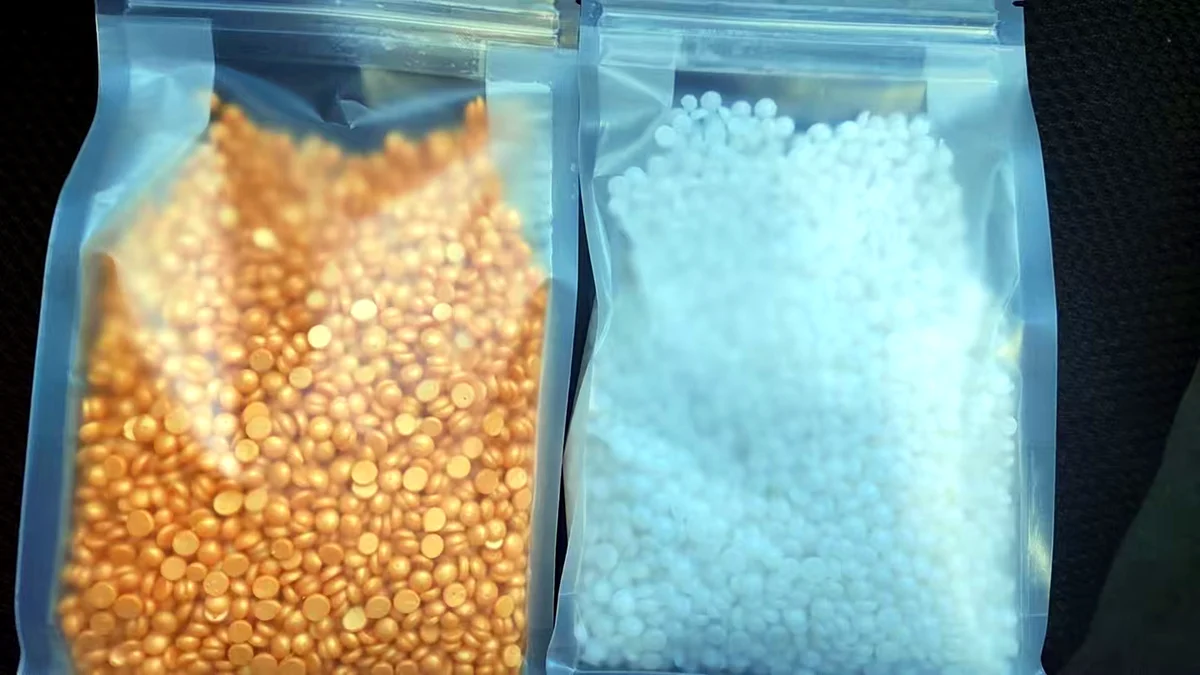
Gold and pink bead in unlabeled transparent bags — the distributor applies the label, so no print run sits between the order and the shelf.
A category that is led by stripless wax
The US remains the single largest national market for hair removal wax, at an estimated 21.6% of global demand in 2026, according to Market Growth Reports (September 2026), in a global category of about USD 957.9 million expected to reach roughly USD 1.43 billion by 2035. The same analysis puts hot wax — the stripless film type — at about 55.4% of product demand, with professional salon environments still accounting for well over half of waxing activity, and offline distribution at roughly 58% of US demand.
Two things follow for a distributor building a range. Stripless is not a niche; it is the majority of the professional shelf, so the range has to be anchored there rather than in strip wax with a film wax as an afterthought. And because professional use dominates, the buying decision is made by technicians who judge a wax on how it pulls, not on how it smells — which is why a range built on formulation differences sells, and a range built on colors does not.
21.6%
Share of global hair removal wax demand held by the US in 2026 (Market Growth Reports)
55.4%
Of demand is hot (stripless) wax — the professional shelf, not the niche
120 days
To list a new cosmetic with FDA after first sale, under MoCRA
Three tiers, four SKUs, one sentence each
The test of a range is whether a rep can describe each SKU in one sentence without comparing it to the others. Four products do that here, and they map to four different conversations in the treatment room:
- Tier 1 — volume and back bar: Consumer-Grade Hard Wax. A 55–60 °C film wax that strips without a cloth strip. One sentence: the wax a busy salon buys by the kilo and does not think about. This is the price anchor of the range and the product that wins the reorder.
- Tier 2 — grip: Formula A2. A premium rosin formula in Cream White beads, built with elasticity to hold short, coarse and dense hair in one pass. One sentence: the wax for the client who comes in at three weeks with stubble the last wax could not lift.
- Tier 3 — sensitivity: Formula A1. The rosin-free flagship, worked in a 45–50 °C window, in standard Gold and Pink, with White as a custom color produced to order. One sentence: the wax for first-timers, sensitive skin and clients who react to rosin.
- The strip line: All-Purpose Soft Wax, 450 g cans. One sentence: what you sell to the esthetician who still works with cloth strips, and what keeps her in your catalog.
That is a range with a job for each SKU: volume, grip, sensitivity, and the legacy strip client. It also gives the rep a diagnostic script — when a salon complains about lifting, the answer is A2; when it complains about redness, the answer is A1; when it complains about cost per service, the answer is the consumer-grade film wax.
The second axis is bag size, and it is where margin hides
Bead comes in 300 g, 500 g and 1,000 g bags, and the three sizes are not a packaging preference — they are three different customers. 300 g is a trial and mobile size: a technician can carry it, a salon can test a formula without committing shelf space, and a distributor can seed twenty accounts for the price of a pallet. 500 g is the salon workhorse, roughly the weekly draw of a single-pot room. 1,000 g is back-bar stock, bought by the room that melts continuously and by the chain that kits out a new site.
Carry all three and the range is twelve SKUs deep, which is too many for a first year. The usual sequence is to launch 500 g across tiers 1–3, add 300 g as the sample and mobile size once the range is proven, and bring in 1,000 g only for accounts that have demonstrated weekly volume. Handling cost per kilo falls as the bag gets larger, so the 1,000 g price can carry a thinner margin per kilo and still be the most profitable line on the invoice.
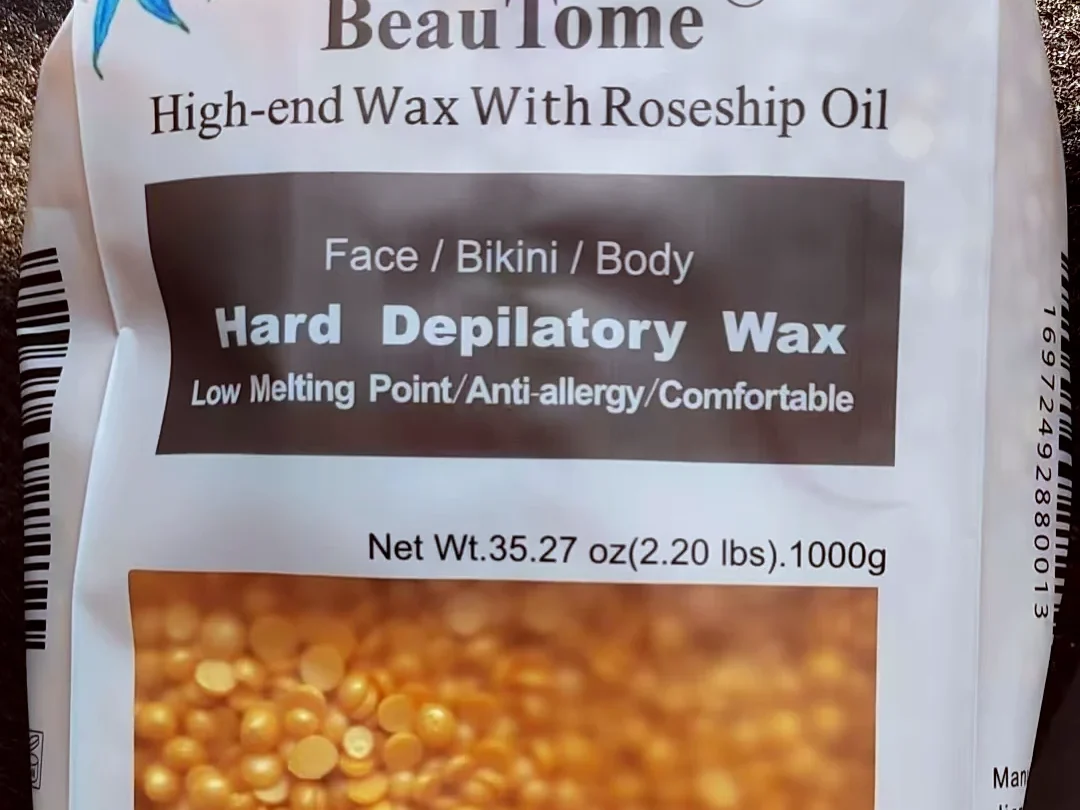
Gold beads in a retail bag. The bag is also a regulatory document: whoever is named on it carries the MoCRA obligations for that product.
The label decision, stated plainly
Under the Modernization of Cosmetics Regulation Act of 2022, the responsible person is the manufacturer, packer or distributor whose name appears on the label. That is the whole rule, and it has a direct commercial consequence for a distributor choosing between finished retail bags and unlabeled ones:
- Your name on the bag makes you the responsible person. You list the product with FDA within 120 days of first sale and update the listing annually; you hold the safety substantiation file; you report serious adverse events within 15 business days; you keep records for six years, or three for a qualifying small business. Your label also needs a US contact route for adverse-event reports, a requirement in force since 29 December 2024.
- Our name on the bag keeps the listing and the safety file with the party named — but a foreign facility still has to register with FDA, renew every two years, and name a US agent. Registration and listing are separate workstreams, and neither replaces the other.
Two clarifications save arguments later. FDA has stated, most recently in September 2026, that it does not issue certificates or verification documents for cosmetic facility registration or product listing — so a supplier who offers an “FDA certificate” is offering something that does not exist, and a buyer who asks for one is asking the wrong question. And the small-business exemption from registration and listing has product-type exceptions, so it should be checked against the specific product rather than inferred from a first order size. Fragrance allergen labeling remains pending as of October 2026; build your label template so an ingredient line can be amended without a redesign.
What the unlabeled bag actually buys you
The unlabeled transparent bag removes printing from the critical path. There is no artwork approval, no plate or cylinder, no minimum print run, and no four-to-six week gap between the purchase order and a shippable carton — the beads arrive in a clear bag and the label is applied on your side, at your quantity, when you need it. For a distributor testing a market, that is the difference between a three-month experiment and a nine-month commitment.
It does not remove the regulatory work. It moves it. If you label, you are the responsible person, so the listing, the safety file and the adverse-event route are yours to run — and the label content, including the US contact details, is your design. Our role is to supply the formula, the ingredient declaration and the batch documentation that your file needs, and to say clearly which party is which. Private-label orders on A1 are low MOQ, and a sample can be shipped before you commit to a bag size.
White is the exception to the lead-time logic: it is a custom color produced to order and it carries the longest production window in the range. Plan it as a second-phase SKU, not as the product you launch with. The wax formulas page lists all four lines with their working temperatures, and the OEM and ODM page covers the branding route from clear bag to printed retail pouch.
Quick FAQ
If I buy unlabeled bags and print my own label, am I the responsible person?
How many SKUs should a first-year US range carry?
Does the factory’s FDA registration cover my brand’s listing?
Next step
Tell us which tiers you intend to launch, which bag size you want to start with, and whether your label goes on the bag or ours. We will come back with a range plan, the ingredient and batch documentation your file will need, and a sample shipment so your technicians can judge the pull before you commit to a pallet. Contact Miro Wu, Dedicated Account Manager — email miro.wu@beautome.com or WhatsApp +86 188 1393 3019.