







Hard Wax for Russian and CIS Distributors: Cold Weather, the EAC File and a Winter-Proof Range
Two questions come up in every serious conversation with a Russian or CIS hard wax buyer, and neither of them is about price. The first is what happens to a bag of beads between a factory in a temperate climate and a warehouse in a city where the ground freezes for four months. The second is what has to be in the customs file after the amendments to the Eurasian cosmetics regulation took effect on 24 December 2025. This article answers both, then sets out the range that fits the region.
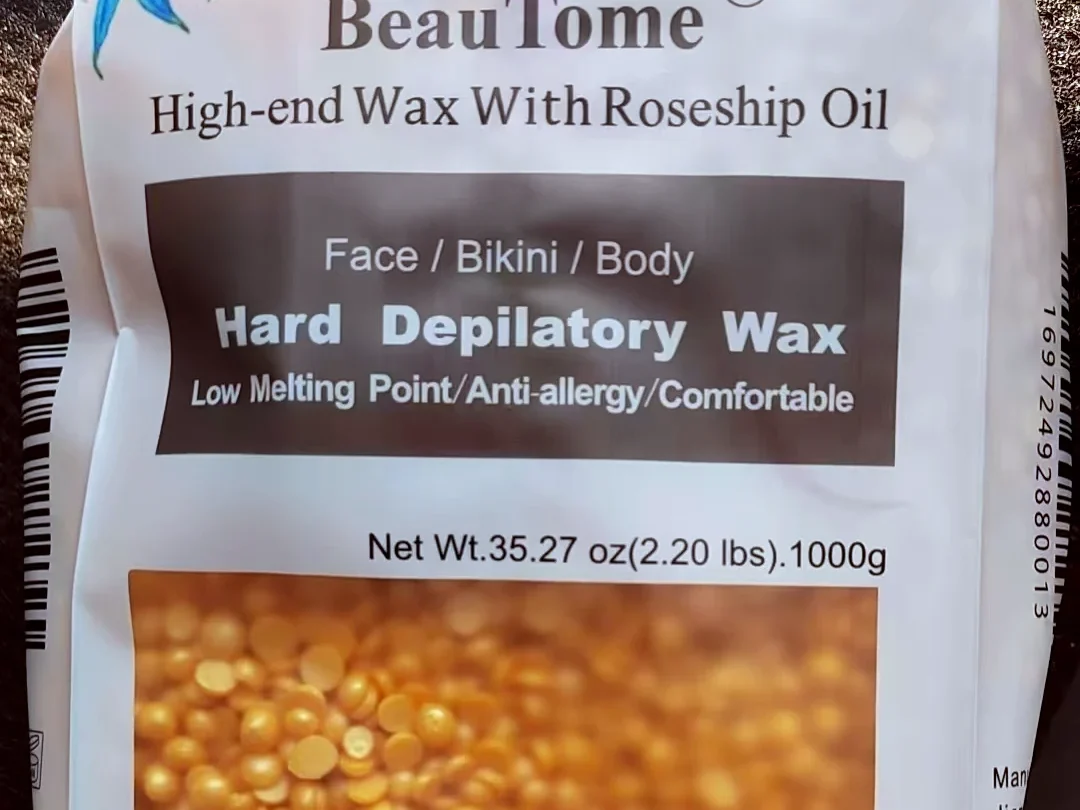
Formula A1 rosin-free, 45–50 °C working window — Gold and Pink as standard colors, White made to order.
Cold is not the enemy. The swing is.
Hard wax is not fragile, but it is temperature-sensitive in a way a cream is not. Industry storage guidance for professional hard wax beads converges on the same numbers: keep the product cool, dry, dark and airtight at around 15–24 °C, and — explicitly — do not store it where temperatures fall below freezing, because cold makes the bead brittle. That single line is the reason a Russian or Kazakh distributor needs a different conversation than a buyer in Madrid.
What actually damages a shipment in this region is not one extreme but the transition between two. A pallet leaves a heated warehouse, sits on an unheated dock, crosses a border in a truck box, and is then carried into a warm salon. At each step the wax contracts and expands, and the risk concentrates at the two places where that movement is mechanically stressed: inside the bag, where beads can crack or powder, and at the seal, where a chilled bag handled roughly in gloves opens. Condensation is the second half of the problem — when a cold carton is opened in a warm room, moisture lands on the contents, and hard wax that absorbs water turns sticky or grainy and stops melting evenly.
The fixes are cheap and unglamorous:
- Let stock acclimate before opening. Move cartons into the storage room and leave them closed until they reach room temperature. Opening a frozen bag in a warm room is how condensation gets in.
- Keep cartons closed until dispatch. The carton is the insulation; a pallet of open cartons absorbs moisture for weeks.
- Use airtight secondary storage, with desiccant where the room is damp. Silica packs in the container cost almost nothing.
- Store opaque and upright. Light degrades the bead’s color over time, and bags stored on their side stress the seal.
- Rotate first-in, first-out. Winter stock bought in October should be the stock sold in January.
What to specify so the bead arrives intact
Three order-stage choices decide how a winter shipment behaves, and all three are made before production rather than after arrival.
First, bag size against turnover. Formula A1 ships in 300 g, 500 g and 1000 g bags. A salon that opens one large bag and leaves it open through a dry winter is better served by two smaller ones, and a distributor who knows his salons will split a 1000 g bag anyway should order the size that gets used rather than the size that gets repacked.
Second, secondary containment at the distributor level. If your warehouse is unheated, the answer is not a different formula — it is a sealed inner liner and a storage room that stays above freezing. Tell us at order stage that the destination is a cold-climate warehouse and we will quote the packaging that suits it.
Third, the color, because color is a selling point here. Formula A1 is standard in Gold and Pink, with White as a custom color produced to order — it is the most demanding of the three to make, which is why it is a made-to-order item rather than a stock SKU. A distributor planning a retail-facing line should reserve White for the accounts that will pay for it.
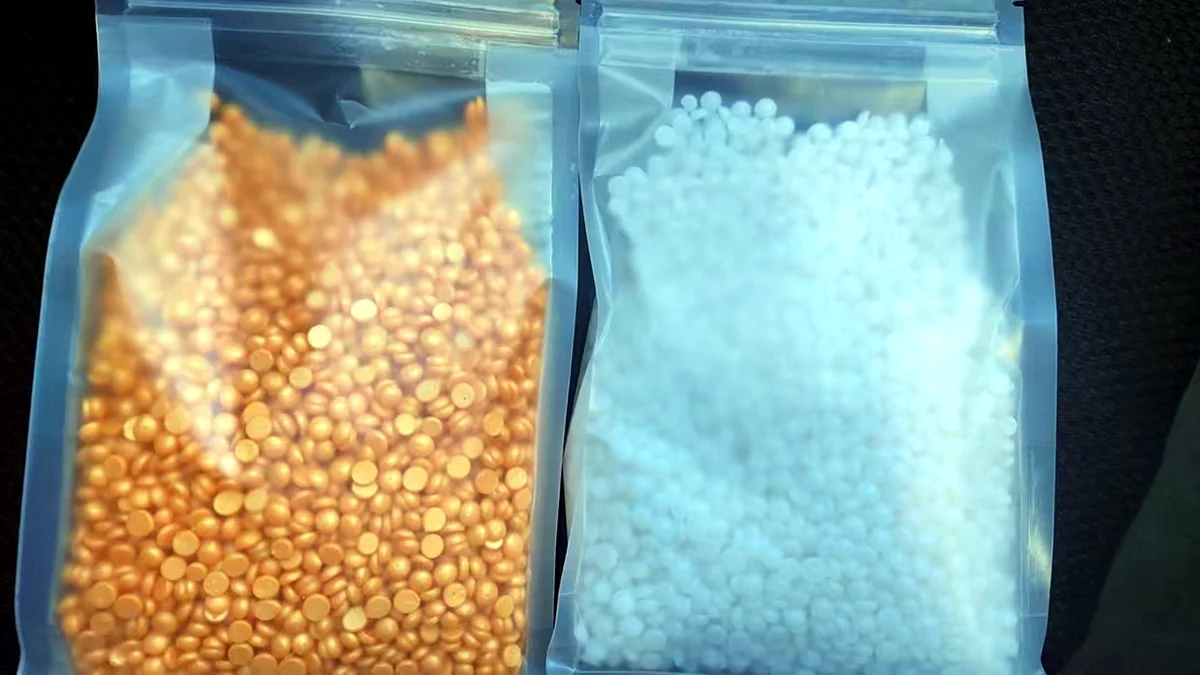
Unlabeled transparent bags: the bead ships without print lead time, and your registration holder applies the Russian-language label.
TR CU 009/2011: a declaration is not always the whole story
Cosmetics and perfumery, including depilatory wax, circulate in the Eurasian Economic Union under TR CU 009/2011 “On the Safety of Perfumery and Cosmetic Products”, which applies across Russia, Belarus, Kazakhstan, Armenia and Kyrgyzstan, and has been in force since 2013. The main conformity route is an EAC declaration of conformity, and it is not a paperwork formality: it requires testing in accredited laboratories. Critically for this product category, depilation products are among the categories that must also undergo mandatory state registration rather than relying on a declaration alone — a distinction that has caught out importers who assumed the sector was uniformly declaration-only. Confirmation of the current classification for your specific item belongs with your EAEU-established registration holder or a local regulatory agent, not with the factory.
The regulatory picture also moved recently. Amendments to TR CU 009/2011 entered into force on 24 December 2025, covering scope and terminology, the rules for placing product on the EAEU market across production, distribution and control, the conformity-assessment procedure, ingredient rules — including a restriction on ingredients unsuitable for children under 14 in products positioned for the whole family — and labeling. One requirement is unusually relevant to a wax supplier: packaging must not resemble food, alcohol or medicine packaging, which is a design consideration for any retail bag or jar you plan to register in the region. Two provisions were deferred, one of them to 1 July 2026. Because the detail is still settling, budget time for the file and confirm the current requirement list with your local agent rather than assuming a dossier prepared for an EU market transfers.
What we supply to support the filing is the documentation set: full composition and INCI data, certificate of analysis, certificate of free sale, GMP certificate, and a manufacturing authorization letter. The declaration or state registration is held by an entity established in the EAEU — your importer, distributor or brand company.
A range that matches how the region buys
Formula A1 — the rosin-free flagship. A 45–50 °C working window, the lowest in our range, which is what makes it the gentle choice for sensitive skin and for clients who wax regularly. It is the SKU a distributor stocks to be the premium option on the shelf rather than the cheapest one.
Formula A2 — the premium rosin workhorse. Cream white beads with high elasticity and the grip to take short, coarse hair in one pass. For the Caucasus and Central Asian markets, where that hair type is the norm rather than the exception, A2 is not a premium upsell — it is the formula the service actually needs.
Consumer-Grade Hard Wax — the volume tier. A 55–60 °C film wax, the most heat-tolerant formula we make. It is the right opener for a price-led account or a retail shelf, and it tolerates imperfect storage better than a low-melt professional wax.
All-Purpose Soft Wax — the strip line. 450 g cans covering the classic strip-wax service. Leaving it out of a range means leaving money out of the range.
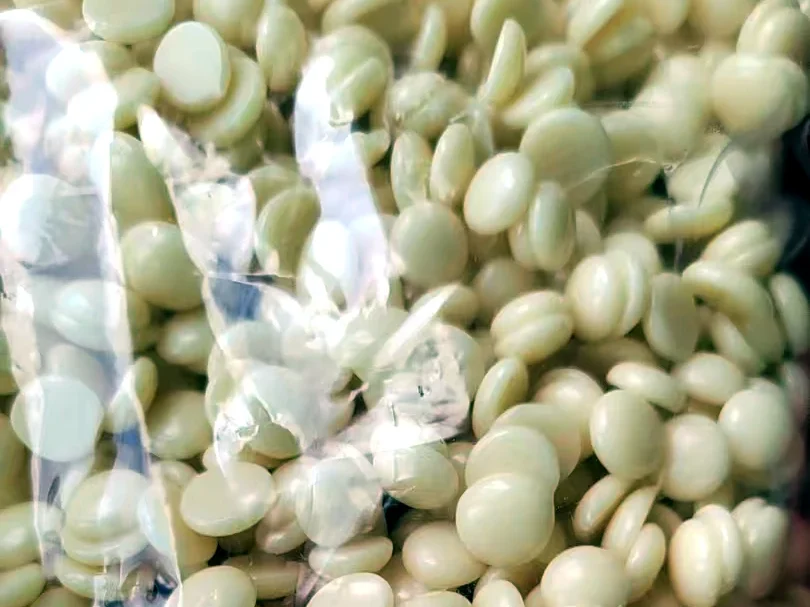
Formula A2 cream white beads — the grip for short, coarse hair that the Caucasus and Central Asian markets buy for.
The default private-label route across all four is the unlabeled transparent bag: the registration holder applies its own label, there is no print lead time and no artwork commitment before the formula is proven, and private label runs at low MOQ. That matters more here than in most markets, because in this region the label — its language and its claims — belongs to the entity that carries the registration, not to the factory.
Quick FAQ
Will a low-melt 45–50 °C wax survive a Russian winter?
Do we need a declaration or state registration for depilatory wax?
What is the minimum order for private label in our own bag or jar?
Next step
Formulas, colors, bag sizes and private-label terms are set out on the depilatory wax page; the chip-controlled warmers these formulas are built around — nine models from 20 ml to 800 ml — are on the wax heater page, and the same range is described in Russian on the localized depilatory wax page. For a sample of Formula A1 and Formula A2, a winter-packaging quotation, or a private-label discussion for Russia and the CIS, contact Miro Wu, Dedicated Account Manager — email miro.wu@beautome.com or WhatsApp +86 188 1393 3019.