





Wax Heaters for Polish and Central European Salons: Temperature Accuracy, Running Cost and the EU File
Poland has around 132,000 hairdressing and beauty businesses and, by the debt registry’s own count, a growing number of them are watching every line of the cost sheet. The stock that sells into this region is not the cheapest pot on the market — it is the pot that holds a temperature, wastes less wax and survives a full working day. This article sets out the temperature argument a distributor has to make, the three-tier range that answers it, and the EU and Polish paperwork that sits behind a legal first delivery.
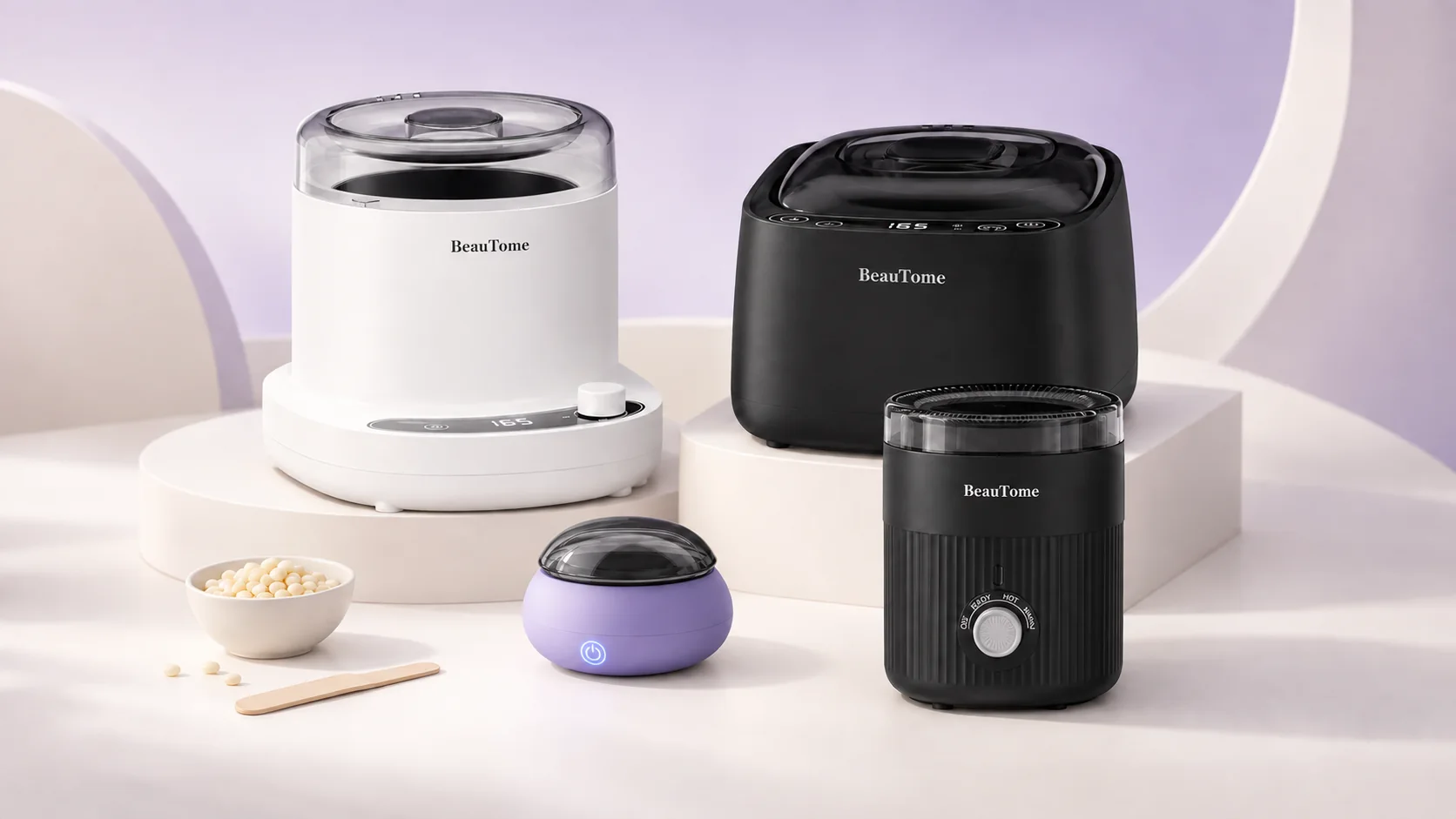
Nine chip-controlled warmers from 20 ml to 800 ml, plus the 450 ml single-knob entry model for price-led accounts.
A crowded market where cost control decides who survives
Poland is one of Central Europe’s largest beauty markets and also one of its most crowded. The National Debt Register (KRD) counted roughly 132,000 hairdressing and beauty businesses operating nationally in 2025, and put the combined debt of hairdressers and beauticians close to PLN 55 million — up about 14% year on year. Sole proprietorships account for 83% of debtors, and around 5,000 such businesses closed in a single year. The pressure named in that reporting is not weak demand; demand is rising. It is operating cost — labor, energy, premises, and supplies roughly 10% more expensive than a year earlier.
132,000
Hairdressing and beauty businesses operating in Poland, 2025 (National Debt Register, 2025)
+14%
Year-on-year rise in salon sector debt; 83% of debtors are sole proprietorships (National Debt Register, 2025)
20–800 ml
Nine chip-controlled models with electronic temperature holding, plus a 450 ml single-knob opener
That cost structure changes what a distributor is really selling. An owner in Kraków or Wrocław who is watching an electricity bill is not shopping for the lowest invoice; they are shopping for the pot that wastes the least wax, reaches temperature fastest in the morning, and does not need replacing within two years. In this region the appliance conversation is a cost-of-ownership conversation, and the specification that carries it is temperature accuracy.
Why temperature accuracy is a cost item, not a feature
A conventional pot regulated by a bimetal thermostat does not hold a temperature. It oscillates around the set point, switching the element on and off across a band of several degrees. For a film wax that is a genuine problem, because hard wax has a working window: below it the wax grips skin instead of hair, above it the film goes stringy and the burn risk climbs. When the pot drifts, the technician spends the appointment judging the wax instead of applying it, and the waste appears twice — once in product and once in the minutes added to every service.
A chip-controlled warmer holds the set point instead. The nine professional models in our range run from 20 ml to 800 ml and hold temperature electronically, which matters most in a body-waxing station that keeps a full pot hot for hours rather than a brow pot used twice a day. The commercial case is unglamorous but easy to present across a treatment room: fewer re-melts, fewer discarded batches, and a shorter warm-up before the first appointment of the morning.
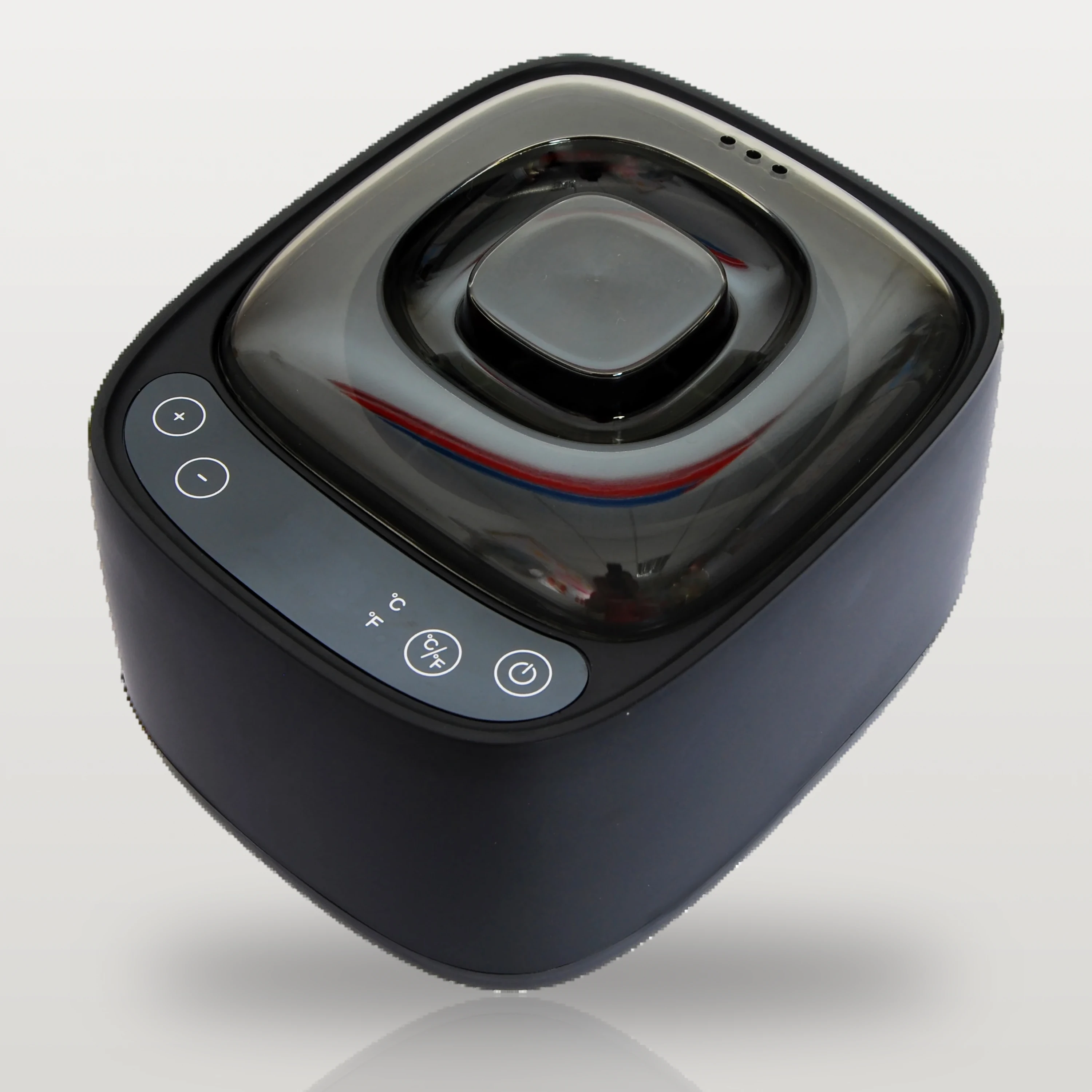
Electronic control holds the working window through a full appointment — the upgrade conversation in a cost-conscious market.
The ladder: an opener, a professional tier and a mini
The opener. The 450 ml single-knob warmer is 100 W with a 30–125 °C dial, no display and no touchscreen. It is the model that opens a price-led account in a market with 132,000 competitors, and its simplicity is the argument: nothing to mis-set and nothing to fail. It is also the unit a distributor uses to start a relationship and upgrade later.
The professional tier. Nine chip-controlled models cover a single-service pot, a full-body station, and a dual-pot unit that holds hard wax and soft wax at two temperatures at once — the configuration that lets one technician run a Brazilian and a leg wax in parallel without buying a second column of equipment.
The mini. A 180 ml portable warmer with a detachable cord handles brow, lip and small-area work, and travels with a technician who rents a chair or goes to the client. Chair rental and mobile work are a growing share of Polish salon activity precisely because they carry no premises cost — the same reason the mini outsells its size in the sales mix.
The EU file, plus one Polish-specific step
A mains-powered warmer placed on the EU market carries a CE mark assembled from several directives that apply together. Low Voltage Directive 2014/35/EU covers electrical safety for equipment rated 50–1000 V AC, tested for household-type appliances against the EN 60335 series. EMC Directive 2014/30/EU covers emissions and immunity for anything carrying an electronic control board, tested against the EN 55014 series. RoHS Directive 2011/65/EU restricts hazardous substances, and the Ecodesign Directive 2009/125/EC adds energy-related requirements. One CE mark covers all of them, and the EU Declaration of Conformity has to list every act that applies — which is where a thin technical file becomes visible to a market surveillance authority.
Then there is the packaging and waste side, which catches importers who treat CE as the finish line. Waste electrical equipment falls under the WEEE regime, and separately, Poland requires businesses to register in BDO, the national database of products, packaging and waste management. From 1 January 2025 the previous exemptions were removed and registration became mandatory even for the smallest entities, with penalties reported to start at PLN 5,000. Registration duties for packaging attach to whoever places the packaged goods on the Polish market, so agree with your importer at quotation stage which entity holds which registration number rather than discovering the gap at the customs broker.
| Item | Who holds it | Why it matters |
|---|---|---|
| CE technical file and EU Declaration of Conformity | Manufacturer prepares, importer holds on file | Must list LVD, EMC, RoHS and Ecodesign; the importer is the responsible economic operator in the EU |
| Safety and EMC test reports | Issued on samples of the model you import | A 100 W sample does not cover the 800 ml unit — model coverage has to be explicit |
| WEEE and packaging registration | Usually the Polish importer or distributor | Producer responsibility is national; the number must exist before retail supply begins |
| BDO entry in Poland | Polish entity placing goods on the market | Registration became mandatory for the smallest entities from 1 January 2025; penalties from PLN 5,000 |
None of this is a reason to buy through a trader rather than the factory. The technical documentation, component lists and test data are the manufacturer’s part of the job, and they are the part we supply; the declarations and registrations are issued to EU entities. Write that split into the quotation so nobody assumes the other side is covering it.
What to specify for a 230 V treatment room
Three details decide whether a range sells cleanly across Poland, Czechia, Slovakia and Hungary. Voltage and plug. The region runs 230 V / 50 Hz on type C and type E plugs — a 110 V build has no home here, so specify voltage and plug at order instead of adapting stock locally. Duty cycle. Station pots run hot for hours, so housing, cord set and pot material need to be selected for continuous professional use rather than occasional home use. Spare parts. A pot and a cord set are the two items a salon eventually damages, so agree the spare-part route before you commit to stocking the whole ladder; it is the most common reason a distributor loses an account in year two.
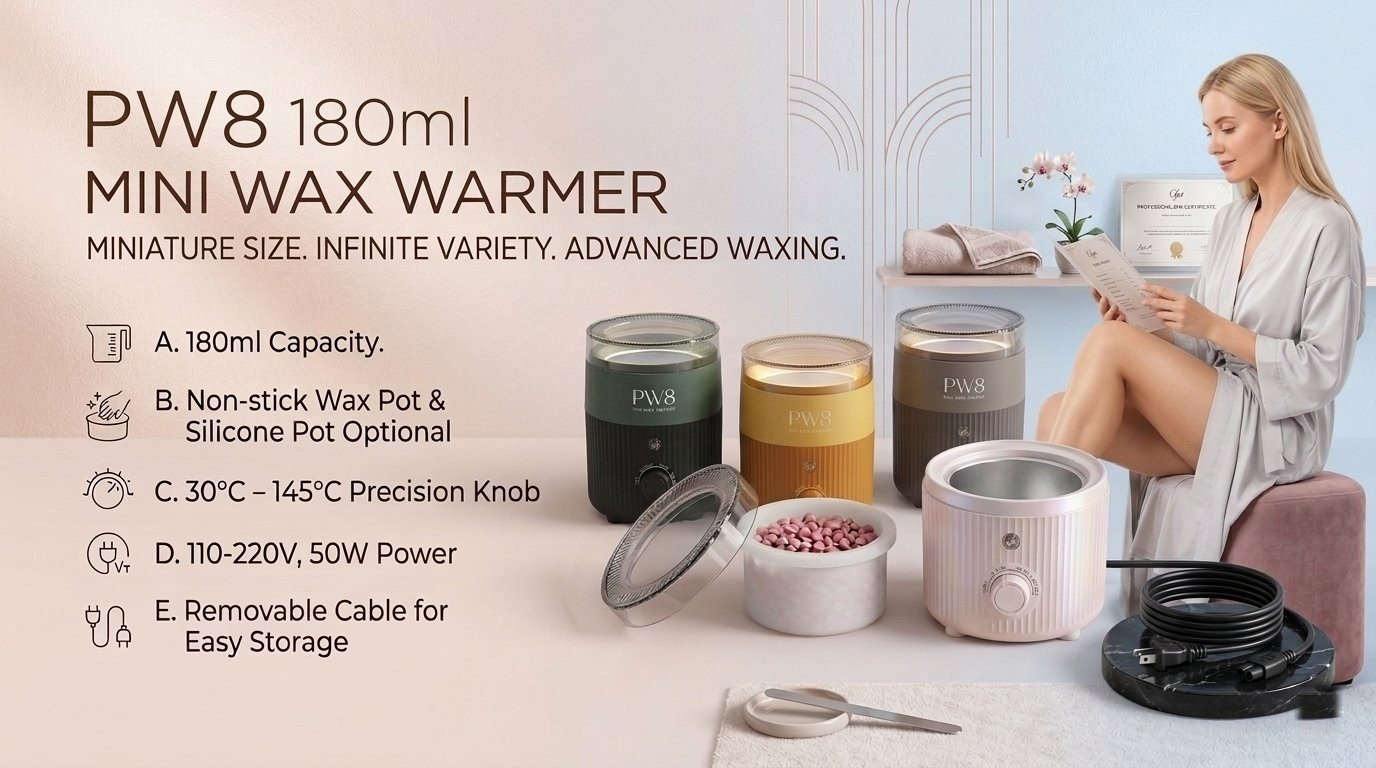
The 180 ml mini travels with chair-rental and mobile technicians, a segment that grew as premises costs rose.
Sample first, then your own brand
Validate the lineup before committing a container. Order one unit of the tier you expect to push — usually the 450 ml opener plus a mid-size chip-controlled pot — and evaluate it against salons you already supply. Printed retail packaging, private labeling and mixed-model orders run through the same channel, and the terms are set out on the OEM & private label page. Because the range shares components across models, a mixed order is a normal production run rather than a special project, which is what makes a two-model trial order practical.
Next step
Capacity, wattage and control options for the full lineup are on the wax heater range page, and the formulas these pots are built around — rosin-free Formula A1 across a 45–50 °C window, A2 premium rosin cream white for coarse hair, and a 55–60 °C consumer film wax — are documented on the depilatory wax page.
For a two-model sample order, a CE documentation discussion or a mixed quotation for Poland and Central Europe, contact Miro Wu, Dedicated Account Manager — email miro.wu@beautome.com or WhatsApp +86 188 1393 3019.