




Wax Heaters for Romanian and Bulgarian Studios: Building a Wax Station That Survives an Audit
In Bucharest and Sofia the client base has caught up with Western Europe faster than the equipment has. Studios are being reviewed by chain head office, by mall operators, and by clients who film the bench before they sit down. The wax pot is the most visible piece of equipment in that review — and the one piece most often bought on price alone. This is what a defensible wax station is made of, and which pot specifications make it possible.
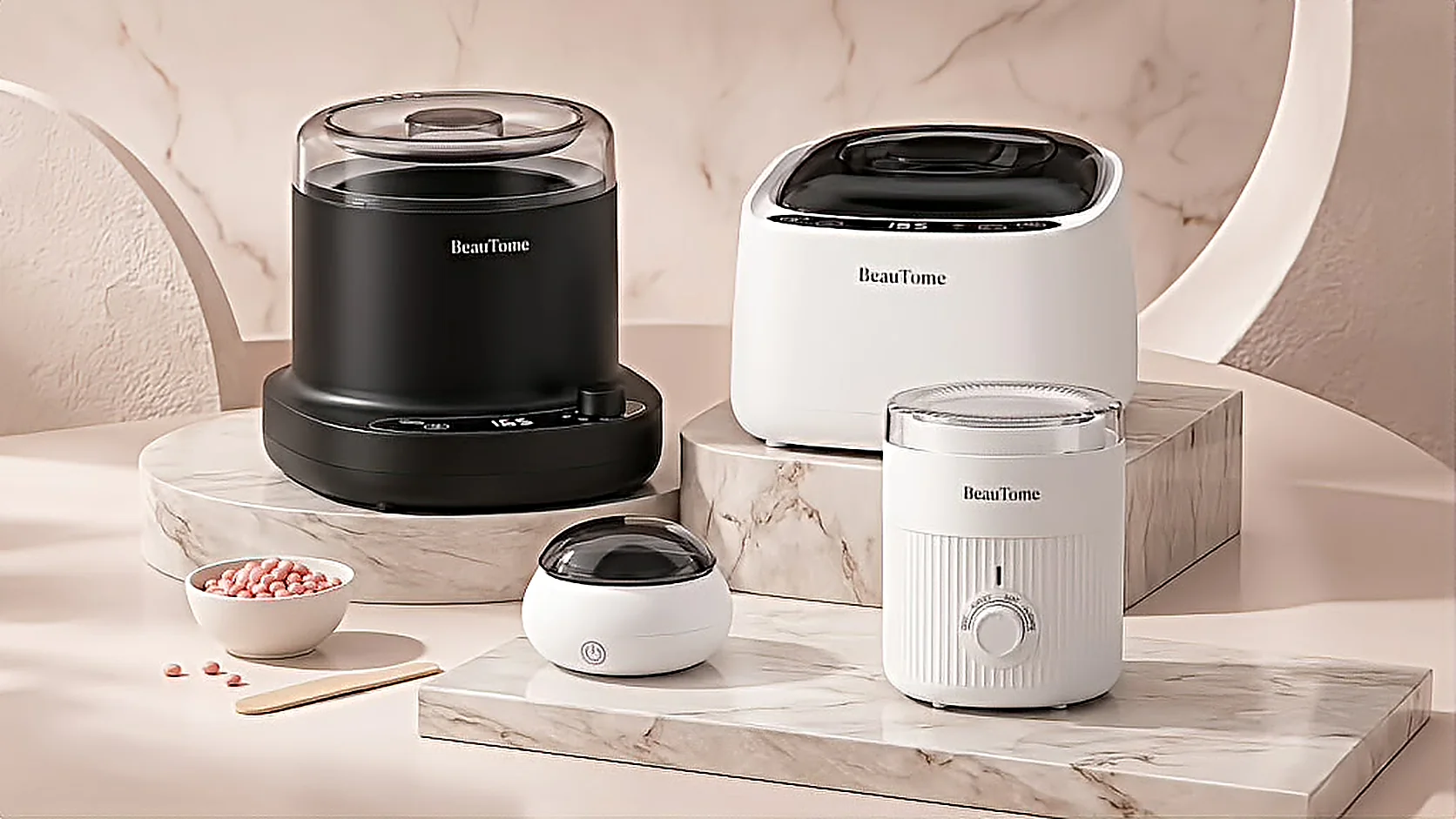
The BeauTome wax heater range — 20 ml to 800 ml, single pots and double-pot stations, all on 230 V.
A market of owner-operators, not chains
The two countries look similar on paper and behave almost identically at the point of purchase. Business-registry counts published in April 2026 put Romania at 5,071 beauty salons, up 5.28% since 2023, and Bulgaria at 1,913, up 5.11% over the same period (Rentech Digital, April 2026). What matters more than the totals is the ownership split: 93.06% of Romanian salons and 90.75% of Bulgarian salons are single-owner businesses. Bucharest alone holds 1,489 of the Romanian total; Sofia 546, Varna 387 and Plovdiv 349 account for most of the Bulgarian market.
That structure decides how equipment gets sold. There is no procurement department to write a specification; the owner decides, usually in one visit, and usually on a mix of price, what a colleague recommended, and what the unit looks like on the bench. Which means the winning argument is not a datasheet — it is a demonstration that the station can be kept clean and shown to be clean.
5,071
Beauty salons in Romania, 93.06% single-owner — Bucharest alone holds 1,489 (Rentech Digital, April 2026)
1,913
Beauty salons in Bulgaria, 90.75% single-owner — Sofia 546, Varna 387, Plovdiv 349 (Rentech Digital, April 2026)
230 V / 50 Hz
Both markets, on type C and type F sockets — a moulded Schuko cord is the correct default
What an audit actually looks at
Romanian and Bulgarian enforcement is set nationally and locally, so treat what follows as the shape of the standard rather than a citation of local law — and confirm the exact requirements with your county or regional public health authority. The shape, though, is consistent across the markets that publish their rules.
New South Wales, Australia, publishes one of the clearest versions. Its waxing fact sheet, last updated 24 September 2025 under the Public Health Regulation 2022, requires enough single-use spatulas to prevent double dipping, states that wax must not be reused on another client, and is explicit that melting down, reheating and filtering wax does not destroy or remove bacteria and viruses. Oklahoma’s cosmetology rules (175:10-7-34, current through June 2025) add the storage side: wax pots must remain covered and free from debris when not in use, and a contaminated pot must be emptied and disinfected. North Dakota (32-02-01-11, current through July 2025) requires pots to be cleaned of all wax residue with a fresh protective collar, and bans roll-on applicators outright.
Read those four requirements together and a specification emerges: the pot has to be coverable, emptiable, cleanable to the metal, and stable at a set temperature so the technician is not chasing wax consistency while working.
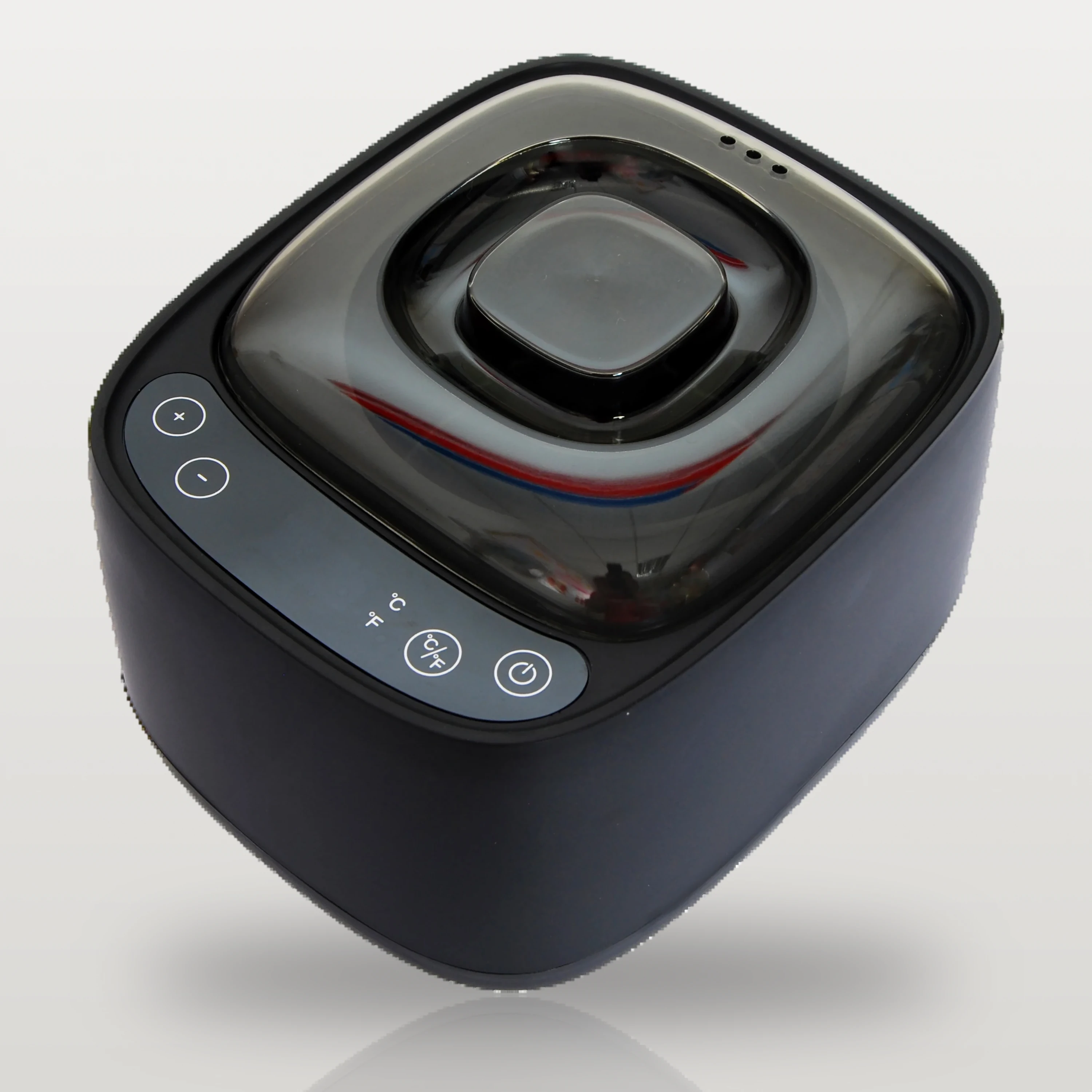
A 450 ml single-knob pot — the workhorse size for one technician, one client at a time.
Why the pot design decides whether you can comply
Most wax pots sold into this region are one-piece aluminum baths with a heating element bonded underneath. They melt wax well. They are miserable to empty: wax sets in the corner radius, the collar collects residue, and the only way to clean it properly is to run the pot hot and scrape it — which is exactly the operation the rules above are trying to prevent between clients.
- A removable inner pot changes the economics of cleaning. The insert lifts out, the residue goes in the bin as one piece, and the bath can be wiped while the next pot is already warming.
- A lid that actually closes turns “covered when not in use” from a habit into a design feature. On a bench shared with lash and brow work, it also keeps dust and hair out between clients.
- A marked maximum fill line stops the two failure modes that generate complaints: overflow onto the bench, and a pot run so low that the element cycles and the wax scorches.
- Chip-based temperature control rather than a bimetallic thermostat matters more than the marketing suggests. A mechanical thermostat swings several degrees around its set point; on a low-temperature hard wax that swing is the difference between a film that grips and one that tears.
None of that is exotic. It is simply the difference between a pot sold on price and a pot sold to a studio that expects to be looked at.
Two working temperatures, two pots
A studio running both a low-temperature hard wax and a film wax is running two different set points, and they do not share a pot comfortably. A single pot turned up and down between clients is how wax gets scorched, how the collar builds residue, and how a technician loses four minutes per service waiting for the pot to settle. The practical minimum for a busy room is one pot per technician, and a second pot the moment the menu includes a second wax type.
The sizing logic is straightforward. A 450 ml pot holds roughly 400 g of beads, which is a working day for one technician on legs and underarms; a 250 ml pot suits a second wax type at lower volume; a 180 ml pot is the right size for a brow bar or a second treatment room; 800 ml and the double-pot stations exist for rooms where two technicians share a bench or where back and chest work is on the menu.
The capacity ladder, room by room
Brow bar & add-on room
PW6 20 ml graphene unit for lip and brow work; PW8 180 ml for a second treatment room or a mobile kit.
Single-technician room
PW2B 250 ml for a second wax type; PW1B 400 ml or the 450 ml W5, W6 and BWW5K for the main pot — the BWW5K is a single 30–125 °C knob, 100 W, no display.
Two-technician bench
W2 500 ml digital, SW1B 800 ml for high-volume rooms, and the SW6B or SW8B double-pot stations at 400 ml and 800 ml per side.
The full specification for each model sits on the wax heater product page. If you are pairing the pots with consumables for the same studio, the hard wax range runs from a 45–50 °C rosin-free film through a premium rosin bead to a 55–60 °C consumer-grade film and a 450 g soft wax can — four SKUs, two working temperatures, which is exactly why the second pot gets sold.
230 V, the EU file, and the language on the box
Romania and Bulgaria are inside the single market, so the equipment file is the familiar one: LVD 2014/35/EU for electrical safety, EMC 2014/30/EU for emissions and immunity, and RoHS 2011/65/EU for substance restrictions, evidenced by a declaration of conformity and a technical file. Two additions are easy to overlook:
- Regulation (EU) 2019/1020, applicable since 16 July 2021, requires an economic operator established in the EU, with its name and contact details on the product or its packaging. For an importer in Bucharest or Sofia, that is them — which is precisely why they will ask you for a clean technical file.
- The General Product Safety Regulation, (EU) 2023/988, has applied since 13 December 2024. A pure B2B sale of professional equipment may sit outside its consumer scope, but the same model frequently ends up on a retail shelf or an online listing, so plan as though it applies.
Then the practical details that hold up a first container: instructions and safety warnings in Romanian and Bulgarian, a rating plate that matches the declaration, WEEE producer registration in the destination country, and a cord set moulded for type C or type F sockets. Both countries use the same socket stock, so one cord set covers both — a rare piece of good news in this region.
What to put on the purchase order
- Volume per pot and the fill level you expect (400 g in a 450 ml bath is the normal working load).
- Set point and tolerance, stated as a number, not “accurate”.
- Inner pot removable, lid included, maximum fill marked.
- Cord set per destination, plug type stated.
- Manual language pair and rating-plate artwork approved before production.
- Spare parts in the first order: one heating element, one inner pot, one controller per ten units is a reasonable service ratio for a market with fast repair expectations and slow cross-border shipping.
Quick FAQ
Can one 450 ml pot serve both a hard wax and a film wax?
Do we need CE marking, or is a declaration enough?
What is the smallest order you will ship to a single studio?
Next step
Tell us the room count, the number of wax types on the menu and the plug type in the building, and we will return a pot configuration, a spare-parts list sized to the order, and the technical file your importer will ask for. The BeauTome blog carries the market-by-market equipment notes. For a quotation, contact Miro Wu, Dedicated Account Manager — email miro.wu@beautome.com or WhatsApp +86 188 1393 3019.