





Hard Wax for Japanese Salons: Splitting the Professional Line from the Retail Shelf
Japan does not buy wax in volume. It buys wax in a mix — a back-bar formula for the treatment room and a second one for the retail shelf next to the till — and it pays more per gram for both. That is why a single-SKU proposal stalls here, and why the salons that grow fastest are running two ranges out of one factory.
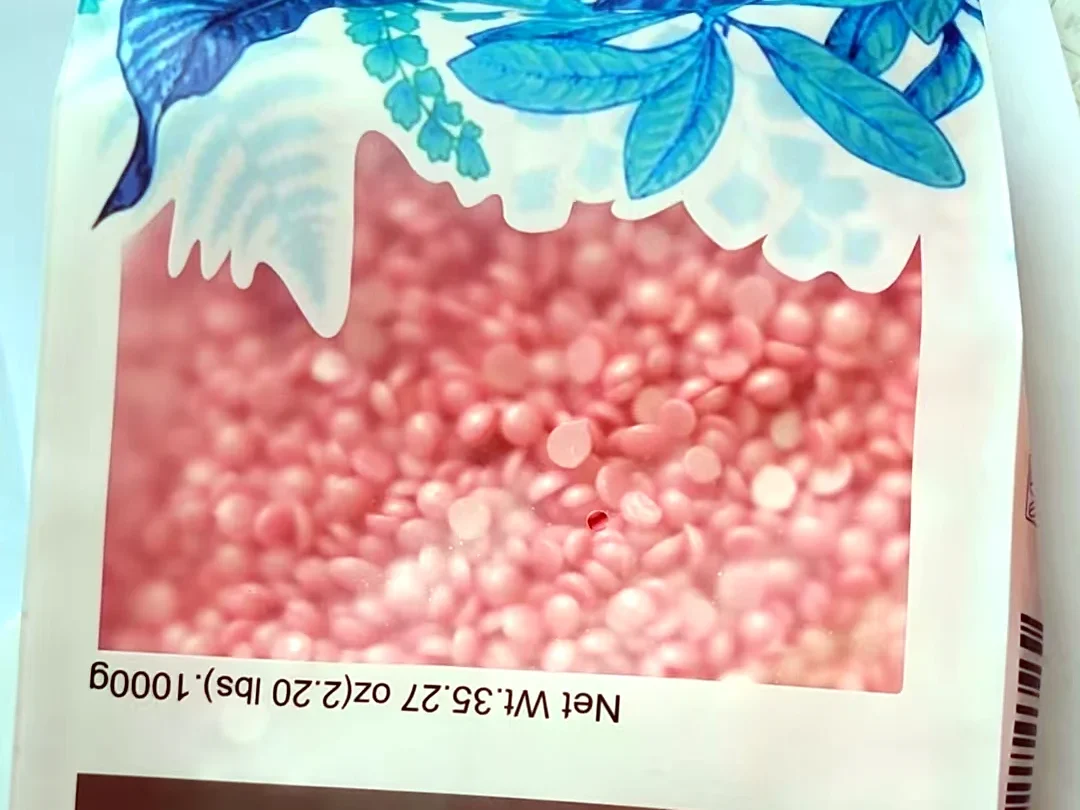
Formula A1 in the stock Pink colorway — the same bead runs as back-bar bulk and as a labeled retail pack.
A slow-volume, high-mix market
The numbers for Japan describe a market that grows slowly in kilos and richly in yen. Global Market Insights puts Japan’s hair removal wax market at USD 700 million in 2025, on track to hold a 12.2% share of the Asia Pacific category by 2035, and describes demand as premium-led: formulation quality, packaging precision and skin-safety assurance (Global Market Insights, 2025). Global Industry Analysts’ figures show the same shape from a different angle — a global wax category growing at 5.7% a year to 2032, hard wax at 7.4% against 4.7% for soft wax, and Japan itself at a comparatively gentle 3.1% a year (Global Industry Analysts, 2025).
USD 700 M
Japan hair removal wax market, 2025, holding 12.2% of Asia Pacific revenue by 2035 (Global Market Insights, 2025)
7.4%
Global CAGR for the hard wax segment to 2032, against 4.7% for soft wax (Global Industry Analysts, 2025)
3.1%
Projected annual growth for Japan’s wax category, 2025–2032 — volume is steady, value comes from mix (Global Industry Analysts, 2025)
Volume at 3.1% means nobody wins here by pushing tonnes. Value comes from what sits on the shelf and at the back bar: a professional formula that a technician trusts, and a consumer pack that a client takes home. Those are two order forms with two different label obligations, and the mistake to avoid is trying to make one SKU serve both.
The back bar: a low working window and a high-grip formula
Japanese clients are attentive to sensation, and the professional line has to answer that before price. Formula A1 — our rosin-free flagship — is designed around a 45–50 °C working window. That is deliberately a range rather than a single melting point, because the range is what a technician actually works in: quoted as one number, a pot tends to get set above the temperature at which the film still releases hair rather than skin. Running at the low end of the window reduces the sting on a first appointment, and removing rosin — the pine resin behind most traditional hard wax, and the ingredient most often raised in client conversations about reactions — gives the salon a direct answer at the desk.
Stock colors for A1 are Gold and Pink, both on a normal production schedule. White is a custom color made to order, and it is the most demanding process in the line: holding clean opaque white across a full run takes a dedicated production slot, so treat White as a photography and premium-tier SKU while Gold and Pink carry volume in 300 g, 500 g and 1000 g bags.
The second professional formula is not a substitute for the first. Formula A2 is the premium rosin formulation, supplied as Cream White beans, built with high elasticity for strong adhesion on short and coarse hair — the underarm, bikini and leg work where a technician wants fewer passes, not a gentler film. On a mixed menu A1 and A2 are two answers a technician chooses between per client, not competitors on a price sheet.
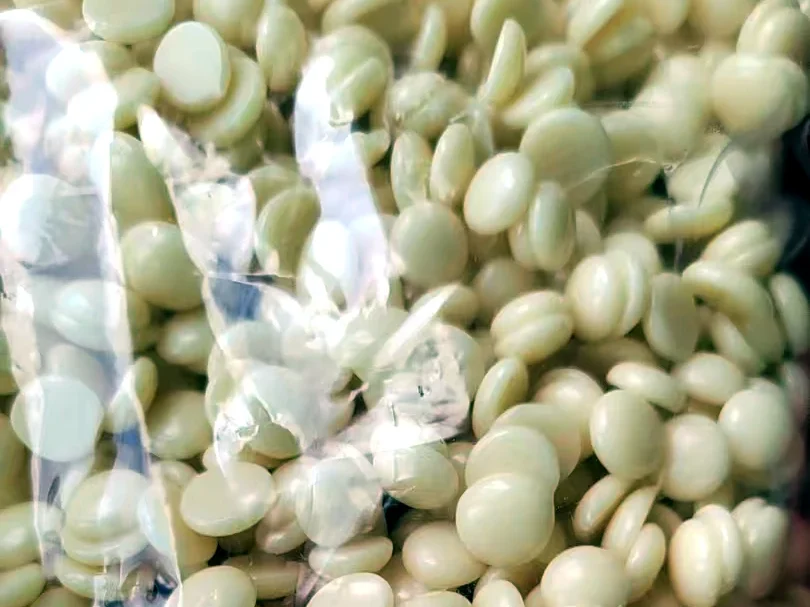
Formula A2 in Cream White — the grip formula for short, coarse and densely set hair.
The retail shelf: film wax and the 450 g can
The consumer side of a Japanese salon brand is built from two products. Consumer-Grade Hard Wax is a 55–60 °C film wax — fast to apply on larger areas, and the format that packages into small retail units for at-home clients between appointments. All-Purpose Soft Wax comes in 450 g cans, which covers traditional strip work at the back bar and doubles as a retail consumable for legs and arms. Both are priced as volume lines rather than premium items, which is exactly how they should be presented in a retail plan: they keep the brand in the client’s bathroom, and they return that client to the treatment room.
This is also where the compliance question changes shape, and it is worth stating plainly. Under Japan’s Pharmaceuticals and Medical Devices Act, hair removal is one of the purposes reserved for quasi-drugs, so what a pack claims decides which route it takes, and a retail pack carrying Japanese-language labeling and a full ingredient list is where those claims become visible to a regulator. A smaller retail unit does not simplify that; it only reduces the space to print it. We are the manufacturer, not your regulatory adviser: settle the classification and the label wording with your marketing authorization holder. The full document route — MAH, foreign plant registration, per-SKU notification and Japanese ingredient names — is set out step by step in our earlier guide for Japanese buyers, and the mechanics of ordering your own artwork are on the OEM and private label page.
The commercial trick that makes a two-range line affordable is to keep the professional pack unlabeled and apply artwork only where it earns its keep. Both ranges run on the same beads, so the split between back bar and retail shelf costs you a labeling decision rather than a second production line.
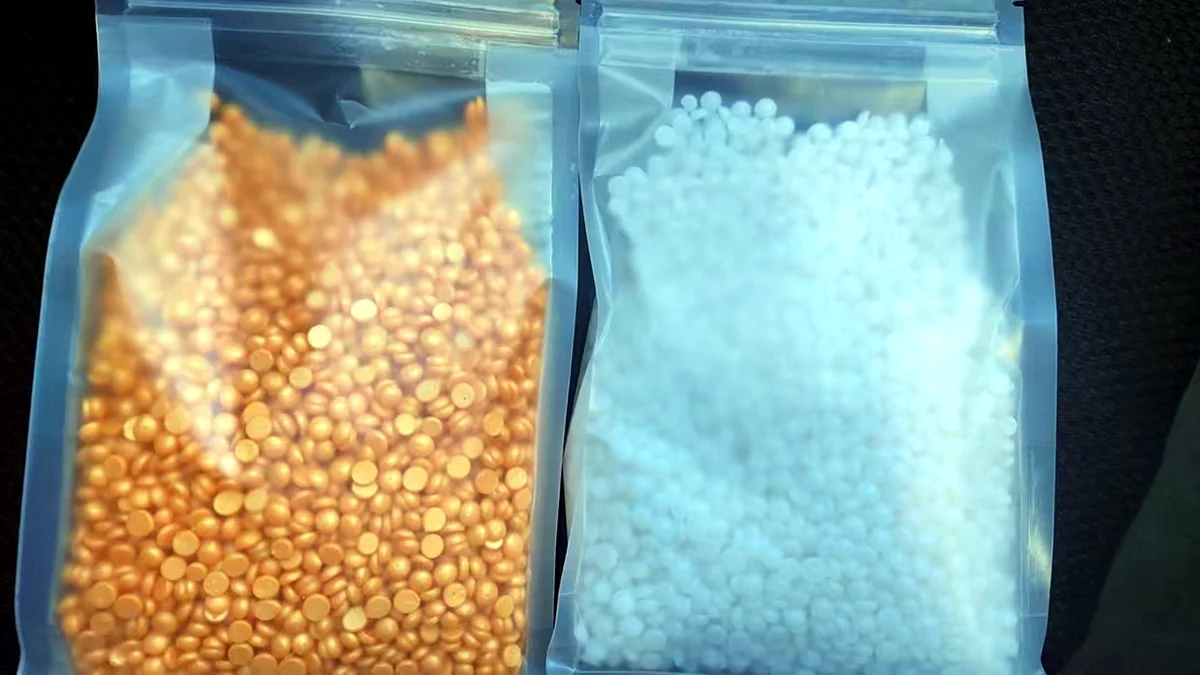
Unlabeled transparent bags — no printing cycle, and the label stays under the brand’s control.
Proving the mix on a small first order
Retail decisions in Japan are usually made after a salon trial, not before it, so the fastest route is a small proof order rather than a container. Formula A1 runs on a low minimum for private-label work, and the usual first step is unlabeled transparent bags: nothing is printed at the factory, the label is applied in your market, and there is no artwork approval or print run between the order and the first sale. A sample box of A1 and A2 lets the salon side of the decision happen in parallel with the labeling work.
One handling note for a humid Japanese summer: keep stock sealed in a 15–24 °C band and rotate it first-in-first-out. Beads moved from a cold warehouse into humid salon air can sweat condensation on the film, so let a bag reach room temperature before opening it. That is a storage discipline, not a formula problem — the 45–50 °C window applies to the pot, not the shelf.
Quick FAQ
Which formula should a Japanese salon use for sensitive clients?
How small can a first production run be?
Do you supply a retail-ready pack?
Next step
Tell us how your Japanese clients split between sensitive-skin and coarse-hair work, and whether you are building a back-bar range, a retail range or both, and we will recommend the two or three formulas to start with instead of the whole catalogue. Formula details and pack sizes are on the wax formulas page, and the pots those films are melted in are on the wax heaters page. For a sample box, private-label packaging or a Japanese retail programme, contact Miro Wu, Dedicated Account Manager — email miro.wu@beautome.com or WhatsApp +86 188 1393 3019.