







Wax Warmers for Indian Salons: Capacity, Temperature Control and BIS Registration Before You Import
India is adding organized salon capacity faster than almost any other market, and a large share of that growth is small, independent and price-aware. For a distributor, chain buyer or own-brand importer in Mumbai, Delhi, Bengaluru or Hyderabad, the wax warmer is the least glamorous line in the catalogue and the one that generates the most repeat orders — provided the fleet is sized to the service menu and the units clear the import file. This guide covers both ends of that sentence.
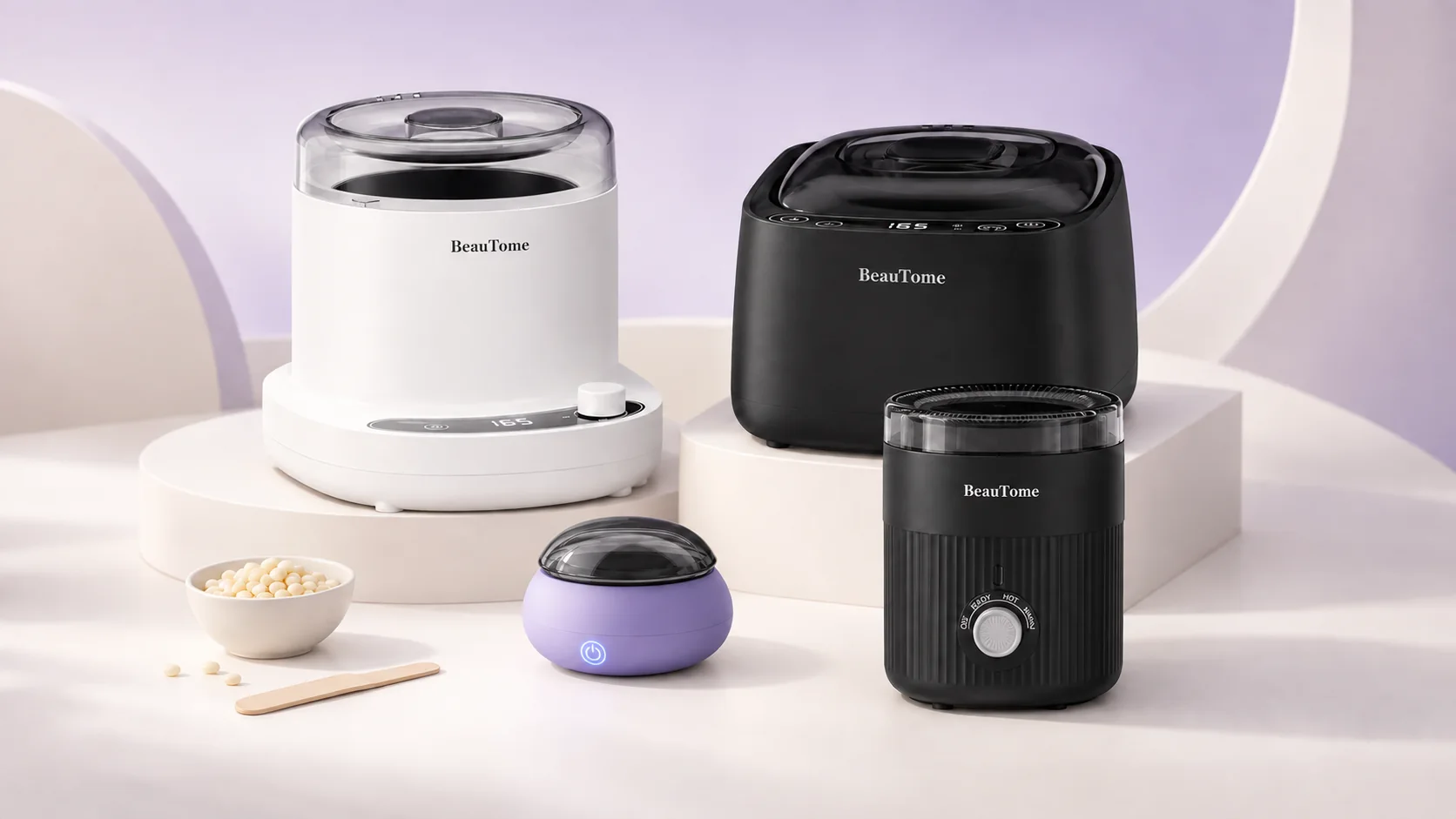
One platform, ten units: the capacity ladder from 20 ml detail work to 800 ml back-bar volume, plus dual-pot stations.
A salon base growing from the middle, not the top
Two figures frame the opportunity. India’s hair removal wax market is projected to reach about USD 1.8 billion by 2035, growing at roughly 8.4% a year from 2026 — among the fastest compound rates in the world, driven by a young population, an expanding organized salon sector and improving e-commerce fulfilment. The wider Asia Pacific hair removal wax market was about USD 4.8 billion in 2025 and is forecast to hold more than 40% of global revenue by 2035 (Global Market Insights, 2025).
What that means for equipment supply is specific. Growth is concentrated in tier-two and tier-three cities, in salons with two to four beds rather than chains, and in price bands where a unit has to justify itself inside one season. Wax heaters sell into that market on three arguments: capacity that matches what the salon actually does, temperature control a trainee cannot get wrong, and a replacement pot available when one wears out.
Start with the plug, not the pot
Every heating appliance buys you a voltage conversation, and in India it is the first line on the quotation: mains power is 230 V, 50 Hz with a mix of plug types in circulation, and a specification sheet written for another market is the fastest way to a shipment that cannot be plugged in. Put rated voltage, wattage and cord set on one line per model before price. The PW8 answers the portability question directly — a 180 ml pot with a precise 30–145 °C rotary thermostat, a detachable power cord and a rated range covering standard mains configurations; it is the unit a mobile therapist carries and the one a distributor sells into home-service networks without a second SKU.
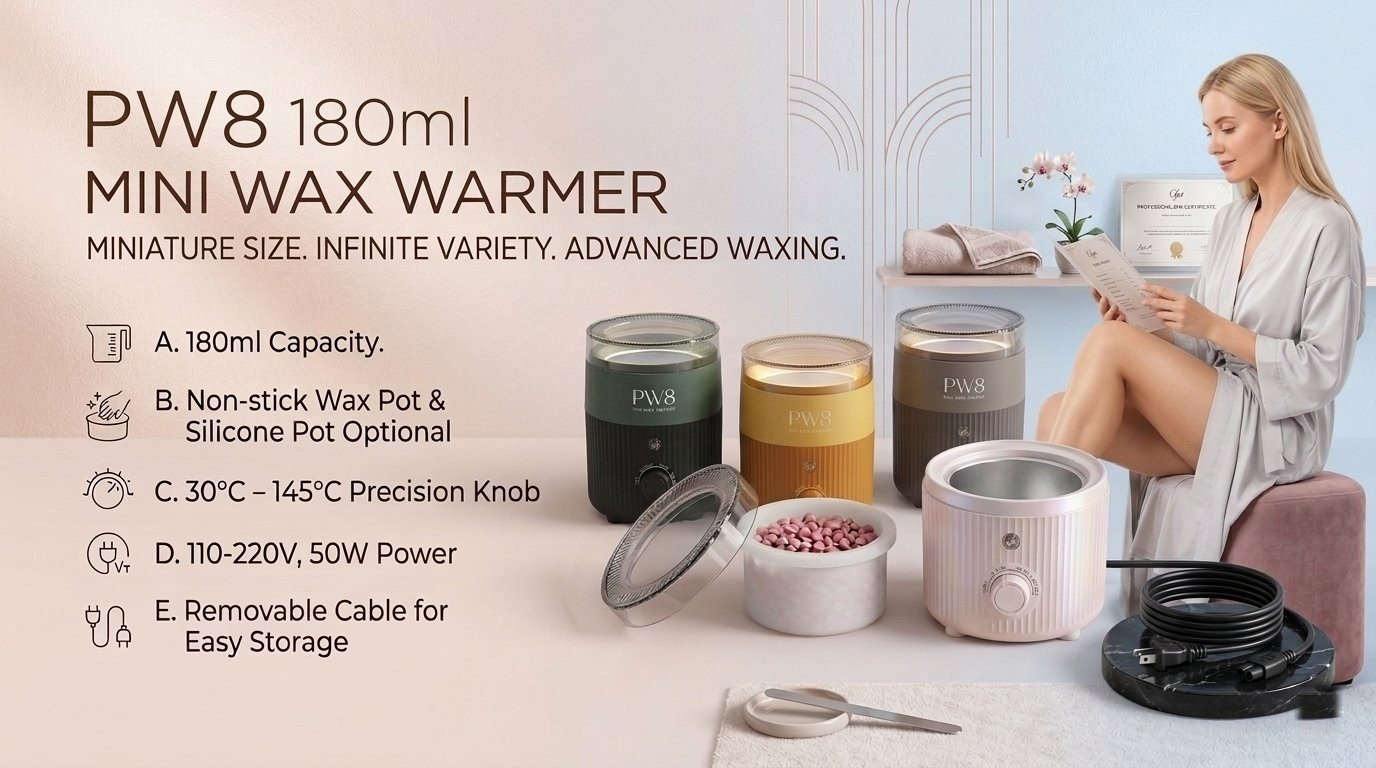
The 180 ml PW8 with detachable cord — the portable tier for mobile and home-service work.
Sizing the fleet to the service list
The professional range runs from 20 ml to 800 ml across nine chip-controlled models, plus the BWW5K entry unit — a 450 ml aluminium pot, 100 W, single 30–125 °C knob, no screen and no touch interface — giving ten platforms in total. The mapping is straightforward. Mini class (well under 200 ml) for brows, upper lip, fingers and touch-ups: cheap to run because the pot is small and melted fresh, and the tier most independent salons should buy first. Mid class for underarms, bikini and forearms in a one- or two-bed salon. 500–800 ml class for full-leg and full-body work, where a busy day empties anything undersized. And dual-pot stations for salons offering both hard and soft wax — two working temperatures on one footprint, because a single pot asked to serve two products is either too cool for one or too hot for the other.
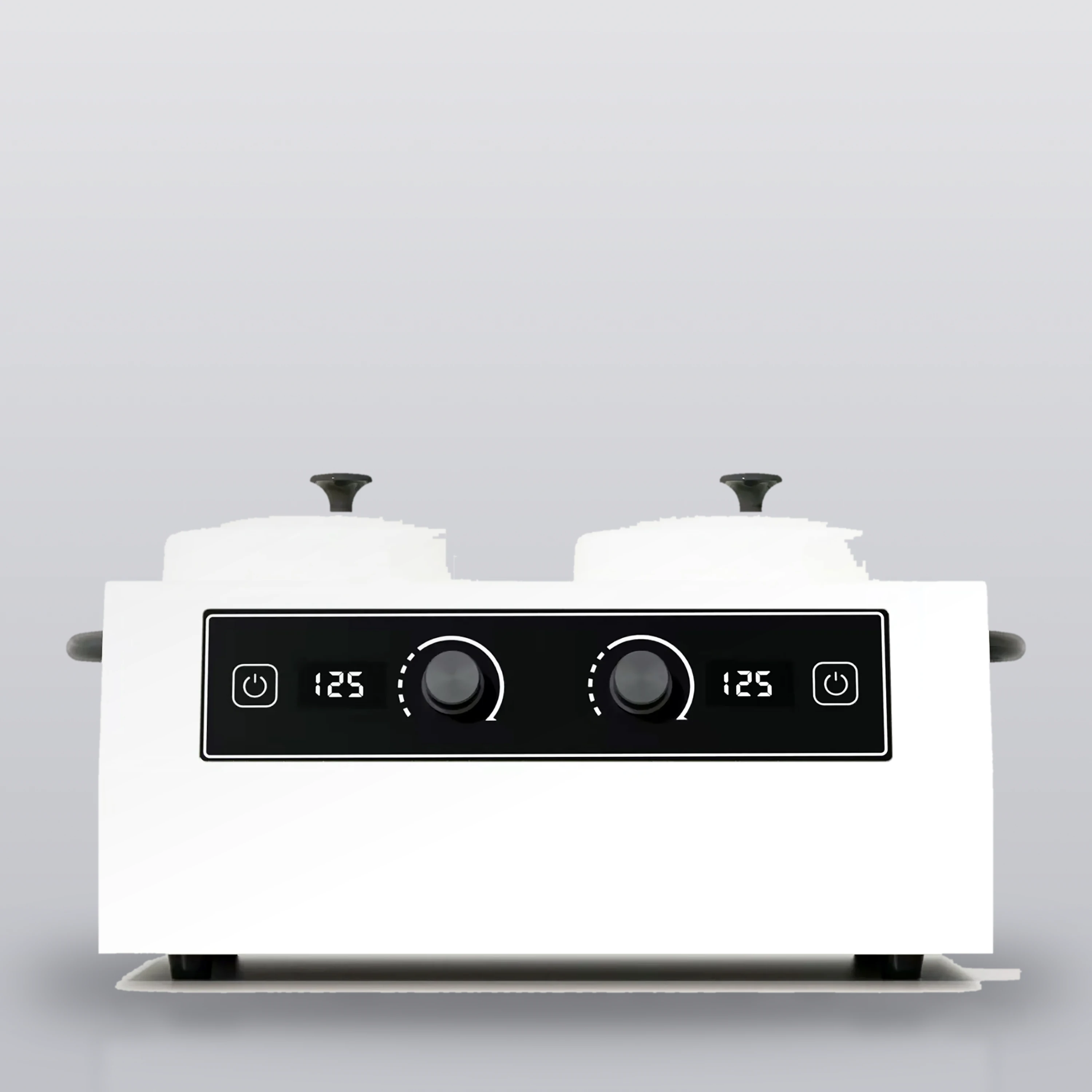
A dual-pot station: hard wax and soft wax at two independent temperatures on one footprint.
Why chip-controlled temperature survives price pressure
In a price-sensitive market the temptation is to quote the single-knob unit everywhere and win on the invoice. That works once; the reorder argument is different, and it fits on one page for your own sales team. A rotary knob sets a warming level, while a chip-controlled pot holds a defined set point — and the difference shows up three ways. Film hard wax has a working window: a pot drifting above it produces a film that tears instead of releasing, and the technician blames the wax rather than the heater. Wax held too hot oxidises faster, so more product is discarded at day’s end and consumable cost per service rises. And in a market adding technicians quickly, a pot that returns to the same temperature every morning is one fewer thing for a manager to supervise. Where the BWW5K belongs is the entry tier, for genuinely low-volume work — quoting it alongside the chip-controlled models is more persuasive than pretending it is the same product.
BIS registration and the Indian Authorised Representative
Import clearance for electrical products into India runs through the Bureau of Indian Standards, and the scheme that applies depends on the product. Two routes matter for a wax warmer: the Compulsory Registration Scheme (CRS), which covers many electronics and appliance categories, and the wider set of Quality Control Orders enforced under the ISI mark. Both lists are amended by notification rather than on a fixed calendar, so the first step is not to assume but to confirm — with your customs broker or a BIS consultant — which scheme covers your specific model and HS code.
The mechanics are consistent enough to plan around. An overseas manufacturer cannot register directly: the application is filed through an Indian Authorised Representative, who carries legal responsibility for the registered product. Testing runs at a BIS-recognised laboratory in India, the registration is model-specific, and the label must then carry the standard mark with the registration number in durable, legible form on the unit, the packaging and the documentation. Validity is commonly quoted at two years with renewal, and the assessment cycle is measured in weeks rather than days, so certification belongs in the procurement plan rather than the week the container ships. Product in a covered category without registration is not a paperwork problem; it can be detained at customs.
One practical division of labour: the factory provides the technical file — ratings, circuit and component documentation, safety test reports and the CE, RoHS and FCC paperwork it already holds — while the Indian registration is taken in the name of your entity or your appointed representative. Agreeing that split at quotation stage is the cheapest way to avoid a stalled first order.
Branding and the repeat-purchase side
The whole fleet can carry your brand: custom branding starts at 300 units for a silk-screen logo on the standard colorways, with custom colors and printed retail packaging quoted against volume. Neutral units are available from 3–5 pieces, and a single sample unit can be sent first — a useful way to place one unit with each of your ten best accounts before committing to a container. The terms sit on the OEM & private label page. Then plan the consumable side of the relationship: a wax warmer is a durable good, and wax is the repeat purchase behind it. Distributors who quote heater and wax together — professional formulas in 300 g, 500 g and 1000 g bags, including the rosin-free and premium grip tiers — build a reorder rhythm a hardware-only catalogue never gets. The range is on the depilatory wax page.
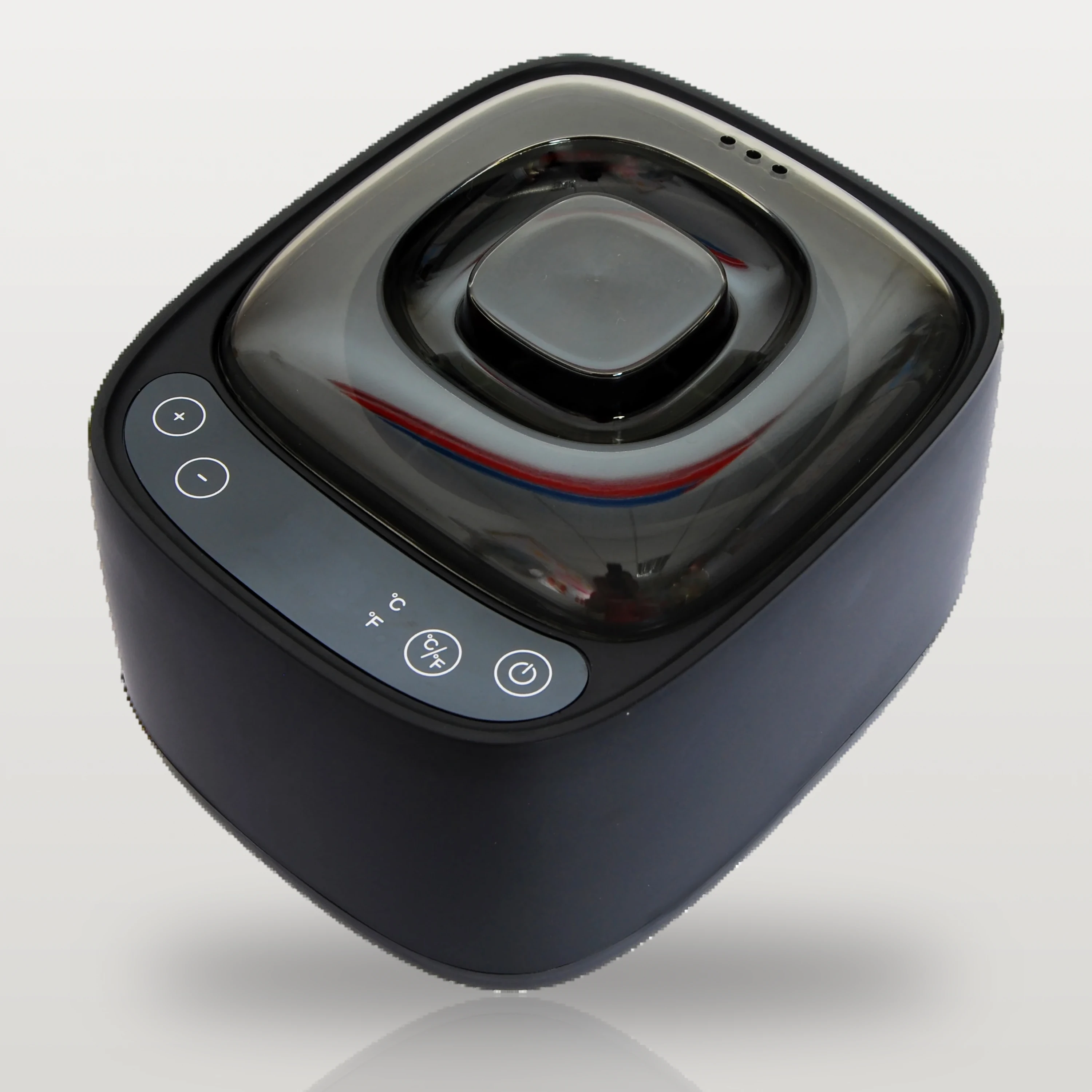
The mid class: zone work for a one- or two-bed salon, with chip-controlled set points.
Next step
Capacities, control types and the full ten-platform range are on the professional wax heater page. Studio-size planning by service mix is covered in the Knowledge Centre, and other regional sourcing guides sit in the market insights hub.
For a fleet quotation, a BIS documentation discussion or private-label units for the Indian market, contact Miro Wu, Dedicated Account Manager — email miro.wu@beautome.com or WhatsApp +86 188 1393 3019.