



Wax Heaters for Kazakh and Uzbek Salons: One Region, Two Certification Routes and a 220 V Ladder
Distributors in Almaty and Tashkent often place the same order and call it “Central Asia.” Commercially that works. On paper it does not: Kazakhstan is inside the Eurasian Economic Union and takes an EAC file, while Uzbekistan sits outside it and runs its own national conformity system. Ship one container against the wrong certificate and the heaters wait at the border while the salon season runs.
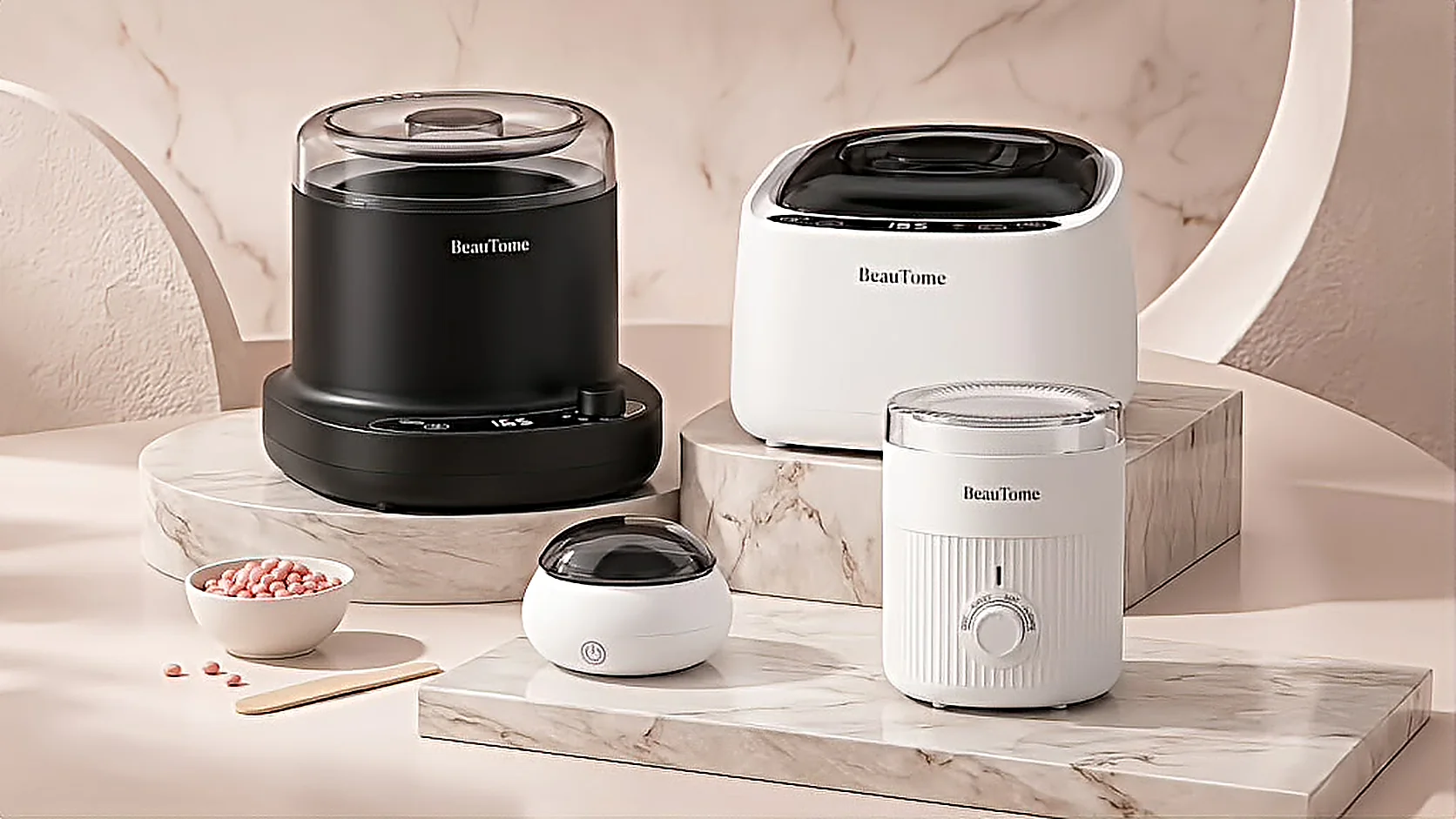
The BeauTome wax heater range — ten models from a 20 ml graphene pot to a 800 ml double-pot station.
Why the region buys on capacity, not on brand
Central Asian waxing is a service business with a narrow equipment budget and a wide range of treatment rooms. A neighborhood studio in Shymkent runs one chair and one pot. A hotel spa in Tashkent runs a suite with two therapists working in parallel. A distributor who stocks only a 500 ml pot loses both ends of that market; one who stocks the full ladder sells the same brand three times as the studio grows.
The practical consequence is that the capacity ladder is the product line, and the certification file is the entry ticket. Neither can be improvised after the order.
EAC
Kazakhstan is an EAEU member: TR CU 004/2011, 020/2011 and 037/2016 apply, with a union-wide mark
O’z DSt
Uzbekistan is outside the EAEU: national GOST-UZB certification, and EAC does not substitute for it
20–800 ml
Ten heater models, all chip-controlled except the entry-level single-knob unit
Kazakhstan: one certificate for five countries
Kazakhstan applies the union’s technical regulations for low-voltage equipment. TR CU 004/2011 covers electrical safety for equipment rated 50–1,000 V AC; TR CU 020/2011 covers electromagnetic compatibility; TR EAEU 037/2016 restricts hazardous substances in electrical and electronic products. Conformity is demonstrated by an EAC certificate (CoC) or declaration (DoC) depending on risk, valid for up to five years, and the mark goes on the product label (Eurasian Economic Commission regulations, as summarized by TÜV SÜD, 2025).
Three details decide whether that file is an asset or a cost. First, the certificate holder must be a legal entity inside the EAEU — typically the importer or an authorized representative; an exporter outside the union cannot hold it alone. Second, ownership matters: a certificate issued to one importer does not transfer to another, so a distributor who builds the file in their own name controls the category, while one who relies on a competitor’s importer does not. Third, documentation and markings are in Russian (Kazakh where required), and the nameplate, model reference and rated values must match the certificate exactly — customs compares them line by line.
Plan three to eight weeks for testing and issuance, longer if a factory inspection is scheduled. Certification agencies also report a 2025 requirement for a QR code linking to certificate and importer data on regulated goods; treat that as a point to confirm with your certification partner rather than a fixed rule, because implementation has been uneven across categories.
Uzbekistan: national certification, and no shortcut
Uzbekistan is not an EAEU member, so CE, EAC and CCC certificates do not replace national conformity assessment. Electrical appliances fall under mandatory O’z DSt certification — commonly called GOST-UZB — supervised by Uzstandard. The output is a certificate of conformity valid for one to five years, with the GOST-UZB mark applied and label information in Russian or Uzbek (Uzstandard framework, as summarized by certification bodies, 2025).
The process has a shape worth knowing before you promise a delivery date. The application is filed with an importer authorization letter and technical documents translated and notarized; samples go to an accredited laboratory in Uzbekistan or an ILAC-recognized lab, with a stated testing cycle of 20–45 working days; certificates are issued for one to five years with surveillance in between (certification-body guidance, 2025). Products that already hold EAC documentation may be exempted from parts of the testing, but they still require registration in Uzbekistan — the file gets shorter, not disappears.
Budget four to eight weeks and a meaningful fee per model family, and keep the certificate scope aligned with what you actually import. A certificate written around a 500 ml pot will not cover an 800 ml double-pot station if the rated power differs.
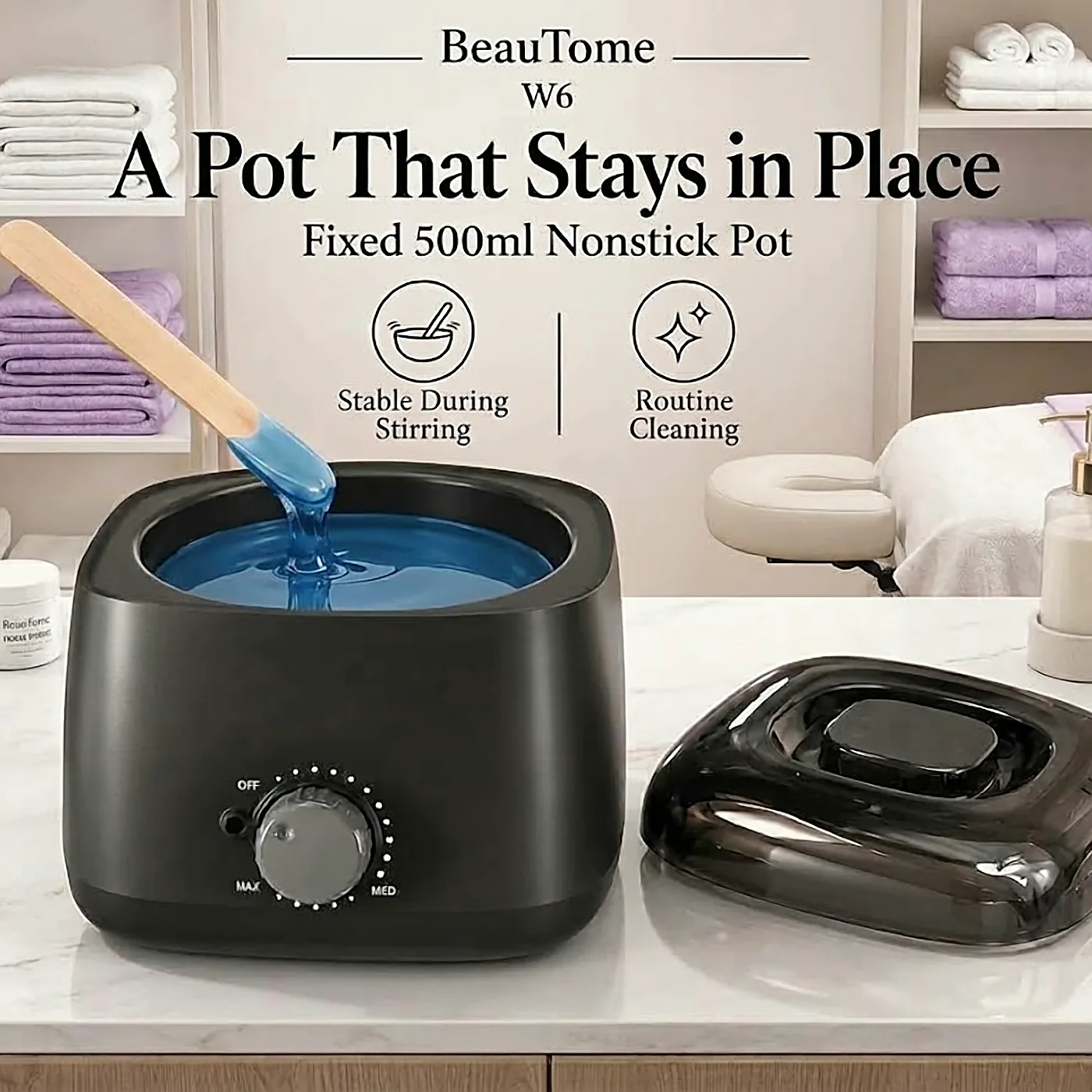
Chip-controlled heat in a 450 ml pot — the volume most single-chair studios in the region settle on.
220 V, 50 Hz — and a winter that tests both
Both countries run 220 V at 50 Hz, with type C and type F sockets the norm in Kazakhstan and a mix of C and I in Uzbekistan. That is close enough to a European specification that distributors assume a CE-style build will do. It usually will — provided the element wattage, thermostat range and cord set are specified for the actual destination rather than left to the default export configuration.
The winter variable is less obvious. Heating load rises while the room is cold, so a pot that reaches 60 °C in eleven minutes in June takes noticeably longer in an unheated treatment room in January. Two specifications answer the question a salon will actually ask: the stated time-to-temperature and the thermostat tolerance in degrees. A bimetallic thermostat that swings ten degrees is not a defect, but it changes how much wax a therapist wastes and how often a strip pulls short. Chip control holds a set point within a narrow band, which is why the mid and upper models in the range are the ones that sell in markets where wax is imported and expensive.
A practical request to put in the quotation: the rated voltage range, the element wattage, and the temperature accuracy at the set point. If a supplier cannot state the third number, the controller is a thermostat, not a control system.
The capacity ladder, matched to the room
Ten models is not a catalog exercise; it is a way to quote three different customers from one price list.
- 20 ml PW6 — graphene-heated, for spot work, brow and lip, and as a sampler a distributor can hand to a new account.
- 180 ml PW8 mini — the mobile and home-service unit; small enough to carry, large enough for a full leg.
- 250 ml PW2B and 400 ml PW1B — the compact professional pair for single-chair studios.
- 450 ml W5, W6 and BWW5K — the volume tier. The BWW5K is the entry build: 450 ml, 100 W, one knob covering 30–125 °C, no screen and no touch control. It is the model that gets a first-time buyer into a branded range.
- 500 ml W2 — same working volume with a digital display, for salons that want a readable set point.
- 800 ml SW1B, and the SW6B/8B double-pot station — back-bar units and two-therapist suites, where one pot runs hard wax and the other runs a second formula.
For a Kazakh or Uzbek distributor the sensible opening order is a shallow mix across three tiers rather than depth in one: a handful of minis, the bulk in 450 ml, and one or two double-pot stations as a display piece that anchors the top of the price list.
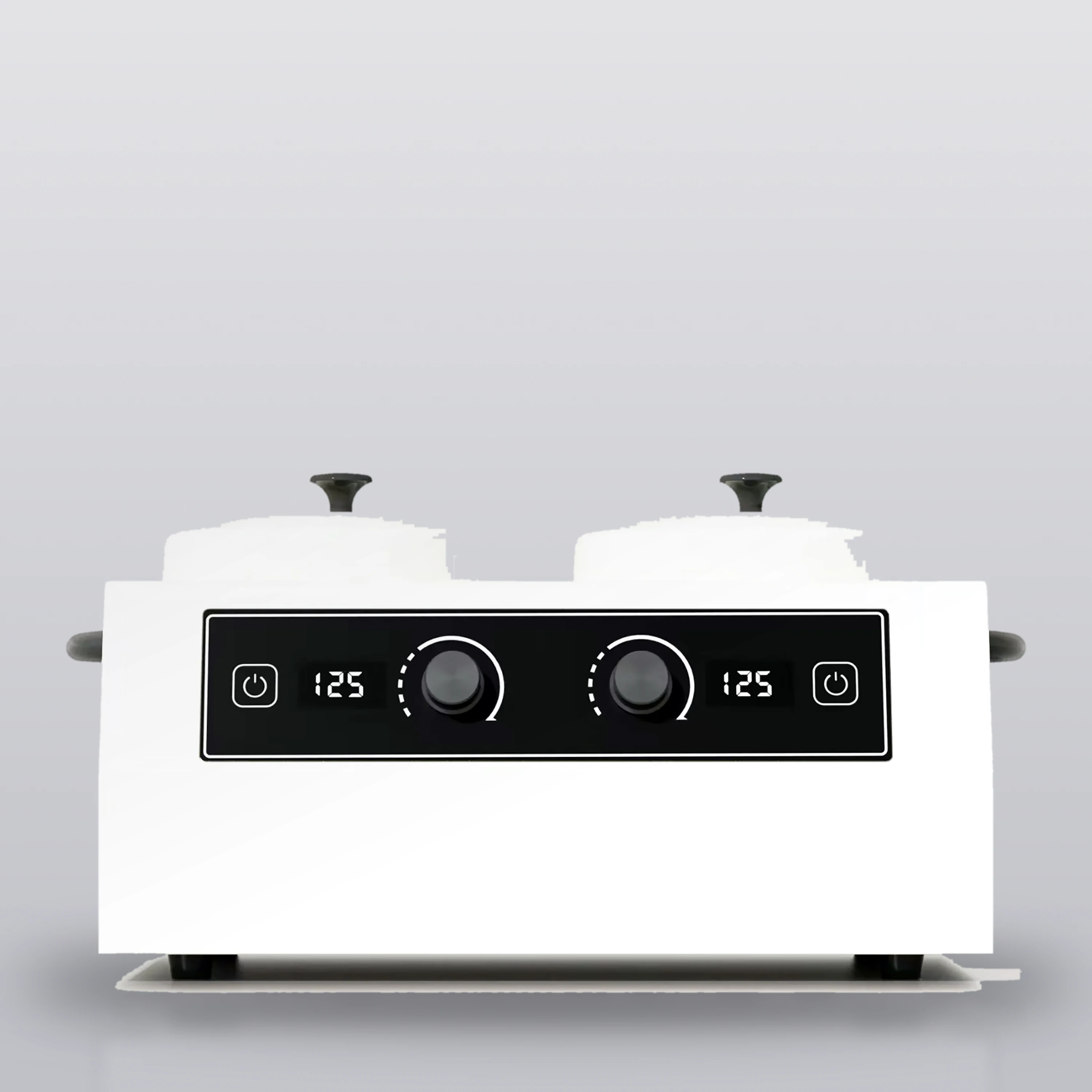
The double-pot station — two formulas running at once, which is what a two-therapist suite actually needs.
Spares decide the second order
A heater is a simple machine with three wear points: the element, the inner pot and the control. A distributor who can supply a 220 V element and a replacement pot in a week owns the account; one who cannot loses the second order to whoever can. Ask for the spare-part list and the unit price at the time of the first order, and confirm that the element is stocked in the voltage you are selling, not a 110 V equivalent.
Quick FAQ
Does an EAC certificate cover Uzbekistan?
Who should hold the EAC certificate — us or the importer?
Can we order a mixed container across the capacity range?
Next step
Send us the destination country, the number of accounts you plan to supply and the capacity mix you have in mind, and we will return the model sheet, rated voltage and element wattage, thermostat accuracy for each tier, and the document pack your certification partner will ask for. The full range is on the wax heaters product page, and the buying route for a private-label range is on the OEM and ODM page. For a quotation or a sample, contact Miro Wu, Dedicated Account Manager — email miro.wu@beautome.com or WhatsApp +86 188 1393 3019.