







AI Smart Nail Lamp for Peruvian Distributors: 220 V at 60 Hz and the File Behind the S Mark
Peru is the odd one out in South America: 220 volts arriving at 60 cycles, three plug families sharing the same wall, and a large share of commercial premises wired before grounding was required. None of that appears on a specification sheet, and all of it decides whether a pallet of curing lamps works in Lima. This is the buyer’s version of the file — what the grid actually supplies, what the certificate actually covers, and the four numbers a studio will test in its first week.
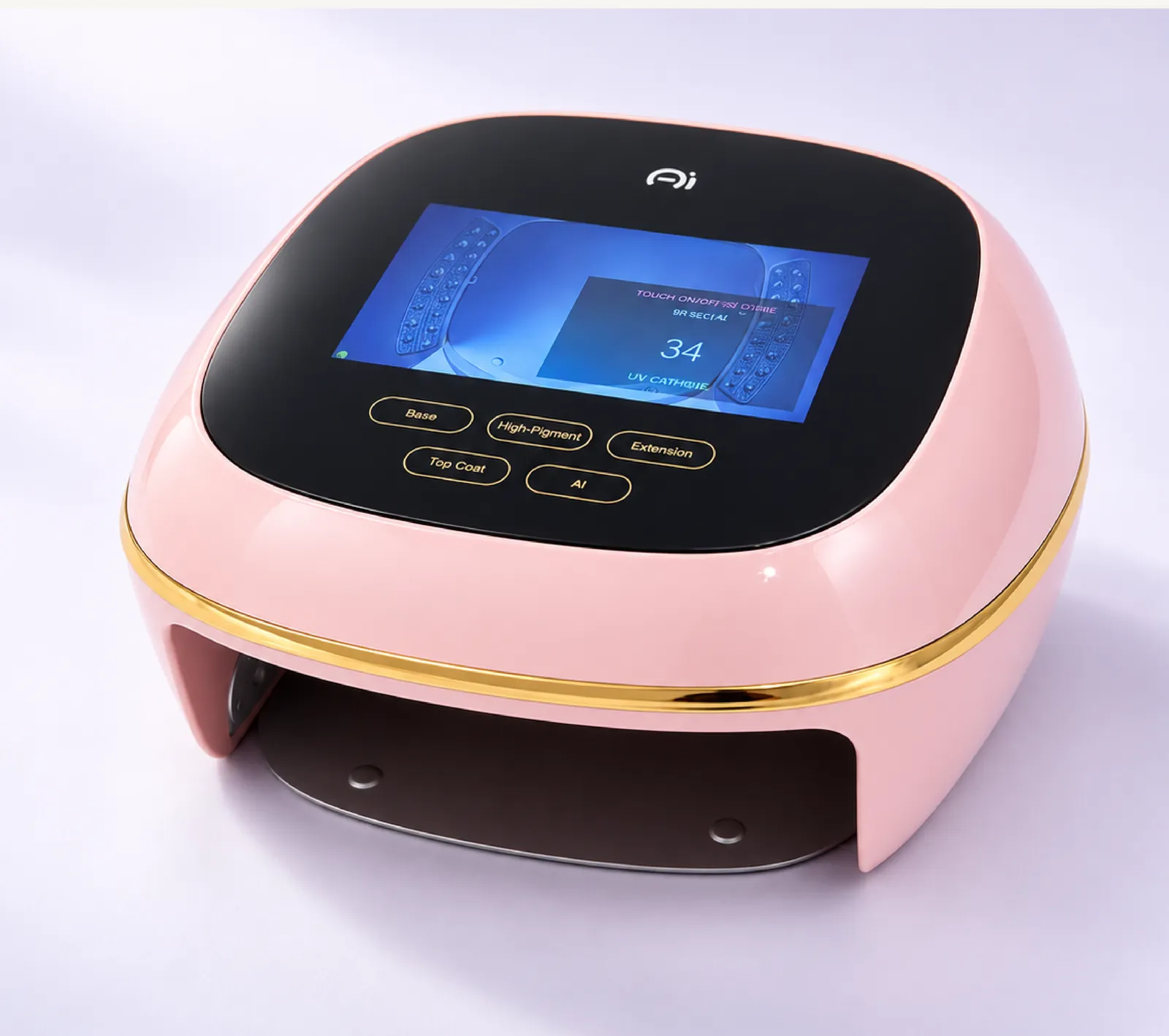
One console, 29 languages, a camera that finds the nails before the LEDs switch on — the version a Lima distributor can put on a counter without a translator.
A grid that matches no standard catalog
Almost every 60 Hz market in the world runs at 110–127 V, and almost every 220–240 V market runs at 50 Hz. Peru pairs the two: a nominal 220 V, 60 Hz supply, with measured fluctuation between roughly 205 V and 235 V in older urban districts and rural areas. That combination is rare enough that it is missing from most supplier checklists, and it is the first thing to settle before a quotation is written.
The socket picture is no cleaner. Type A (NEMA 1-15), type B (NEMA 5-15) and type C (Europlug) all exist, and the most common wall plate is a hybrid that accepts A and C. Because A and C are both ungrounded, a grounded type B socket is the minority case — and in buildings from before the early 2000s, equipment grounding is often absent altogether even where a three-pin socket is fitted. Peruvian installations are governed by the Código Nacional de Electricidad, and newer construction is required to include grounded circuits and residual current devices, but a distributor selling into a mixed estate of 20-year-old premises should assume the worst case rather than the code.
Two things follow. The purchase order has to name the plug family and whether the site expects a ground pin — not “220 V plug”. And the manual should say, in Spanish, what the operator should do when the socket has no ground: which is to use the two-pin moulded cord supplied for that configuration rather than force a three-pin plug into an ungrounded plate. That single paragraph prevents most of the support calls we see from the region.
What 60 Hz changes, and what it does not
Inside the lamp, the LEDs run on direct current. The driver rectifies whatever comes in, so the curing wavelength, the 136-LED array and the camera behave the same at 50 Hz and 60 Hz. What does change is everything on the alternating side and, more importantly, the evidence. Ask for two documents rather than an assurance: a nameplate reading 100–240 V ~ 50/60 Hz, and a test report whose scope explicitly covers 60 Hz operation. A report written only for 230 V / 50 Hz is common, and it is not wrong — it is simply not the file a Peruvian importer can hand to a conformity body without a question.
The classic mismatch is a nameplate that says 220 V and nothing else. In a market that swings between 205 V and 235 V, a single-value rating invites an argument at the counter and, worse, at inspection. Name the range, put the frequency next to it, and keep the same string on the carton, the manual and the invoice — the three documents an inspector compares.
The certificate behind the S mark
Peru runs mandatory conformity assessment for a defined list of electrical products, administered through INACAL as the accreditation body and carried out by accredited conformity assessment bodies. The output is a certificado de conformidad and the right to carry the safety mark on the product and its packaging; certificates in this system are typically issued for around three years with annual surveillance, on a type-test plus factory-inspection model, with Spanish-language labeling and instructions expected. Those parameters come from laboratories and certification bodies operating in the market in 2025–2026; the exact scheme depends on the product family, so treat them as planning numbers.
Two consequences matter commercially. First, a foreign manufacturer cannot self-declare into this system — the applicant is the importer or a locally established representative, which means the certificate lives with your customer, not with you. Second, whether a curing lamp sits on the current mandatory list is a classification question, and the answer changes the lead time by weeks. Ask the importer to confirm the line in writing before you quote a delivery date, and note which code they intend to declare.
220 V / 60 Hz
A pairing almost no other market uses — nameplate must state the full range and both frequencies
3 plug types
A, B and C share the wall; the grounded B socket is the exception, not the rule
3 years
Typical validity of a Peruvian conformity certificate, with annual surveillance and a local applicant
A 2026 draft that may add a second label
In August 2026 Peru notified the WTO of a draft amendment to its energy-efficiency labeling regulation, originally issued as D.S. 009-2017-EM and administered by the Ministry of Energy and Mines. The proposal (G/TBT/N/PER/181, circulated 14 August 2026, comments closed 13 October 2026) adds eleven product categories — among them LED lighting driver power supplies — and introduces a Type-2 certification model of type test plus annual market surveillance, a three-year certificate, QR-based labels, and a ban on carrying several countries’ energy labels at once.
Nothing in that draft says “nail lamp”. That is exactly why it deserves a line in the file: a curing lamp contains an LED driver, and whether the driver is assessed as a component of an appliance or as a standalone lighting driver is the sort of classification decision that turns into a sticker on a retail carton two seasons later. Do not assume either way. Ask the importer to obtain the reading in writing, and keep the carton artwork flexible enough to accept a label band without a reprint.
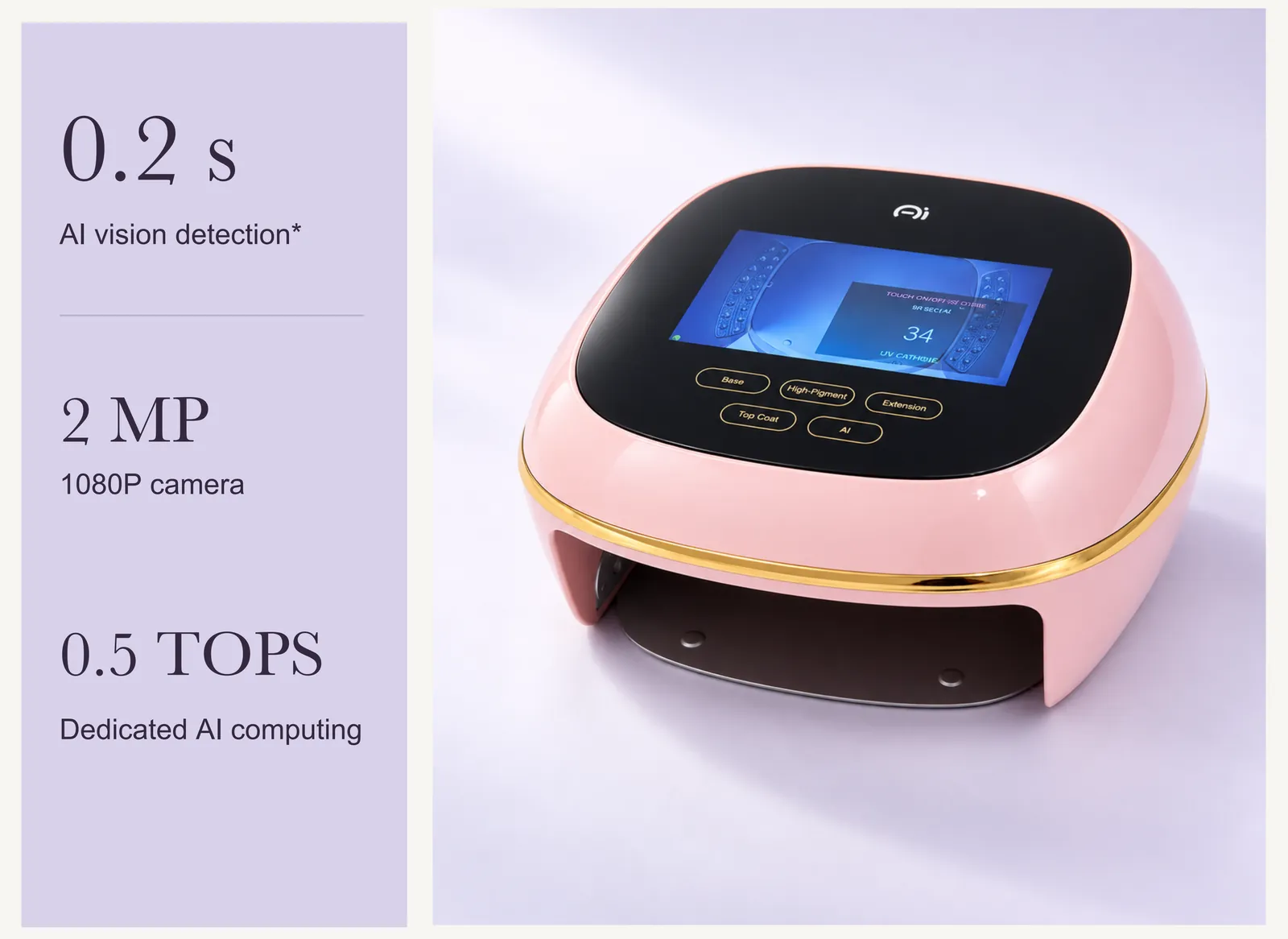
A 2 MP camera and 0.5 TOPS of on-board processing locate the nails in about 0.2 seconds; only the zones above them light up.
What a Lima studio actually tests
“How many watts” is the question a buyer asks; “where does the light go” is the question that keeps the account. The AI Smart Nail Lamp pairs a 2 MP camera with 0.5 TOPS of processing to find the hand in roughly 0.2 seconds, then drives 136 dual-band LEDs in 365–370 nm and 395–400 nm as separate zones rather than as one flood. The shorter band does the work through pigmented gels; the longer band carries speed. Because emission is confined to the zones above the nails, the surrounding skin receives far less unnecessary light — which is the mechanism behind the “dark hands” complaint technicians bring up in every market, and the one benefit a client notices without being told.
Ask for three demonstrations. Cure a full set of a dark, heavily pigmented gel and time it. Put a hand in at an angle and confirm the console recovers rather than misreading the nails. Then run the lamp for half an hour and see whether the console reports a thermal event or a drop in output — a lamp that quietly loses intensity is a redo factory, and the light-decay warning is the feature that turns an invisible failure into a work order.
The rest is fit: 24 × 24 × 11.5 cm, rear cable entry so the unit can sit against a wall in a room that is 2.4 m wide, and a 5.5-inch console in 29 languages. Spanish is the obvious setting; the useful detail is that the language can be locked per shift, so a mixed team stops resetting the menu between clients.
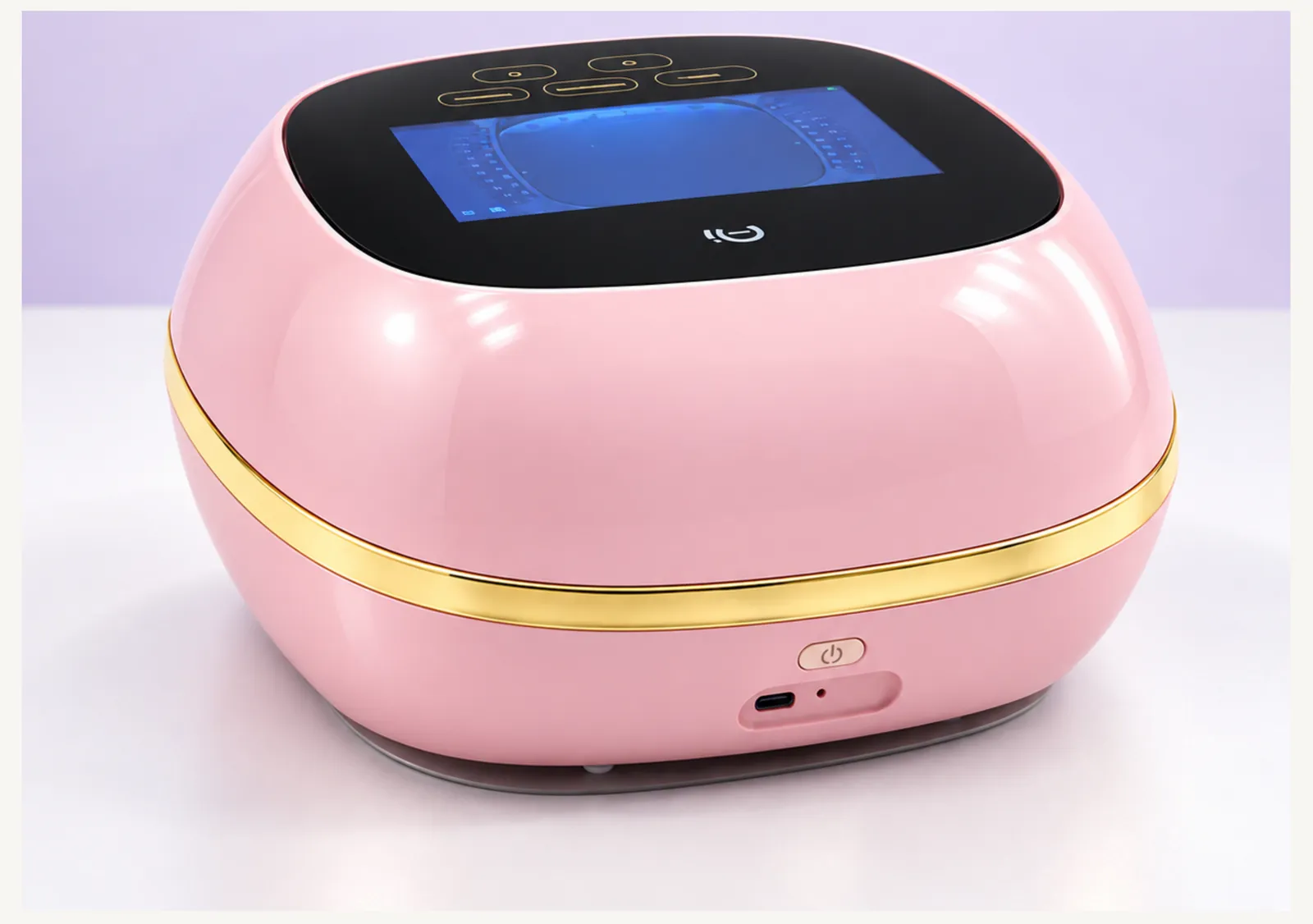
Rear cable entry and a compact footprint: in a 2.4 m room the cable route decides where the lamp can live.
What to put in the purchase order
Voltage range and frequency, plug family and ground requirement, the Spanish manual and the Spanish label on the carton, the name of the entity that will hold the conformity certificate, and a spare cord set per ten units. Then the commercial line: the standard build is AC-powered with no battery, a 6,000 mAh battery version is available on request for mobile technicians, white-label units start at three to five pieces with single units available for evaluation, and full custom branding starts at 300–500 units.
The full specification sits on the AI Smart Nail Lamp page, the branding ladder is under OEM and ODM, and a parameter-by-parameter comparison with an earlier generation of AI lamps is in this article.
Why Peru, and why now
The supply side is unusually open. Roughly 77% of beauty goods sold in Peru are imported, and China’s share of the country’s beauty and hair-import basket rose from about 3% in 2019 to 19% in 2025, with 2025 imports from China reaching USD 61.4 million, up 52% year on year. The domestic market is still growing: cosmetics and personal care in the first quarter of 2026 reached PEN 2.4 billion, up 6% year on year, according to the Lima Chamber of Commerce and the industry association Copecoh. Translation: the shelf is being rebuilt by importers who are actively looking for a second or third supplier, and the differentiator is documentation rather than price alone.
Quick FAQ
Do I need a step-down transformer for a lamp in Peru?
Can the factory hold the Peruvian conformity certificate?
Which plug should ship with the unit?
Next step
Send the voltage and plug details your importer requires, the number of units for a first evaluation, and whether the first order is a sample set or a shelf. We will return a quotation with the nameplate string, the cord set per destination and the certificate ownership spelled out. For a quotation, contact Miro Wu, Dedicated Account Manager — email miro.wu@beautome.com or WhatsApp +86 188 1393 3019.