





Inside the Gold: What’s Really in Our Rosin-Free Hard Wax
Thirteen ingredients, published openly — and why a 55–75% synthetic resin base outperforms rosin for sensitive skin. With footage from our studio: the wax melting, stringing and going onto skin.
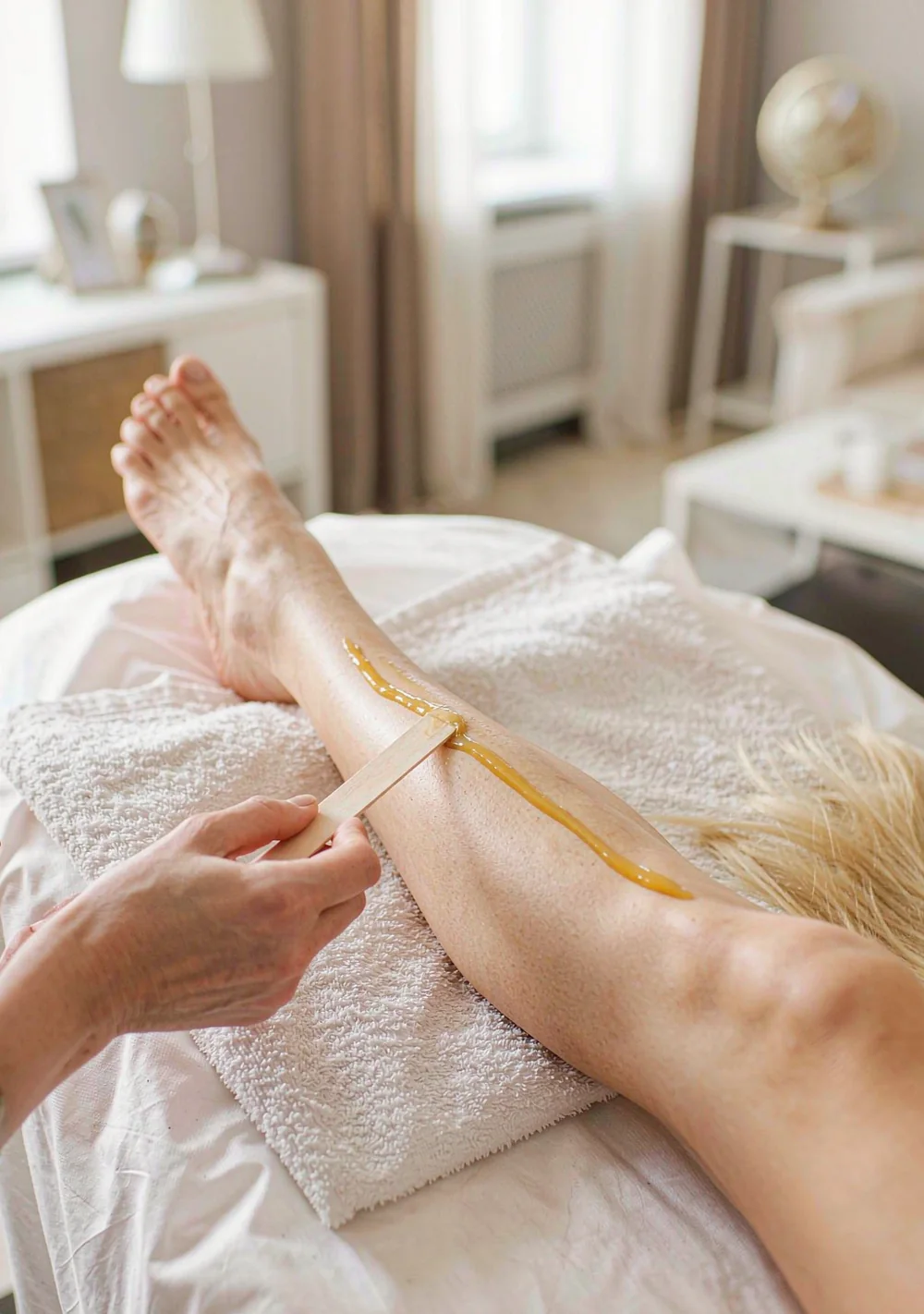
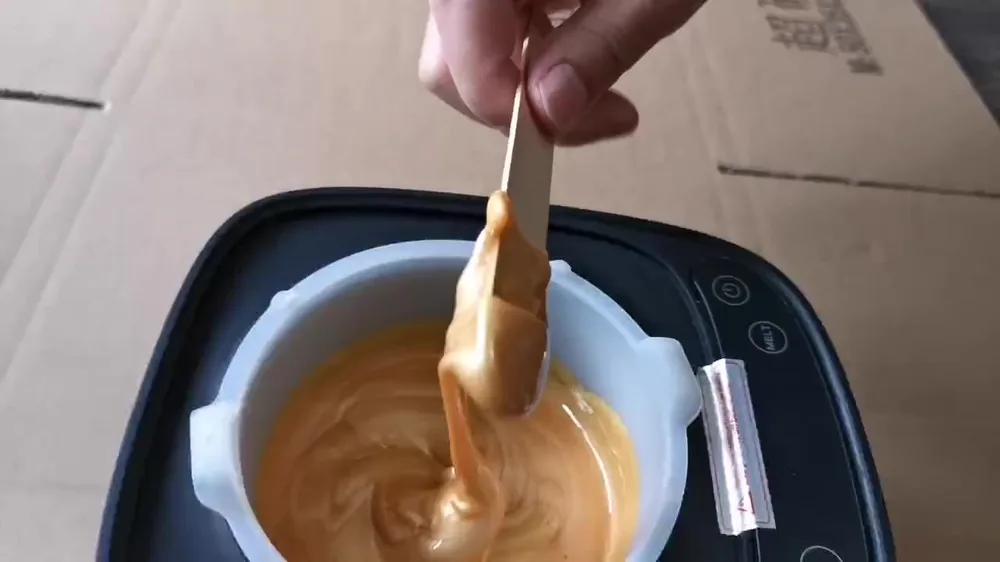
Formula A1, melted and applied at its 45–50 °C working temperature.
The base: hydrogenated polydicyclopentadiene, 55–75%
The single biggest difference between our gold wax and the shelf-full of look-alikes is what we removed: tree rosin, the ingredient responsible for most wax-related skin reactions. In its place, A1 uses hydrogenated polydicyclopentadiene — a synthetic resin that mimics rosin’s grip and clean-peel behaviour without its sensitising potential.
For salons this is not a marketing detail. Clients with reactive skin come back when the wax doesn’t leave redness that lasts all day. A rosin-free claim you can back with a published INCI list is a reason to choose your brand over a competitor’s.
The structure builders
Three supporting waxes tune how A1 behaves in the pot and on the skin. Ethylene/VA copolymer (8–20%) is the muscle: it grips short, coarse hair so technicians work an area once. Microcrystalline wax (5–10%) keeps the melted pool glossy and the set film flexible. Paraffin (5–10%) sets the hardness so beads pour freely and melt evenly — no clumping in the bag, no scorching in the heater.
The skin-care layer: four plant oils
Riding on the base are rice bran oil, shea butter, coconut oil and rose flower oil, each at 0.1–2%. They sound like garnish; they are not. The oils form a slip film between wax and skin, so removal lifts hair while friction — the thing clients actually feel — stays low. Petrolatum (0.2–2%) finishes the edge release.
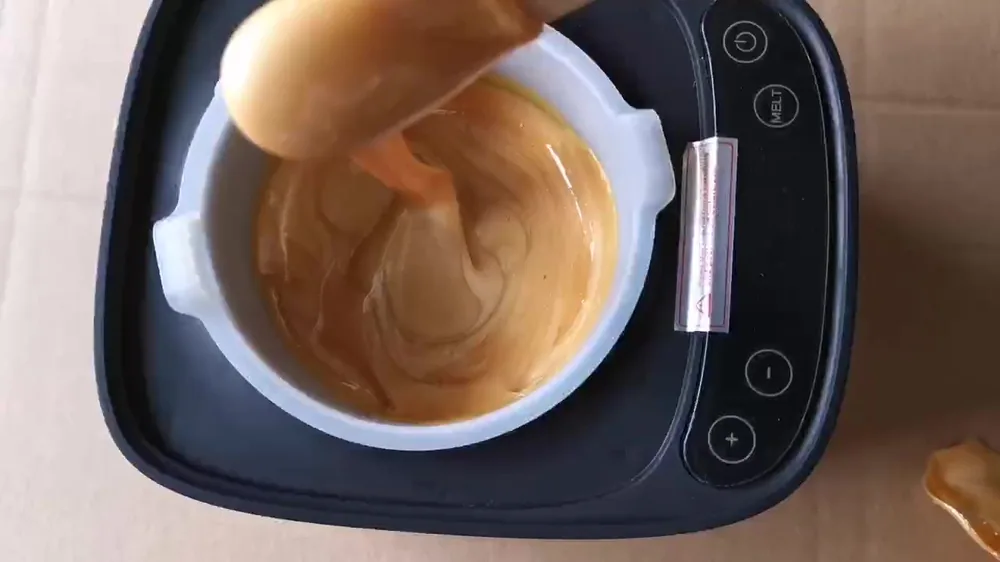
See it melt: 44 seconds from our studio
No stock footage — this is our own gold formula going from beads to working temperature in a digital wax heater:
Where the gold comes from
Four cosmetic colorants build the signature honey-gold: titanium dioxide (CI 77891) for opacity, mica (CI 77019) for sheen, red iron oxide (CI 77491) for warmth and CI 47000 for depth. Each sits at 0.05–2% — enough to look premium in a transparent bag, far below any safety-relevant level. The same base ships in pink; white is made to order.
Pair it with the right heater
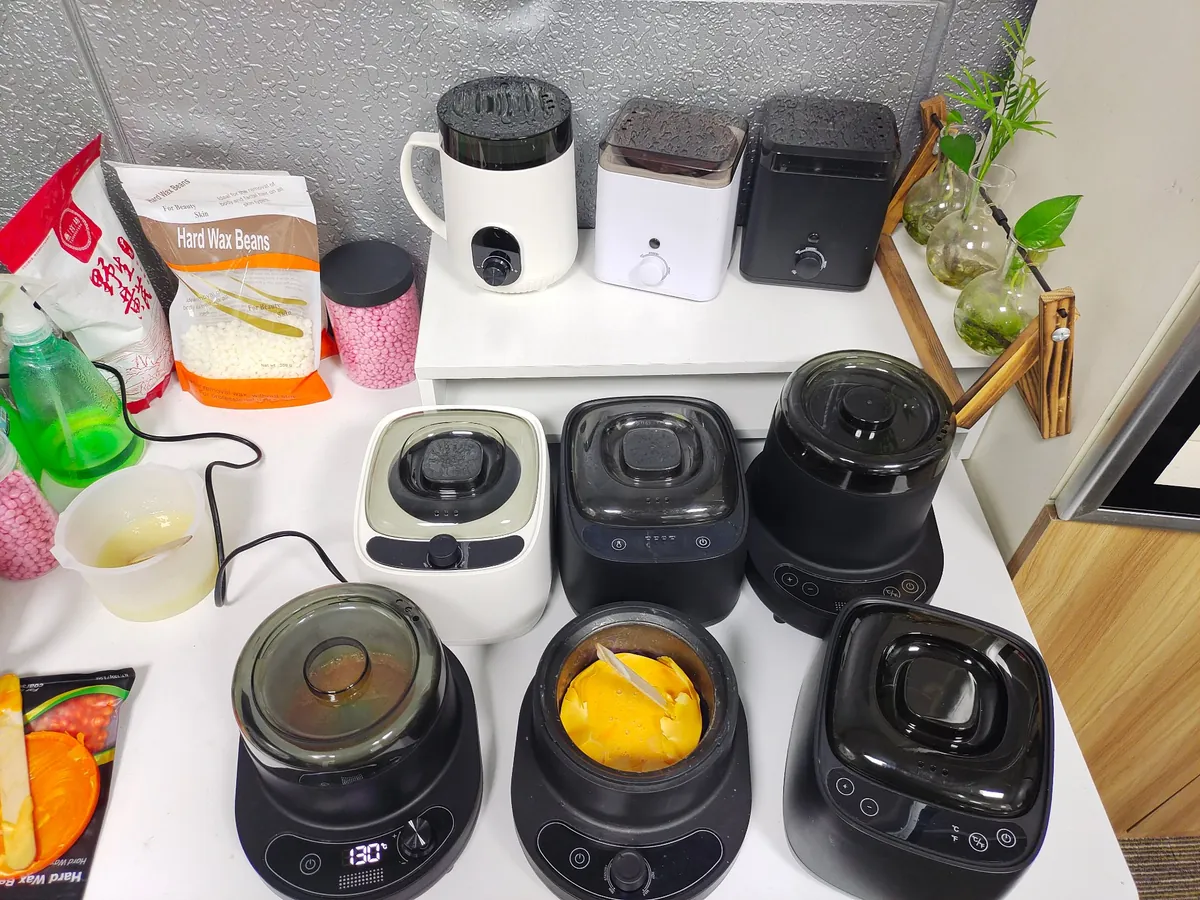
A low-temperature wax deserves a heater that holds temperature instead of cycling hot. Our digital units read to the degree and hold A1 in its 45–50 °C window:
- PW8 Mini Wax Warmer — 180 ml, home/ travel sizing for retail kits and e-commerce bundles.
- SW1B Large-Capacity Heater — salon throughput for back-to-back leg treatments.
- SW6B Dual Pot — two formulas side by side, e.g. gold A1 plus a pink consumer SKU.
Selling wax and heater as one matched system is the easiest upsell in this category — and the reason our studio tests every formula in our own units before it ships.
What this means for your brand
Everything above is documented: full INCI, CAS numbers and a product dossier you can hand to retailers or import inspectors. Private label starts from a sample box — neutral unlabeled bags first, printed packaging when you are ready. Most partners launch A1 gold as the hero SKU, then add the pink consumer variant once reviews land.