






Hard Wax for Men’s Back and Chest Waxing in US Salons: What to Stock and Why It Pulls Differently
The men’s waxing client is not a smaller version of the women’s client. The hair is coarser and more densely packed, the treatment areas are larger, and a first appointment is usually a nervous one. That changes which formula a professional should reach for — and it changes what a US distributor or salon brand should keep on the shelf. Here is a range built for back-and-chest work, and the filing question any US brand owner has to answer before the first pallet moves.
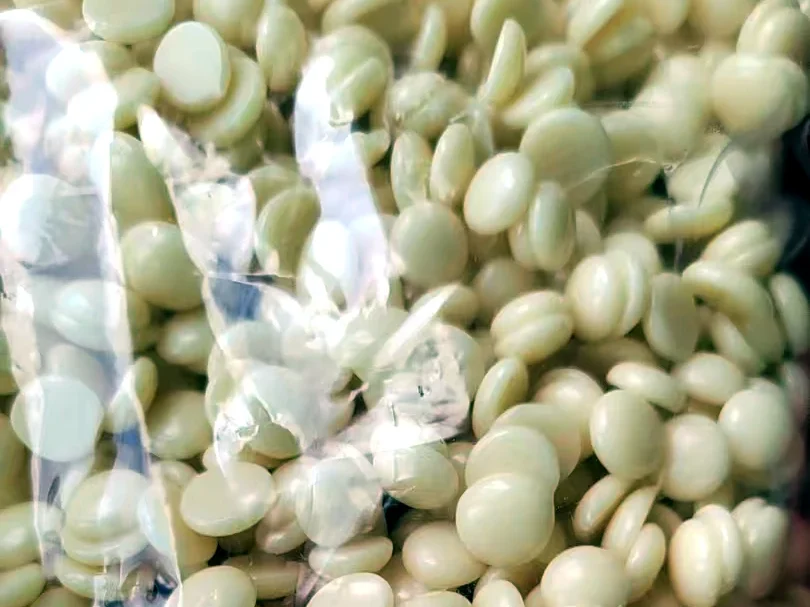
Formula A2 premium rosin wax in Cream White — the elasticity and grip that coarse back-and-chest hair needs.
The fastest-growing demand in the wax room is a men’s service
Professional waxing in the United States has been a flat-to-steady business for a decade — except in one segment. Body grooming has moved from a niche to a routine for men in their twenties to forties, and the services they book are not the ones the industry was built around: back and chest work is the single most requested area, accounting for roughly 62% of men who come in for professional hair removal (Grooming Insights, cited in 2025 industry reporting). The product numbers follow the same direction. The US men’s hair removal wax market is put at USD 0.8 billion in 2024, growing to roughly USD 1.4 billion by 2033 at about 6.0% a year (Verified Market Reports, 2025), and the wider US depilatory wax category is forecast at USD 2.6 billion for 2025 rising to USD 4.2 billion by 2035, with hard wax the fastest-growing type (Global Market Insights, 2025).
62%
Share of US men booking professional hair removal for back and chest work (Grooming Insights, cited in 2025 reporting)
USD 0.8 B
US men’s hair removal wax market in 2024, forecast to USD 1.4 B by 2033 at ~6% CAGR (Verified Market Reports, 2025)
USD 2.6 B
US depilatory wax market in 2025, heading to USD 4.2 B by 2035 — hard wax growing fastest (Global Market Insights, 2025)
Two behavioral facts sit underneath those numbers and both affect what you stock. A 2024 survey of men considering hair removal found that around 40% named pain as the reason they had not booked, and 2025 industry reporting puts the share of male clients who treat privacy as a decisive factor at roughly a third. The practical translation is simple: the service that wins these clients is the one that is fast, that does not tear the skin, and that ends with an aftercare instruction the client can follow. The formula is the first variable in all three.
Why back and chest hair is a different job
Back and chest hair is thicker in diameter and set closer together than the hair on legs or arms, and the skin underneath it is often being waxed for the first time. Men also tend to leave longer intervals between appointments, so the hair that arrives on the table is longer and takes a heavier first pass. A formula that works beautifully on a leg can pull skin on a back if the application is too thin, the temperature is too high or the pull direction is wrong.
What this means for the range you keep behind the counter:
- Elasticity matters more than adhesion. The wax has to stay flexible as it is pulled so it takes the hair and leaves the skin, which is exactly what a premium rosin formula with high elasticity is engineered for. This is the case for Formula A2, our Cream White medium-hard wax, on coarse and closely set hair.
- Reactive skin needs a rosin-free option. Rosin — the pine resin behind most traditional hard wax — is also the most common irritant in the category, and men’s back and chest skin has had far less exposure to waxing than most of your client list. Formula A1 removes rosin from the formulation entirely.
- Temperature is the third variable. Every hard wax has a working window, and a formula that can be run at the low end of it reduces both the sting and the risk of lifting skin. A1 is designed around a 45–50 °C window, which is the specification to look for when a client arrives with a first appointment and a low pain tolerance.
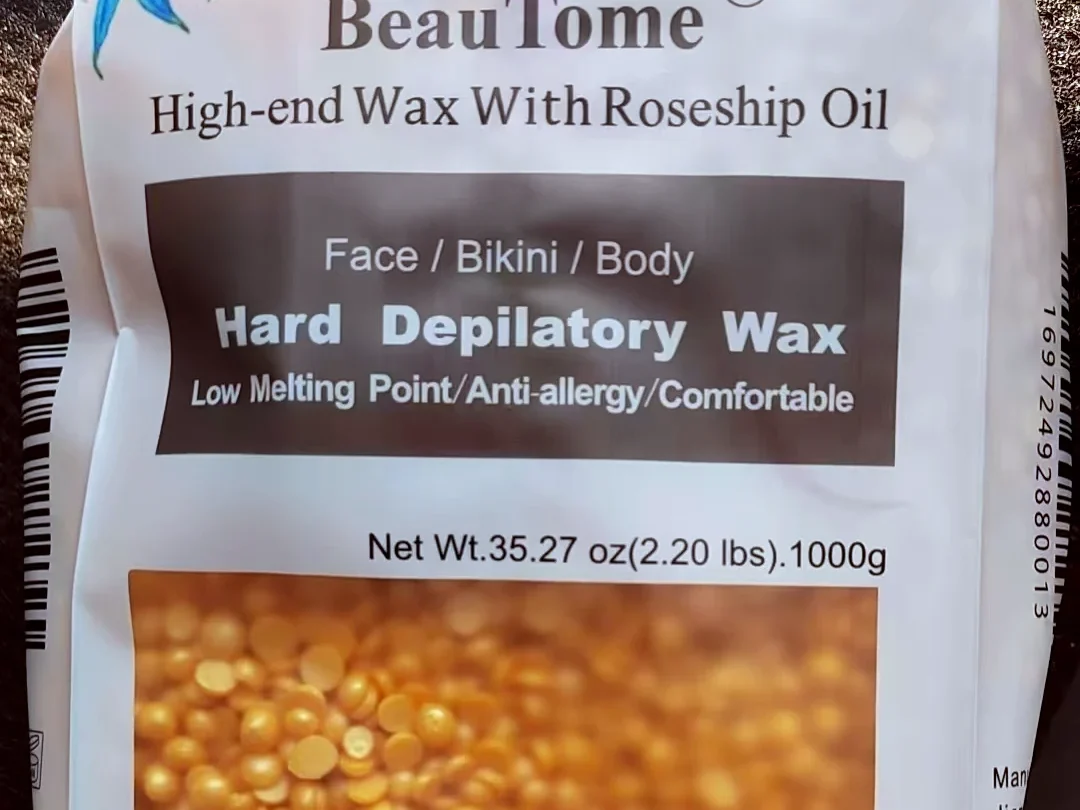
Formula A1 in the stock Gold colorway — rosin-free, and specified around a 45–50 °C working window.
A four-tier range for a men’s-heavy book of business
There is no single formula that covers everything a US waxing room sells, and trying to make one do the work is how salons end up over-heating a product to make it grab. Four tiers cover the whole book:
- Formula A1 — rosin-free. The sensitive-skin and first-timer formula, used for face, nape, back and chest on reactive clients. Instead of rosin, the formulation uses a hydrogenated synthetic resin as the tackifier, supported by EVA, microcrystalline wax, paraffin, four plant oils and cosmetic colorants. Stock colors are Gold and Pink; White is a custom color produced to order. Available in 300 g, 500 g and 1000 g bags.
- Formula A2 — premium rosin, Cream White. The workhorse for coarse, closely packed hair: back, chest, underarms, legs. High elasticity and short-hair grip, which is what lets a technician take a large area in fewer passes. This is the formula to push when a salon tells you its men’s bookings are growing.
- Consumer-Grade Hard Wax — 55–60 °C film wax. A film hard wax for fast service on large areas, and the SKU that carries retail: male at-home grooming has been the fastest-moving part of the consumer segment, and a two- or three-application pack sells next to the till.
- All-Purpose Soft Wax — 450 g cans. Strip wax for legs, arms and large flat surfaces, priced as a salon consumable rather than a premium item, and the range filler that keeps a distributor’s order economically sensible.
MoCRA: what the US side of the label has to hold
Before any of that ships, a US brand owner has to answer a question that has nothing to do with wax quality. Under the Modernization of Cosmetics Regulation Act (MoCRA), the obligations sit with the responsible person — defined as the manufacturer, packer or distributor whose name appears on the label. When an American distributor imports a hard wax under its own brand and sells it under its own name, that distributor is the responsible person, and the duties are theirs even if the wax was made and packed abroad.
In practice that means four things. Facility registration: a facility that manufactures or processes cosmetics for US distribution has to register with the FDA, and a foreign facility must name a US agent; registration renews every two years. Product listing: one submission per product, carrying the ingredient list, updated annually — and note that a manufacturer’s own registration does not satisfy the brand owner’s listing duty. Safety substantiation: each product needs evidence that it is safe under its intended use, and current FDA practice does not treat raw-material safety sheets as sufficient on their own. Adverse event reporting: serious events must be reported within 15 business days, with records kept for six years, or three for a qualifying small business. A limited exemption exists for businesses averaging under USD 1 million in annual US cosmetic sales, which covers registration, listing and GMP — but not safety substantiation, adverse event reporting or labeling, and it is lost for certain product categories. Registration and listing run through the FDA’s Cosmetics Direct portal. Confirm your own position with counsel, since the exemption turns on your US revenue rather than on order size.
This is also the reason the private-label route matters commercially. When we supply wax in unlabeled transparent bags, nothing is printed at the factory and the label is applied in your market — so the artwork, the claims, the language and the responsible-person statement stay under the brand’s control, and the brand can revise them without a production run at our end. That workflow is available at low MOQ, and it removes a printing cycle from the lead time entirely.
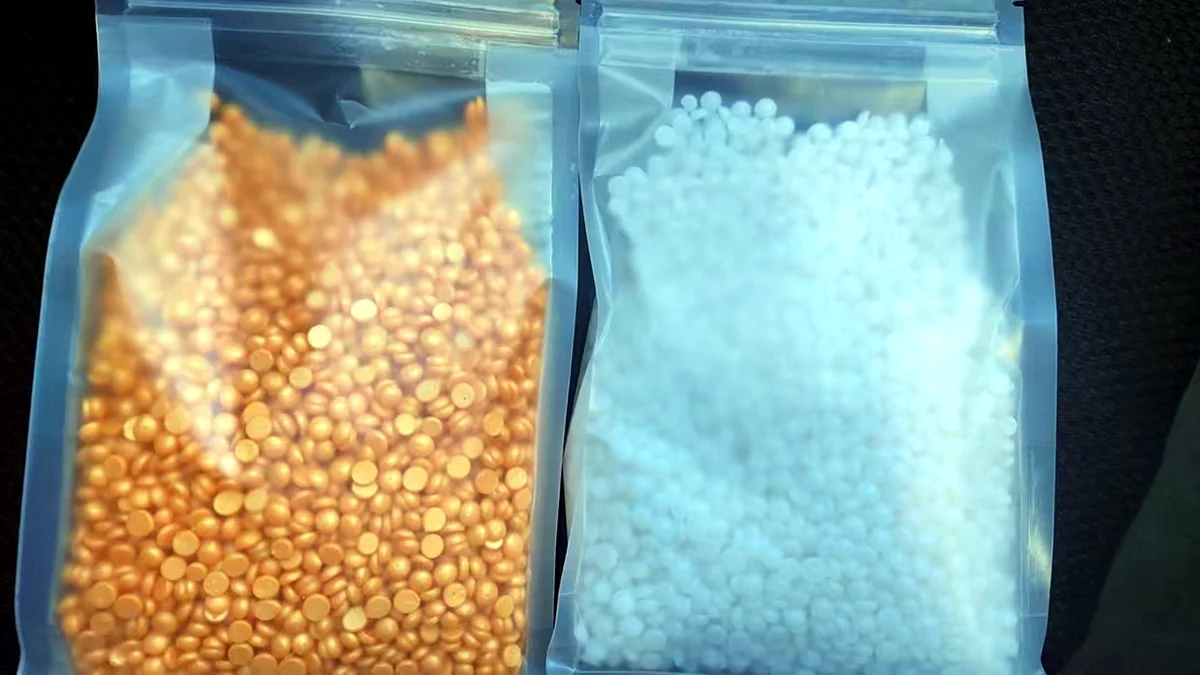
Unlabeled transparent bags: no printing lead time, and the responsible-person statement on the label stays a decision for the brand.
Quick FAQ
Which formula should a salon use for men’s back and chest waxing?
What is the difference between Formula A1 and Formula A2?
Can we private-label hard wax for the US market?
Next step
Tell us which services dominate your book — back and chest, Brazilian, legs — and whether your clients skew toward reactive skin, and we will recommend the two or three formulas to start with rather than the whole catalogue. The full range with pack sizes is on the wax formulas page; if you sell both equipment and consumables, the wax heater range is the platform those pots run on, and the products overview shows the whole factory line. For samples, private-label packaging or a house-brand programme for the US, contact Miro Wu, Dedicated Account Manager — email miro.wu@beautome.com or WhatsApp +86 188 1393 3019.