





Hard Wax for Southeast Asian Distributors: Heat, Humidity and a Four-Tier Range
Southeast Asia is a wax market that grows faster than the global average and punishes bad logistics harder than most. A film hard wax that leaves our factory in perfect condition can leave a Manila or Jakarta warehouse clumped, grainy and impossible to spread — not because the formula failed, but because nobody planned for 35 °C ambient and 80% relative humidity. This article covers what heat and moisture do to a hard wax, how to build a container and warehouse routine around it, and the four price tiers that answer the region’s buying patterns.
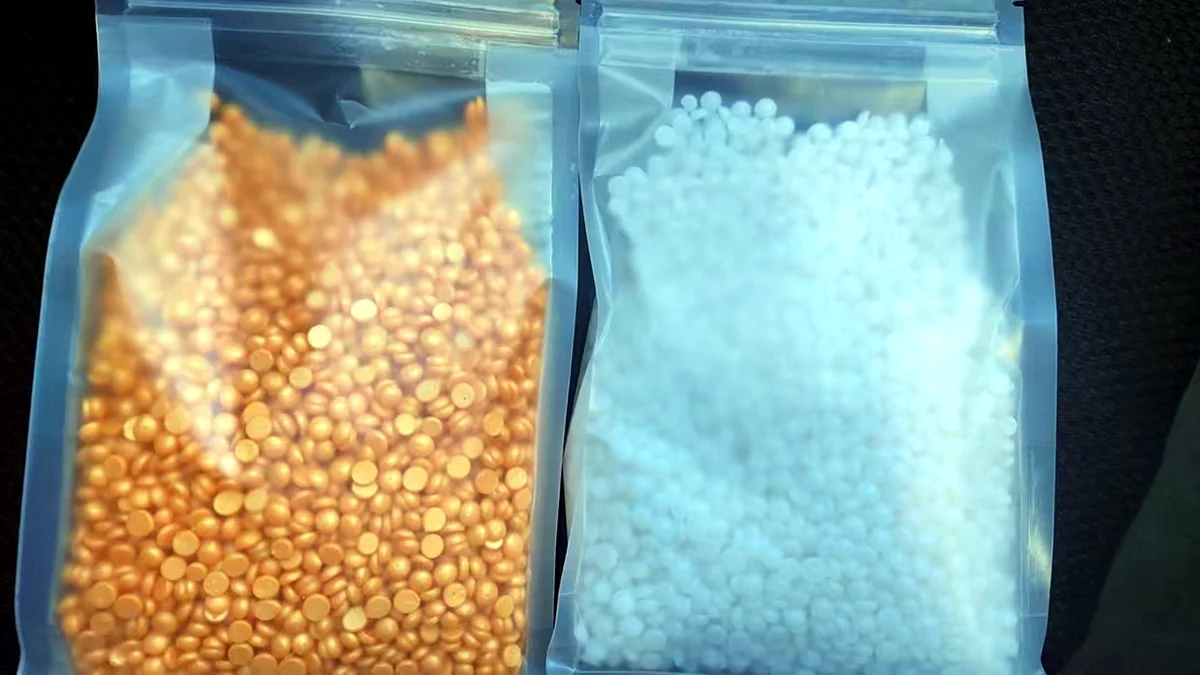
Unlabeled transparent bags: the SKU goes into a distributor’s warehouse and a brand’s own label, with no print lead time.
A small market that grows faster than the global average
Southeast Asia is not a volume market by global standards, but it is a genuine one, and it is compounding. Deep Market Insights values the regional hair removal wax market at USD 0.26 billion in 2025, forecast to reach USD 0.4 billion by 2034 at a compound rate near 4.9%. Thailand alone recorded about THB 449 million in depilatory sales in 2025, growing roughly 4% in current value terms, and industry analysis of that market puts male grooming among the fastest-growing segments, ahead of the market average.
USD 0.26 bn
Southeast Asia hair removal wax market, 2025, forecast to USD 0.4 bn by 2034 (Deep Market Insights, 2025)
THB 449 M
Thailand depilatory sales, 2025, up about 4% in current value terms (Euromonitor International, 2025)
15–24 °C
Recommended storage band for hard wax — cool, dry, dark and airtight (industry storage guidance, 2024–2025)
Two characteristics define the region for a supplier. First, professional buying is price-segmented: the market splits cleanly into salons that buy on the lowest landed cost and studios that pay for a formula they can charge a premium for, and a distributor needs a SKU for each. Second, the climate does not ask permission. Ambient temperature in a non-air-conditioned warehouse in Vietnam, Indonesia or the Philippines can sit above the point at which a low-melt film wax starts to soften in the bag.
What heat and humidity do to a film hard wax
Hard wax is not a fragile cosmetic, but it is temperature-sensitive in a way a cream is not. Standard storage guidance for professional wax is consistent across the industry: keep beads cool, dry and dark, ideally between 15 °C and 24 °C, away from direct sunlight, in sealed containers. Two failure modes follow from disregarding that.
Heat. Sustained warmth softens the bead and lets it fuse into a block. The product is not ruined in the chemical sense, but the bag arrives as a lump, the technician has to break it up, and portioning becomes guesswork. This matters most for a low-melt formula: Formula A1 is rosin-free with a working window of 45–50 °C, the lowest in our range, and a low working window is exactly what makes it the gentle choice for sensitive skin — and exactly what makes it the most sensitive to a hot storeroom.
Humidity. Moisture is the quieter problem. When wax absorbs water, the texture changes: beads turn sticky or grainy, the melt behaves inconsistently, and application comes out patchy. In a market where relative humidity is routinely high, sealed packaging and airtight secondary storage are not optional extras.
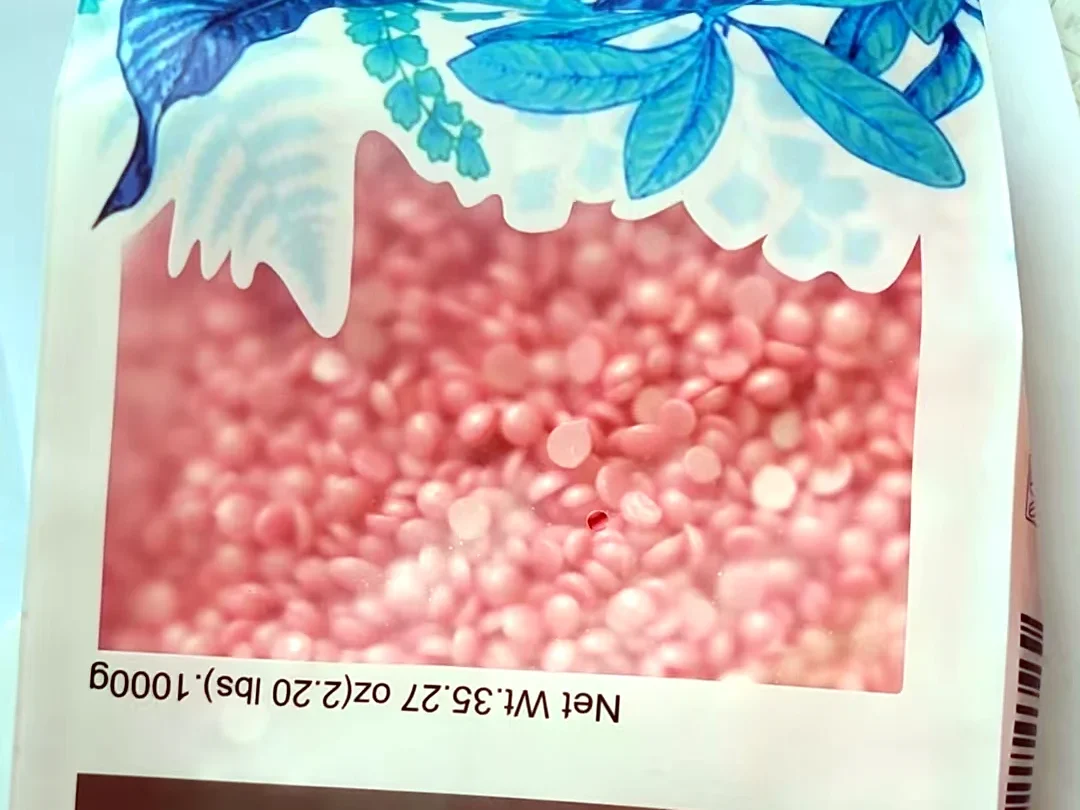
Sealed bags protect the bead from moisture in transit; the distributor’s warehouse has to keep doing the same job.
Container and warehouse: a distributor’s checklist
Everything below is cheap to do and expensive to skip, and none of it requires new equipment.
- Keep cartons closed until dispatch. A pallet of open cartons in an unventilated warehouse absorbs humidity for weeks before it reaches a salon.
- Stack low, not high, in the container. Heavy pallets compress the cartons beneath them, and a crushed bag is a bag a salon refuses.
- Store away from doors, glazing and exterior walls. In a tropical warehouse, the hottest place is not the middle of the room — it is the wall that faces the afternoon sun and the area near the roller door.
- Rotate on first-in, first-out. Wax stored correctly keeps well, but stock that sits for a year behind newer deliveries is how a distributor ends up discounting a batch nobody will buy at full price.
- Offer secondary containment up the chain. Where a salon’s storage room is humid, a reusable airtight container solves it for a few dollars and removes the complaint before it is made. It is also an easy value-add for the distributor who supplies it.
- Match the bag size to the turnover. Formula A1 ships in 300 g, 500 g and 1000 g bags; a salon that opens one large bag and leaves it open is better served by two smaller ones.
Four tiers that fit the region’s price bands
Tier 1 — the volume entry. Consumer-Grade Hard Wax is a 55 °C to 60 °C film wax, the most heat-tolerant formula we make and the right opener for a price-led account or a retail shelf. It tolerates warm storage better than a low-melt professional wax, which in this region is a genuine selling point rather than a compromise.
Tier 2 — the strip-wax line. All-Purpose Soft Wax in 450 g cans covers the classic strip-wax service. Soft wax still holds the largest share of the regional category, so leaving it out of a range means leaving money out of the range.
Tier 3 — the professional workhorse. Formula A2 is a premium rosin hard wax in cream white beads with high elasticity and the grip to handle short, coarse hair — the formula for a full-body Brazilian and for male back and chest work, which the region’s growth data says is the segment moving fastest.
Tier 4 — the flagship. Formula A1 is the rosin-free line: a 45–50 °C working window for sensitive skin and repeat waxing, in three bag sizes. Standard colors are Gold and Pink; White is a custom color made to order. It is the SKU a distributor stocks to be the premium option on the shelf rather than the cheap one.
Formula A1 rosin-free at 45–50 °C — Gold and Pink as standard colors, White made to order.
The reason this four-tier structure is practical to launch is the packaging model. Our default private-label route is the unlabeled transparent bag: the distributor or brand applies its own label, which means zero print lead time and no artwork commitment before the formula is proven in the market. Private label runs at low MOQ, and the supply terms are on the OEM & private label page. If you would rather launch in your own printed retail bag from day one, that is available too — but the transparent bag is how most distributors in this region test which tier their market actually buys.
Notification, not approval: the ASEAN paperwork
Every country in this region regulates depilatory wax as a cosmetic, under a framework that looks harmonized but is not. The ASEAN Cosmetic Directive was signed in 2003 and fully implemented across member states on 1 January 2008, and it standardizes requirements — but there is currently no mutual recognition: a product notified in one member state must still be notified separately in each country where it is sold. Completion times differ accordingly, from a few weeks in Malaysia to several months in Indonesia, and Thailand regulates depilatory creams and wax under its own FDA cosmetics notification with Thai-language labeling.
The document set is broadly consistent and worth assembling once: a Certificate of Free Sale, a GMP certificate, an authorization letter or contract manufacturing agreement between brand and factory, and the local importing company’s business license. After notification, a Product Information File has to be prepared and held. Requirements per country are updated regularly and differ in detail — notarization and certification of the CFS and GMP in Indonesia being one common example — so verify the current list for each market with a local regulatory agent before you schedule a first shipment rather than assuming one notification travels across the region.
Next step
Formulas, colors, bag sizes and private-label terms are set out on the depilatory wax page, and the chip-controlled warmers these formulas are built around — nine models from 20 ml to 800 ml — are on the wax heater page. For a sample of Formula A1 and Formula A2, a mixed-tier distributor quotation or an unlabeled-bag private-label discussion for Southeast Asia, contact Miro Wu, Dedicated Account Manager — email miro.wu@beautome.com or WhatsApp +86 188 1393 3019.